Detail-first accessory sellers
If clasps, beadwork, stones or fine texture need to fill much of a listing image, start with lens magnification. Nikon, Sony and Fujifilm each specify a 1:1 lens among the macro options discussed below.


Choose the lens around the smallest accessory detail you need to show, then choose a compatible camera body that fits your lighting and handling needs. A 1:1 macro lens suits frame-filling close-ups; if you often work handheld in a dim space, check autofocus and stabilisation specifications, while a controlled tabletop setup gives you more scope to prioritise a compact system.
If clasps, beadwork, stones or fine texture need to fill much of a listing image, start with lens magnification. Nikon, Sony and Fujifilm each specify a 1:1 lens among the macro options discussed below.
If you regularly photograph accessories away from a fixed tabletop, body autofocus and stabilisation specifications become relevant. They do not replace lighting that lets you control reflections on the accessory.
If you can arrange lights and camera support in a repeatable position, a smaller body and compatible macro lens may suit both close-up work and a system that is easier to put away.
Set the required close-up scale and physical lighting layout before comparing camera-body specifications: the lens determines magnification, while its position can affect where lights and reflectors fit.
| Concern | What to check | Who this matters to |
|---|---|---|
| Small details | Check the exact lens’s maximum magnification and its compatibility with the camera mount. Nikon describes 1:1 as life-size reproduction on the sensor; a lens labelled macro does not necessarily reach it. | When tiny clasps or surface details need to fill the frame, I would choose the lens before the body. Around 33% of consumers put close-detail reproduction first. |
| Artificial lighting | Plan where lights, diffusers and camera support will sit, and check that the lens leaves room for the arrangement. | If I need consistent photographs of reflective accessories, I need a lighting arrangement I can repeat. Around 33% of consumers make lighting control their primary concern. |
| Handheld work | Compare the exact body’s low-light autofocus specification and the stabilisation available with your chosen lens; manufacturer stop ratings depend on shooting conditions. | Working away from a fixed tabletop, I may need to frame and focus in a dim space. For around 20% of consumers, handheld operation takes priority. |
| System size | Consider the body and lens together, including whether a suitable macro lens fits the space available for tabletop work. | If I regularly set up and put away the camera, the complete system needs to be manageable. Compact, mixed-use equipment comes first for around 14% of consumers. |
Low-light camera specifications cannot make a lens reproduce smaller details at a larger scale. Canon specifies 0.5x magnification for the RF 85mm F2 MACRO IS STM, while the Nikon, Sony and Fujifilm macro lenses discussed here reach 1:1.
Decide how much of the frame the smallest required detail should occupy, then check the exact lens’s maximum magnification and mount compatibility.
If the supplied lens cannot produce the close-up you need, adding a dedicated macro lens later changes the equipment you must carry and set up.
Camera or lens stabilisation addresses camera movement, not the direction or softness of light falling on metallic, translucent or sequinned accessories.
Plan a repeatable lighting and camera-support arrangement, then check how the intended lens fits into it.
Close focusing can make it awkward to position lights. Fujifilm specifies a 10cm minimum focusing distance for its XF30mm macro; Canon specifies 35cm for its RF 85mm macro. Those figures do not, by themselves, describe the free space in front of each lens.
Lay out the camera position, subject and lighting accessories on your actual tabletop before settling on a lens.
UK Intellectual Property Office guidance says photographs are generally protected by copyright and that copying or sharing another person’s images online will usually require permission.
Before using commissioned or supplied accessory photographs, confirm in writing who may publish, edit and reuse them.
These body-and-lens examples show different ways to balance close-up scale, handling and tabletop space; check the exact combination rather than treating a brand name as a specification.
The Z5II and NIKKOR Z MC 105mm f/2.8 VR S pair a full-frame body with a dedicated 1:1 macro lens.
The α7C II and FE 90mm F2.8 Macro G OSS combine a compact full-frame body with a 1:1 macro lens.
The APS-C X-S20 and FUJINON XF30mmF2.8 R LM WR Macro offer a smaller-body route with 1:1 reproduction.
The full-frame EOS R8 and RF 85mm F2 MACRO IS STM suit moderately close accessory compositions rather than a requirement for 1:1 reproduction.
These Sony camera-and-zoom kits offer starting points for wider accessory photographs and mixed-use shooting. If tiny details must fill the frame, check the supplied lens’s maximum magnification and the compatible macro-lens options before choosing a kit.
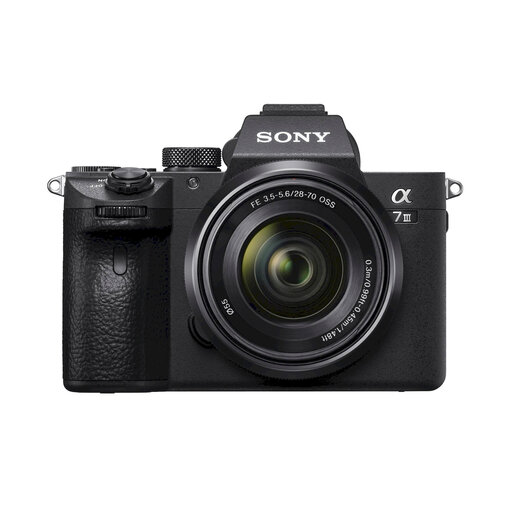 No image available
Consider this full-frame mirrorless kit if you also need wider accessory compositions. Check how closely the supplied 28–70mm zoom can frame your smallest details and plan the artificial lighting separately.
 No image available
Consider this APS-C kit if accessory stills form part of a mixed stills-and-video workflow. Its stated 26-megapixel specification does not establish how large tiny details will appear: check the supplied lens’s magnification for close-ups.
 No image available
This APS-C mirrorless kit may suit general accessory compositions alongside other stills. Confirm the 16–50mm lens’s maximum magnification before relying on it for frame-filling shots of small fittings or texture.
 No image available
Consider this APS-C mirrorless kit for a setup that also needs wider accessory images. Check the included lens’s close-up magnification and the camera-and-lens arrangement under your planned lights before choosing it for detailed product shots.
Choose a 1:1 lens if very small stones, clasps or textures need to fill much of the frame. Nikon describes 1:1 as life-size reproduction on the sensor; Nikon, Sony and Fujifilm specify 1:1 for the macro lenses discussed here, whereas Canon specifies 0.5x for its RF 85mm F2 MACRO IS STM.
No: body autofocus and stabilisation specifications do not control the light or reflections on an accessory. Arrange the lights and camera support repeatably, and check that the chosen lens leaves enough room for them.
Check permission and the agreed usage terms before publishing them. UK Intellectual Property Office guidance says photographs are generally protected by copyright and that copying or sharing someone else’s images online will usually require the copyright owner’s permission.
Check the appropriate collection or take-back route for the camera and its accessories rather than assuming they belong in ordinary waste. UK government guidance covers electrical and electronic equipment under the waste electrical and electronic equipment framework; ask your local authority or retailer which route accepts the particular camera, battery and charger.