What matters when choosing?
Start with the smallest detail you need to show, then decide how often you film demonstrations or work handheld. Those needs determine which lens and camera functions deserve attention.
| Concern |
What to check |
Who this matters to |
| Small details |
Compare the intended lens’s maximum magnification and close-focus distance; 1:2 and 1:1 are different ratios. |
If tiny jewellery details or stitches need to fill my photographs, I need a lens that gets close enough without making focus unmanageable. Around 33% of consumers put close-up detail first. |
| Process video |
Check product-focused autofocus behaviour and the microphone and headphone connections needed for your recording setup. |
When I show a tool to camera, I want viewers to follow the demonstration and hear the explanation. For around 25% of consumers, process video is the primary need. |
| Handheld workshop work |
Check whether stabilisation is in the body or lens, and read the conditions behind any stated rating. |
If I move between a maker and their work without setting up a tripod, camera movement matters to my shots. Handheld coverage comes first for around 25% of consumers. |
| First camera kit |
Confirm the included lens, its close-focus capability and the video mode you intend to use. |
If I mostly need portraits, workshop views and occasional clips, I want to know what the supplied lens can cover before adding another. Around 17% of consumers prioritise a straightforward mixed-use kit. |
Joybuy camera choices
These interchangeable-lens camera choices cover general maker photographs, handheld workshop work and stills-and-video setups. Check the supplied lens or body-only configuration against the size of the craft details you need to capture.
 No image available
Sony A6700 APS-C Camera with 16–50mm Lens
Consider this kit for handheld workshop photographs and wider views of a maker at work.
The supplied lens is a 16–50mm zoom. Sony specifies five-axis in-body stabilisation for the Alpha 6700 under stated test conditions; it cannot stop subject movement.
If small details must fill the frame, check the supplied lens’s magnification and close-focus distance.
View on Joybuy
 No image available
Sony Alpha 7 III Full-Frame Camera with 28–70mm Zoom
Consider the supplied zoom for maker portraits and wider workshop framing.
This is a full-frame camera kit with a 28–70mm lens. Check that lens’s magnification and close-focus distance before relying on it for small craft details.
View on Joybuy
 No image available
Sony A6400 APS-C Camera with 16–50mm Power Zoom
Consider this kit for general workshop images and clips when self-framing is also useful.
The supplied lens is a 16–50mm power zoom. The camera description specifies a 180° tiltable touchscreen and an external microphone jack; stabilisation is specified for the supplied lens, not the camera body.
Check the lens’s close-focus specifications if fine product details are essential.
View on Joybuy
 No image available
Sony Alpha ZV-E10 II K with 16–50mm f/3.5–5.6 Power Zoom
Consider this stills-and-video kit if filming a maker’s process is part of your work.
The camera is APS-C, and its listed features include 4K60p recording, Product Showcase Mode and an internal directional microphone. If focus must shift between presenter and object, check the mode’s exact behaviour for your setup.
For small products, also check the supplied lens’s magnification and close-focus distance. The stated handheld video stabilisation should not be assumed to provide in-body stabilisation for still photographs.
View on Joybuy
 No image available
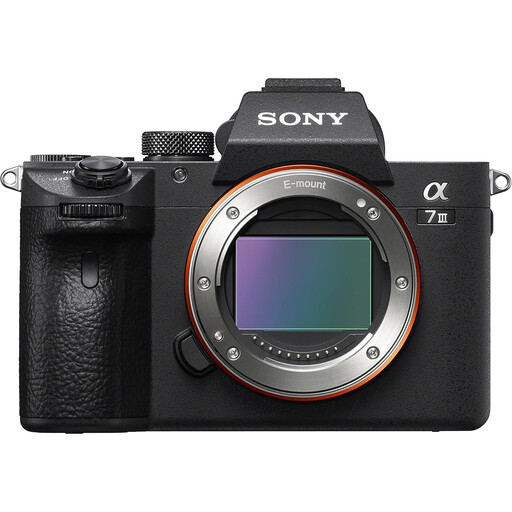
Sony Alpha 7 III Full-Frame Camera Body Only
Consider this listing if you intend to choose a compatible lens for your maker photography.
The title identifies a full-frame camera body only, while the accompanying description also mentions a lens. Confirm the exact box contents before ordering, then check your intended lens’s close-up capability if small details matter.
View on Joybuy
Common questions
Do I need a macro lens for handmade products?
Not for every product: wider workshop scenes, portraits and larger pieces may suit a general-purpose lens. When small details must fill the frame, check the exact lens’s magnification rather than its name alone. Nikon describes 1:1 as life-size reproduction on the sensor; Canon specifies 1:2 for its RF 35mm F1.8 Macro.
Will stabilisation fix blurry craft close-ups?
No: stabilisation addresses camera movement, not a moving subject or misplaced focus. Nikon notes the narrow plane of focus at high magnification, while Sony’s Alpha 6700 stabilisation rating applies under specified CIPA conditions. For controlled detail photographs, consider stable support and careful focus placement.
What if a camera bought from a UK trader is faulty or misdescribed?
GOV.UK says a trader must offer a full refund for goods that are faulty, not as described or do not do what they are supposed to. Keep your order details and evidence of the problem when contacting the seller. That remedy is distinct from returning an item simply because you have changed your mind.
How should I dispose of an old camera or rechargeable battery?
Use an appropriate electrical or battery recycling route rather than household rubbish. GOV.UK identifies the crossed-out wheelie-bin symbol used on electrical products and batteries; check the collection arrangements for each item before taking it for recycling.


