Detail-focused tool sellers
If engravings, cutting edges or small components matter to a listing, choose the lens around the smallest feature you need to show. Check its magnification and leave room to position the tool and lights.


Choose the lens and camera together, starting with the smallest tool detail your shop photos must show. A zoom may cover whole-tool and workspace shots, while engravings or tiny components may call for a compatible macro lens; for repeatable listings, also plan for stable support and a practical way to frame and transfer images. If you film demonstrations, check video and audio features separately from close-up still-photo capability.
If engravings, cutting edges or small components matter to a listing, choose the lens around the smallest feature you need to show. Check its magnification and leave room to position the tool and lights.
When photographing many tools or variants, consistent framing and a stable camera position may matter more to your workflow than maximum magnification on every shot.
If you also record tools in use, consider how the camera focuses when an item moves towards it and whether its video and audio connections suit your recording setup.
Decide how small a feature must appear in the final listing image, then check whether the lens, camera position and transfer workflow suit the volume of photos you make.
| Concern | What to check | Who this matters to |
|---|---|---|
| Close-up detail | Check the compatible lens’s maximum magnification and working distance against the smallest feature you photograph. | If an engraving or fastener needs to fill the listing frame, I put close-up detail ahead of general-purpose framing; around 27% of consumers put that need first. |
| Repeatable catalogue shots | Check screen positioning and how you will support the camera; test focus and aperture on a representative tool. | When I photograph several tool variants, I need consistent framing and sharpness from one image to the next. Around 33% of consumers make that their primary concern. |
| Transfer and setup | Confirm the camera’s transfer method and the charging accessories supplied with the exact package. | If I update shop listings frequently, moving images into my editing workflow without disrupting a shoot matters most; roughly 27% of consumers prioritise that workflow. |
| Demonstration video | Check the required video mode, focus behaviour when presenting a tool and any microphone connection you need. | For tool-use clips alongside still listings, I need the camera to handle a moving item and usable audio. About 13% of consumers put demonstrations first. |
The lens changes how large a small tool detail can appear. Canon UK specifies up to 0.5x magnification for the RF 35mm F1.8 MACRO IS STM, while Nikon UK and Sony UK specify 1:1 for the macro lenses discussed here.
Start with the smallest feature you must show, then check the exact lens mount, magnification and working distance before choosing a kit.
Depending on the package, a suitable close-up lens, support, lighting or memory card may need to be obtained separately.
At close range, a tool’s edge and its engraving may not both appear sharp in a single frame. Canon UK advises stable support for still-life macro photographs.
Test the aperture and focus position on a representative tool, then inspect the image at the crop size you intend to use in the shop.
Sony UK lists a 2.4 cm lens-front working distance for the E 30mm F3.5 Macro at its closest setting. That leaves little space between lens and subject when arranging light around polished metal.
Check the physical positions of the lens, tool, support and lights if you regularly need maximum close-up magnification.
A camera package may differ from the setup you need if the lens or accessories are not what you expected.
Before ordering, confirm the exact included items and keep the listing details and retailer’s cancellation instructions.
The EOS R50 and RF 35mm F1.8 MACRO IS STM are one camera-and-lens combination to consider for whole-tool photographs and moderate close-ups.
The Z50II can be paired with the NIKKOR Z MC 50mm f/2.8 when small tool details are central to the photographs.
The α6400 offers manual-focus aids for static close-ups, while Sony’s E 30mm F3.5 Macro is a separate lens option for 1:1 detail images.
These mirrorless camera listings offer zoom-lens kits and a separately listed body for whole-tool photographs, catalogue work or occasional demonstrations. Check the supplied lens and its close-up capability before relying on any kit for tiny engravings or components.
 No image available
Consider this zoom kit if you make still listings alongside demonstration clips; its title specifies 26 MP stills and 4K60p video.
For small engravings, confirm the supplied lens’s close-up magnification. Check the memory card required for your intended recording settings.
 No image available
Consider this kit for whole-tool shots where you want to adjust framing with the included 28–70mm zoom.
Check that lens’s magnification and close-focus capability if small details must fill the frame; use stable support for repeatable close-up compositions.
 No image available
This zoom kit is an option for photographing tools from several angles and recording demonstrations.
Confirm the supplied lens’s close-up capability for fine details. If you need a particular 4K frame rate or format, check the exact recording mode before ordering.
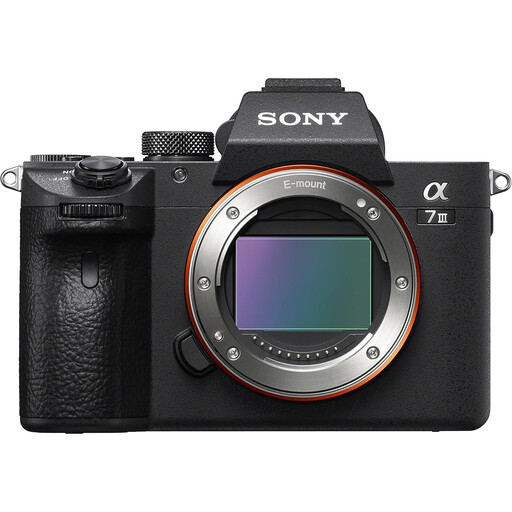 No image available
Consider this listing if you intend to choose a compatible lens separately for your tool photographs.
The title calls it body-only, but the package description mentions a 28–70mm lens. Confirm the actual contents before ordering, then check the lens you will use for close-up work.
 No image available
For static tool details, Sony UK specifies focus magnification and focus peaking on the α6400, which may help when setting focus carefully.
Check whether the supplied 16–50mm lens frames your smallest details closely enough, and confirm the transfer method your listing workflow requires.
Not necessarily: choose magnification by the smallest detail you need to show at your intended listing crop. Canon UK specifies up to 0.5x for the RF 35mm F1.8 MACRO IS STM; Nikon UK and Sony UK specify 1:1 for the macro lenses discussed here. Check how much of the frame an engraving or component must occupy rather than relying on the word “macro”.
At close range, the sharp area can be narrow, so an edge and an engraving at different distances may not both appear in focus. Canon UK advises stable support for still-life macro work; test aperture and focus position, then inspect the result at the crop size your shop will use.
Confirm the exact lens, charger and other included items against the setup you intend to use, and keep the listing and order information. For an eligible UK distance-sale cancellation, the Consumer Contracts Regulations 2013, regulation 30, sets a period ending 14 days after the day the goods come into the consumer’s physical possession; applicable exceptions and the process for exercising cancellation still matter. A change-of-mind cancellation is separate from remedies for goods that are faulty or misdescribed.