Choose the camera system around the smallest tool detail you need to show and how consistently you can light and support the camera; a dark background alone does not make a full-frame body necessary. For close-ups, check the compatible lens’s magnification and any focus-bracketing workflow. For repeated tabletop images, controlled lighting and a tripod matter alongside the body, while broader photo and video use may justify a different system choice.
Who needs which setup?
Close-up detail sellers
If markings, joints, cutting edges or surface texture must be visible, the lens’s close-focus capability and the depth covered by each image deserve particular attention. Canon’s focus-stacking guidance and the macro specifications published by Canon, Nikon and Sony illustrate the separate lens and shooting choices involved.
Repeatable catalogue photographers
For a series of listings or stock images, a fixed tabletop arrangement helps keep framing and the dark background consistent. Canon recommends a tripod for consistent product images, while Adobe emphasises controlled lighting and a clean background.
Hybrid craft-content creators
If the same camera will also handle general photographs or video, consider the wider body-and-lens system without assuming that those uses solve close-up framing. Check the lens you would use for the smallest tools separately.
What matters when choosing?
For craft tools on a dark background, decide how close the lens must frame your smallest feature, then plan the lighting and camera support before choosing between an APS-C or full-frame body.
| Concern |
What to check |
Who this matters to |
| Small details and depth |
Check the compatible lens’s maximum magnification and whether the body offers focus bracketing for stationary subjects. |
If tiny markings and edges need to remain clear across the tool, I would put close-up framing and depth coverage first; around 42% of consumers have this as their primary need. |
| Repeatable images |
Check manual exposure and whether the screen works at your planned camera height; allow for stable support and controllable lighting. |
When making a series of listings, I need the framing, exposure and background to stay consistent. Roughly 33% of consumers primarily care about that repeatable workflow. |
| Use beyond the tabletop |
Compare body-and-lens options for your other photography or video needs, while checking a route to the close-up lens you require. |
I want one system for tool images as well as other stills or video, without losing the option of closer shots; about 25% of consumers put that flexibility first. |
Buying mistakes to avoid
-
Choosing resolution before checking close focus
More sensor pixels do not give a standard lens the magnification needed to frame a tiny marking. Canon, Nikon and Sony publish maximum magnifications for their respective dedicated macro lenses, making the lens a separate part of this decision.
Work out the smallest feature and framing you need, then check the lens mount, magnification and working distance before settling on a body.
A dedicated macro lens may need to be bought separately from the camera kit.
-
Relying on the dark backdrop instead of lighting the tool
A dark background does not by itself control reflections, shadows or how clearly the tool separates from it. Adobe’s product-photography guidance favours controlled lighting, and Canon highlights stable framing for arranging a product shot.
Plan a stable camera position and adjustable lighting for the tool and backdrop before choosing extra body features.
-
Expecting focus stacking to fix movement
Focus stacking combines frames taken at different focus distances. Canon recommends sturdy support to keep a close-up series aligned.
Use the technique with a stationary tool, fixed camera and consistent lighting; if those conditions are impractical, adjust the composition and depth of field instead.
Camera brands to consider
Canon
Canon RF is worth considering for an EOS R7 tabletop setup with focus-bracketing options, or for a system built around the RF 100mm F2.8L Macro IS USM lens.
- Canon specifies a 32.5MP APS-C sensor for the EOS R7 and describes its focus-bracketing and in-camera stacking features. Its RF 100mm macro lens is specified at up to 1.4x magnification.
- The macro lens is a separate purchase, and stacking a close-up series still calls for a stationary tool and stable camera.
FUJIFILM
FUJIFILM X is a stills-led APS-C route for buyers considering the X-T5’s resolution and manual exposure controls in a controlled tabletop setup.
- FUJIFILM specifies a 40.2MP APS-C sensor, RAW recording and manual exposure mode for the X-T5.
- Resolution alone does not establish the required close-up framing; check the exact lens, lighting and camera support for your tools.
Sony
Sony E-mount offers a full-frame route for buyers considering the Alpha 7 IV alongside a dedicated FE 90mm F2.8 Macro G OSS lens for close-ups.
- Sony specifies a 33.0MP full-frame sensor for the Alpha 7 IV and 1.0x maximum magnification for the FE 90mm macro lens.
- The macro lens is a separate part of the system; decide whether that magnification matches the size and framing of your subjects.
Nikon
Nikon Z is relevant if you want to select a camera system around the NIKKOR Z MC 105mm f/2.8 VR S macro lens.
- Nikon specifies a 1:1 reproduction ratio and 105mm focal length for this lens.
- Check the camera-to-tool distance and framing available on your tabletop before choosing a 105mm macro setup.
Joybuy cameras for tabletop photography
These Sony APS-C and full-frame camera bodies and kits are options to consider for tabletop tool photographs and wider stills or video use. For small tool details, compare the exact lens and close-up workflow as well as the camera body; the two Alpha 7 III entries also need to be distinguished by their stated bundle contents.
 No image available
Sony Alpha ZV-E10 II K with 16–50 mm power zoom
Consider this APS-C kit if you also want to make video alongside fixed tabletop photographs.
The product title specifies 26 megapixels, a 16–50 mm f/3.5–5.6 lens and 4K60p video. Check the lens’s close-focus capability and the body’s focus-bracketing options if small details must fill the frame or remain sharp through their depth.
View on Joybuy
 No image available
Sony Alpha 7 III with 28–70mm zoom lens
This full-frame kit is an option if the camera will serve broader photography as well as your tabletop setup.
The product title identifies a supplied 28–70mm zoom lens. Before relying on it for tiny markings, check its close-focus specifications, compatible macro options and the focus-bracketing workflow you need.
View on Joybuy
 No image available
Sony A6700 APS-C with 16–50mm lens
Consider this APS-C kit if you want a camera for tool photographs that will also be used outside the tabletop setup.
Its product title specifies a 16–50mm lens. Check whether that lens frames your smallest tool feature closely enough, or which compatible macro lens and focus-bracketing workflow would meet the need.
View on Joybuy
 No image available
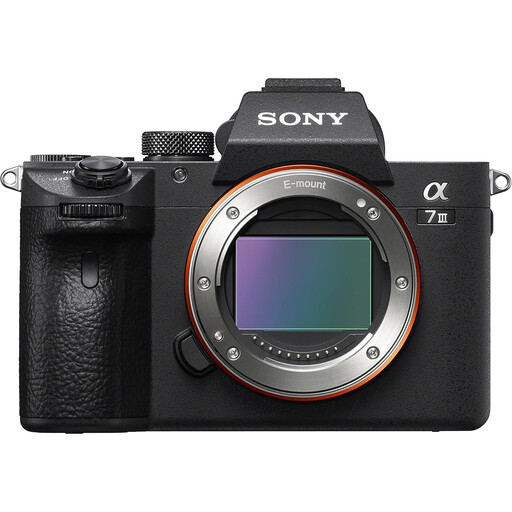
Sony Alpha 7 III full-frame, listed as body only
This entry may suit a setup in which you intend to select the lens separately, but confirm the exact bundle before ordering.
The product title says body only, while its description mentions a 28–70mm lens. Check whether a lens is included, then confirm the close-focus and focus-bracketing capabilities required for your tools.
View on Joybuy
 No image available
Sony A6400 APS-C with 16–50mm power zoom
This kit is an option for tabletop tool images when you also want an interchangeable-lens camera for other subjects.
The product title specifies a 16–50mm power zoom lens. Check its close-focus specifications and the body’s focus-bracketing options before choosing it for small markings or deeper close-ups.
View on Joybuy
Frequently asked questions
Do I need a macro lens to photograph craft tools?
Not for every tool, but a dedicated macro lens is worth checking when small markings or hardware must occupy much of the frame. Nikon specifies 1:1 reproduction for the NIKKOR Z MC 105mm f/2.8 VR S, Sony specifies 1.0x for the FE 90mm F2.8 Macro G OSS, and Canon specifies up to 1.4x for the RF 100mm F2.8L Macro IS USM. Confirm the framing and working distance you need, not just the magnification figure.
Does a dark background mean I should prioritise high-ISO performance?
Not necessarily for stationary tools in a controlled setup. Adobe’s product-photography guidance emphasises good lighting and a clean background; light the tool and manage its separation from the backdrop, then use consistent exposure settings across the series.
How can I keep a series of tool photographs consistent?
Fix the camera position and keep the backdrop and lighting arrangement stable between shots. Canon recommends a tripod to maintain consistent framing and background, leaving you free to adjust the tool’s arrangement and lighting deliberately.
Where can I take an old camera or lens for recycling?
Check your local authority or retailer for a collection or take-back route, and confirm that it accepts the particular camera equipment and batteries you have before visiting.


