Detail-first catalogue sellers
If individual petals, stems and seed heads need to be clear in close photographs, put lens magnification, accurate focus and stable framing ahead of body specifications alone.


Choose the lens and shooting setup alongside the camera body: small petals and seed heads call for a compatible close-focusing lens, while consistent catalogue angles benefit from a fixed support. A body with more recorded pixels can give you more room to crop, but it will not replace suitable magnification, careful focus or stable framing.
If individual petals, stems and seed heads need to be clear in close photographs, put lens magnification, accurate focus and stable framing ahead of body specifications alone.
If you photograph repeated listing angles at a table or in a light tent, a fixed camera position and a screen you can see from that position can make the workflow easier to manage.
If your shop needs still listings alongside short product clips, assess the camera’s video options and framing controls as well as its still-image resolution.
For dried-flower listings, decide which need comes first: filling the frame with fine details, repeating tabletop compositions, making alternative crops and clips, or starting with a general lens before adding a macro lens.
| Concern | What to check | Who this matters to |
|---|---|---|
| Close detail and focus | Check the compatible lens’s maximum magnification and working distance at the flower size you intend to photograph. Fujifilm and Nikon each specify a 1:1 macro-lens option. | If tiny petals or seed heads must occupy much of the image, I need to control the focus plane without relying on a heavy crop; around 36% of consumers put close detail first. |
| Repeatable tabletop shots | Check whether you can compose from a fixed support and see the screen at your usual camera angle. Canon recommends a tripod or other support for still-life macro work. | When photographing a batch of arrangements, I want the angle and framing to stay consistent; roughly 29% of consumers prioritise that repeatable workflow. |
| Cropping and mixed content | Compare stated resolution with the video and screen features you will use. Sony specifies 33.0MP for the α7C II; that figure alone does not establish close-focus capability. | If one session must produce listing images, alternative crops and short clips, I need enough flexibility for each format; around 21% of consumers put this combined need first. |
| Staged lens upgrade | Check the mount and the magnification of a compatible future macro lens. Nikon describes the Z50II’s 16–50mm kit lens as a general zoom and specifies 1:1 magnification for its separate Z MC 50mm f/2.8. | If I am starting with wider product shots, I may prefer to add a specialist lens when close-detail work becomes essential; about 14% of consumers prioritise this staged route. |
A camera body does not determine how large a small flower detail appears in the frame; the Fujifilm XF30mmF2.8 R LM WR Macro and Nikon Z MC 50mm f/2.8 are separate 1:1 lens options.
Check the lens mount, magnification and working distance for the exact camera-and-lens combination before committing to the system.
Nikon describes its Z50II 16–50mm kit lens as a general zoom, while its Z MC 50mm f/2.8 is specified for life-size 1:1 photography. A kit name alone cannot establish the close-up framing you need.
Compare the supplied lens’s magnification with the size of the details you want to show.
At close focusing distances, small movements can change what is sharp. Canon recommends a tripod or other support for still-life macro photographs.
Keep the camera supported for repeated catalogue angles, then assess stabilisation separately for handheld supplementary shots.
A tripod or other fixed support may need to be obtained separately.
Recorded resolution affects how much image data is available for cropping, but it cannot correct missed focus, movement or a lens that does not frame a small subject closely enough.
Work out your close-up lens and support needs before deciding how much cropping flexibility matters to your listings.
An X-mount option for sellers considering an APS-C body with a separately purchased 1:1 macro lens.
A Z-mount route for starting with a general zoom and adding a dedicated lens for small details.
An E-mount option to examine when alternative crops and mixed still/video work matter alongside product photographs.
An RF-mount option for sellers considering focus controls for staged close-up photographs.
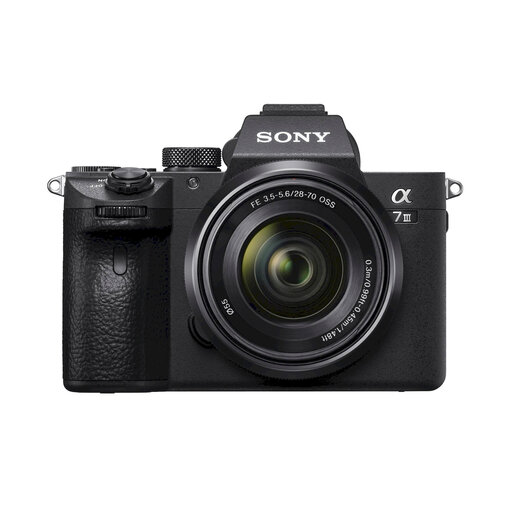
These Sony camera-and-zoom combinations offer starting points for general dried-flower listings and, where relevant, short clips. If individual petals must fill the frame, choose a compatible macro lens by its magnification and working distance rather than relying on the supplied zoom’s name.
 No image available
The supplied zoom provides a starting lens for wider dried-flower arrangements. This is a full-frame camera supplied with a 28–70mm zoom; for small details, check the magnification and working distance of a compatible macro lens.
 No image available
This APS-C camera comes with a 16–50mm lens for starting with general arrangement photographs. If close crops of individual flower parts are central to your listings, check compatible macro-lens magnification and working distance.
 No image available
Consider this APS-C kit if dried-flower stills will sit alongside short product clips. Its stated features include 26-megapixel stills and 4K60p video, with a 16–50 mm f/3.5–5.6 power zoom supplied; check a compatible macro lens separately for frame-filling fine detail.
 No image available
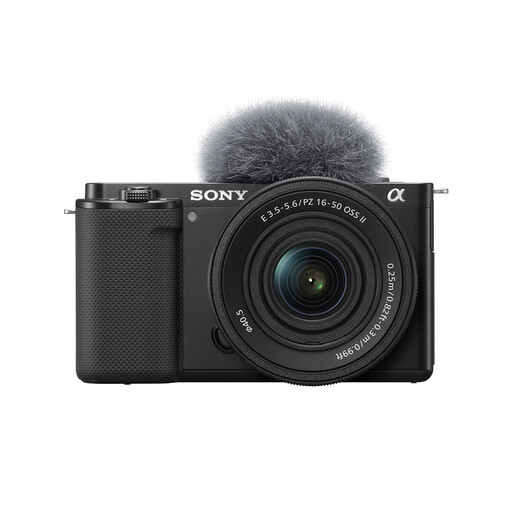
The included power zoom offers a starting lens for general tabletop arrangements. This is an APS-C camera supplied with a 16–50mm power zoom; check a compatible macro lens’s magnification if your listings also need very small flower details.
 No image available
This interchangeable-lens camera includes a 16–50mm power zoom for general flower arrangements. Before choosing it for close photographs of petals or texture, check the magnification and working distance of a compatible macro lens.
Not for every whole-bouquet photograph, but a dedicated macro lens is worth considering when small petals or seed heads must fill much of the frame. Fujifilm specifies 1:1 magnification for its XF30mmF2.8 R LM WR Macro, Nikon specifies 1:1 for its Z MC 50mm f/2.8, and Canon lists its RF 85mm F2 Macro IS STM at 0.5x; check the framing each provides for your subjects.
Keep the camera on a tripod or other fixed support for static arrangements, then check framing and focus with test shots before photographing a batch. Canon’s macro guidance recommends support for still-life work because close-up shooting has a narrow depth of field and movement can blur the image.
For a UK purchase made as a consumer and covered by the Consumer Contracts Regulations 2013, the normal cancellation period ends 14 days after you or your nominated recipient receives the goods; applicable exceptions and conditions still matter. If purchasing for your shop as a business, do not assume consumer cancellation rules apply: check your purchase terms. Change-of-mind cancellation is separate from remedies for faulty, damaged or misdescribed goods.
Use an appropriate electrical-waste or battery collection route rather than household rubbish. GOV.UK advises ideally taping lithium-battery terminals to reduce fire risk and states that a retailer selling a replacement electrical item must accept an old like-for-like item free of charge, including for online purchases.