What matters when buying
Start with the smallest detail you want to fill the frame, then decide whether you will usually shoot handheld or can keep the camera and flowers still on a support. That choice helps put stabilisation, close-up depth of field and resolution in context.
| Concern |
What to check |
Who this matters to |
| Handheld sharpness |
Check body and lens stabilisation separately, and consider whether the flowers will remain still during the exposure. |
If I move between arrangements without setting up a tripod, I want fine stems to stay sharp as the light changes; around 29% of consumers put handheld sharpness first. |
| Close-up depth of field |
Check the lens’s close-focus capability and the camera’s focus-bracketing or stacking options; plan for stable support. |
When petals overlap, I need several depths to look sharp rather than only the nearest edge; roughly 29% of consumers prioritise close-up depth of field. |
| Detail and cropping |
Compare the exact body’s effective megapixels and whether the intended lens can frame your smallest detail closely enough. |
For crops of seed heads or prints, I want detail left after reframing; about 24% of consumers put cropping and fine texture first. |
| A lighter full-frame setup |
Compare the body and lens together for carrying weight, close focusing and stabilisation; do not assume full frame means in-body stabilisation. |
If I carry the camera between setups, I want a lighter full-frame starting point while accepting that I may need lens stabilisation or a tripod; approximately 18% of consumers make that their primary concern. |
Joybuy camera choices
These Sony interchangeable-lens kits offer a starting point for framing dried-flower arrangements. Before choosing either one for small petals or seed heads, check how closely its supplied lens can focus and whether its stabilisation setup suits the way you shoot.
 No image available
Sony A6400 APS-C Camera with 16–50mm Power Zoom Lens
Consider this interchangeable-lens kit if you want to frame still arrangements with its supplied zoom. Check the lens’s minimum focus distance and maximum magnification for small flower details, and confirm the body and lens stabilisation options for handheld shots.
View on Joybuy
 No image available
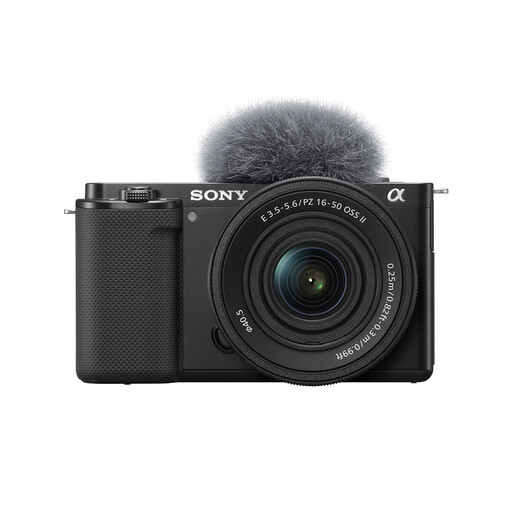
Sony ZV-E10K Interchangeable-Lens Camera with 16–50mm Power Zoom Lens
Consider this zoom-lens kit for composing dried-flower arrangements from different positions. Confirm that the supplied lens focuses close enough for your intended detail and check the body and lens stabilisation options before relying on handheld window-light exposures.
View on Joybuy
Frequently asked questions
Do I need full frame for dried-flower photographs by a window?
No. A full-frame body is one option, but close focusing and the depth of field you need are separate decisions. For layered close-ups, Panasonic describes focus stacking on current LUMIX G models as a way to extend or control depth of field when the subject stays still.
Will in-body stabilisation let me shoot handheld in low window light?
It can reduce blur caused by camera movement while the arrangement remains still, but it cannot freeze a flower moving in a draught. Nikon rates the Z5II at up to 7.5 stops and Sony rates the α7C II at 7.0 steps under their stated conditions; neither rating guarantees a particular handheld result.
Should I buy a macro lens with the camera?
Consider a macro or other close-focusing lens if small petals or seed heads need to fill much of the frame. Before ordering, compare the exact lens’s minimum focus distance and maximum magnification with the detail you want to photograph; a camera body’s resolution does not answer that question.
Can I return a camera bought online in the UK if I change my mind?
For eligible distance purchases, GOV.UK says you generally have 14 days after receiving the item to tell the seller you want to cancel, followed by another 14 days to return it. Check how the seller asks you to make the cancellation and distinguish that process from a claim about faulty goods.
What if a new camera is faulty?
A fault is not merely a change-of-mind return. Coventry City Council Trading Standards explains that a refund is available in most cases for a faulty item during the initial 30-day period, with other remedies relevant later; keep your proof of purchase and a clear record of the problem when contacting the seller.


