What matters when choosing?
Decide how small a detail must fill the frame, then check the compatible lens and the space needed to use it at your bench.
| Concern |
What to check |
Who this matters to |
| Stitch-level detail |
Check the exact compatible lens and its maximum magnification. A stated 1:1 macro lens gives greater subject magnification than a 1:2 lens. |
If tiny borders and individual stitches need to occupy much of my image, magnification is my priority. Around 42% of consumers put close-up detail first. |
| Shared-bench setup |
Check lens-front working distance and where lights can sit; consider an adjustable screen for overhead framing. |
When I share a table, I need to photograph patches without the lens blocking my light or the setup taking over the bench. About 33% of consumers prioritise that working arrangement. |
| System versatility |
Identify the supplied lens, then check its stated close-focus capability and which compatible lens you would use for finer detail. |
I photograph complete patches and wider workshop scenes, so I want to know what the supplied lens can do before adding another. Roughly 25% of consumers put this flexibility first. |
Joybuy camera options
These Sony camera-and-zoom options suit buyers considering an E-mount starting point for patch photographs and wider workshop scenes. For regular stitch-level close-ups, check the supplied lens's magnification and the exact compatible macro lens you would use.
 No image available
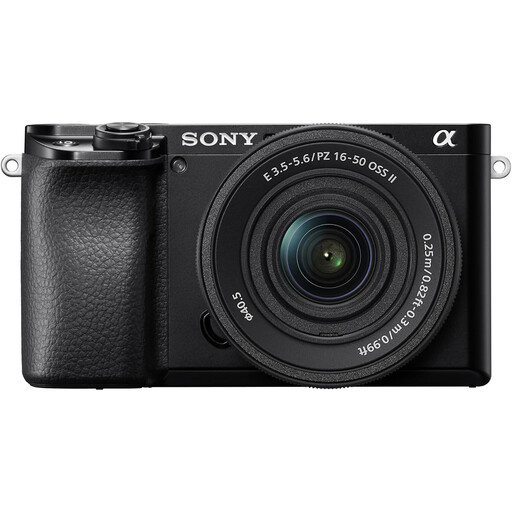
Sony A6400 with 16–50 mm Power Zoom Lens
Consider this kit if you want a tilting screen for framing patches at a shared bench and plan to assess lenses separately for finer detail.
The listing specifies a 24.2 MP camera, 425 phase-detection autofocus points, a 180° tiltable touchscreen and a supplied 16–50 mm power zoom.
Check the supplied zoom's maximum magnification before relying on it for stitch close-ups. Sony's 1:1 E 30mm F3.5 Macro is a separate lens route; its short working distance also needs room for lighting.
View on Joybuy
 No image available
Sony A6100 APS-C with Zoom Lens
Consider this E-mount camera for patch and general workshop photographs if you can confirm which lens the bundle contains.
The listing specifies a 24.2 MP APS-C sensor, 425 phase-detection and 425 contrast-detection autofocus points, and a 180° tiltable touchscreen.
Confirm the included zoom model and its close-focus magnification before depending on it for stitch detail: the stated lens ranges differ between the listing title and description. If you choose a separate macro lens, check its compatibility and lighting clearance.
View on Joybuy
Common questions
Do embroidered patches need a 1:1 macro lens?
A 1:1 macro lens is worth considering when small motifs or individual stitches regularly need to fill much of the frame; a 1:2 lens may be enough for complete patches and larger details. Nikon, Sony and Fujifilm specify 1:1 capability for the macro lenses discussed here, while Canon specifies up to 1:2 for the RF 35mm F1.8 Macro.
How can I photograph patches at a shared workbench?
Keep the patch and camera positions repeatable with stable support, and allow room beside the lens for lights. Check working distance for the lens you intend to use at close focus; an adjustable screen can make overhead framing easier when the camera is awkward to view directly.
What equipment should I check besides the camera body?
Check the exact included lens, its close-focus magnification and whether a compatible macro lens is needed for your smallest details. Also consider how you will support and light the patch: an interchangeable-lens camera does not make its supplied zoom a 1:1 macro lens.
Can I publish patch photos that show other workshop users?
If people are identifiable, assess the intended use before publishing rather than assuming the photograph is automatically permitted or that consent is always required. Keep incidental people out of frame where practical and check the workshop's policy. The UK Information Commissioner's Office says public posting can go beyond personal use and that using people's information requires a lawful basis.


