Choose the camera and a compatible true macro lens together, rather than choosing the body by megapixels alone. For repeatable stamp photographs in a shared workshop, allow room for a stable overhead support, controlled lighting and a way to trigger the camera without disturbing it. A compact macro lens may leave little space around the stamp for lights; a larger lens places different demands on support and storage.
Who is this setup for?
Collectors recording fine detail
If perforations, printing detail or condition indicators must be visible, check the lens’s stated magnification and its compatibility with the body. The body’s megapixel figure alone cannot tell you how closely the lens will focus.
People sharing a workshop bench
If light or activity around the bench changes between sessions, a mounted camera and repeatable lighting arrangement matter. Remote triggering is worth checking when touching the camera could disturb the framing.
Collectors preparing images to share
A clear photograph and permission to publish it are separate questions. Before reusing third-party material online, check its rights and any applicable collection terms; the UK Intellectual Property Office advises that permission is usually needed for restricted acts involving protected images.
What matters when choosing?
Start with the detail the stamp photograph must show, then check whether the complete camera, lens, support and lighting arrangement will fit the shared bench.
| Concern | What to check | Who this matters to |
|---|
| Close detail |
Check the exact lens model, mount and maximum magnification. Nikon and Sony specify 1:1 capture for their cited macro lenses; Canon specifies 1.4x for the RF 100mm F2.8L Macro IS USM. |
If I need to record tiny printing or perforation details, I want the lens to bring them into the frame without relying on a body specification alone. Around 31% of consumers put close detail first. |
| Stable, repeatable framing |
Check the support’s fit on the bench and the chosen camera’s exact remote-triggering options. Canon says EOS Utility supports remote control on compatible EOS cameras. |
When several people use the bench, I need to frame successive stamps without repeatedly moving the camera. For around 25% of consumers, repeatability is the primary concern. |
| Glare and colour |
Test adjustable, diffused lighting with reflective stamps. The New Zealand Maritime Museum describes side-mounted softboxes for reducing glare in an archive-copy setup. |
If coatings or mounts catch the room light, I need images whose detail remains visible across a collection. Glare and colour control come first for around 25% of consumers. |
| Space and storage |
Compare the footprint of the lens, overhead support and lights, not just the body. Sony states a 2.4 cm working distance at close focus for its E 30mm F3.5 Macro. |
If the equipment has to be put away after each session, I need a kit I can accommodate without losing the space required to light the stamp. Around 19% of consumers prioritise a manageable setup. |
Buying pitfalls
-
Assuming a camera kit includes the close-up capability you need
A body specification does not establish the bundled lens’s maximum magnification. The Nikon and Sony lenses discussed here are specifically rated for 1:1 capture.
Check the exact bundled lens and its magnification, then confirm the mount and working distance of any macro lens you plan to use.
A separate compatible macro lens may be needed for the intended detail photographs.
-
Expecting stabilisation to fix a moving work surface
Camera or lens stabilisation does not stop the stand, camera and stamp moving with a vibrating bench. The New Zealand Maritime Museum describes using flash where building vibration made slower exposures problematic.
Test the support and lighting in the actual workspace. Consider fixed overhead mounting and remote triggering when consistent framing matters.
A suitable support and a steadier bench position take space that must be planned for.
-
Relying on uncontrolled room lighting
Reflections from glossy stamps or mounts can obscure detail and make successive images harder to compare. The New Zealand Maritime Museum describes side lighting and dark surroundings as part of its glare-control arrangement.
Try the proposed lighting with the most reflective items you expect to photograph before settling on a permanent bench layout.
Diffusion and backdrop materials may also need room in the shared workspace.
-
Assuming a photograph is automatically cleared for online reuse
Taking a photograph does not by itself settle rights in material reproduced or obtained from someone else. UK Intellectual Property Office guidance says protected images generally require permission for restricted acts such as copying or sharing online.
For third-party material, check the rights owner, any licence and relevant collection terms before publication; seek legal advice for a disputed use.
Relevant brands to consider
Nikon
The Nikon Z50II and Z-mount NIKKOR Z MC 50mm f/2.8 offer a body-and-lens route for stamp detail; Nikon specifies 1:1 magnification for the lens.
- Nikon lists USB-C and a remote-release connector for the Z50II, features worth assessing for a fixed tabletop workflow.
- The Z50II’s stated 20.9 million effective pixels do not replace a decision about the capture area, macro lens and support you need.
Sony
Sony’s APS-C E-mount route includes the E 30mm F3.5 Macro, which Sony specifies for 1:1 magnification.
- Sony lists the E 30mm F3.5 Macro at 138 g, relevant when the setup must be moved or stored.
- Its stated 2.4 cm working distance at close focus leaves limited room to position lights around a reflective stamp.
Canon
The EOS R50 and RF 100mm F2.8L Macro IS USM form an RF-mount route; Canon specifies 1.4x maximum magnification for that lens.
- Canon EOS Utility provides remote control and live preview for supported EOS cameras; confirm the intended camera and computer workflow.
- Canon lists the RF 100mm macro lens at 685 g, so check the overhead support and available storage space.
Joybuy camera kits to consider
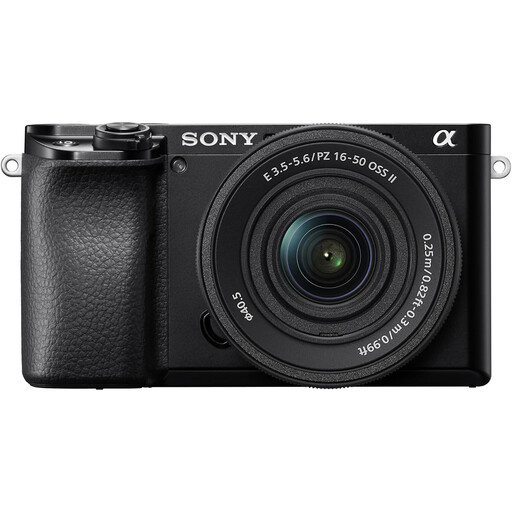
These Sony APS-C camera kits are starting points for an E-mount setup. If fine stamp detail is the aim, check a compatible macro lens separately: the listed zoom-lens bundles should not be treated as 1:1 macro kits.
 No image available
Sony A6400 with 16–50mm power-zoom lens
Consider this APS-C E-mount kit if you plan to choose a separate compatible macro lens for fine stamp detail.
The supplied 16–50mm power zoom is not the Sony E 30mm F3.5 Macro. Confirm the intended remote-triggering method and whether the support and lights you need are included.
View on Joybuy
 No image available
Sony Alpha ZV-E10 II K with 16–50 mm power-zoom lens
This APS-C E-mount kit is an option if you will check the exact lens bundle and add a compatible macro lens where fine stamp detail is required.
Its listed zoom is not a confirmed 1:1 macro lens. Check remote-control compatibility and the space needed for a stand and controlled lights.
View on Joybuy
 No image available
Sony A6100 with 16–55mm zoom lens
Consider this APS-C E-mount kit if you intend to verify a separate macro-lens choice for close stamp records.
The named 16–55mm zoom is not a confirmed 1:1 macro lens. Confirm the exact bundle, your intended triggering workflow and any support or lighting you require.
View on Joybuy
Common questions
Do I need to choose a camera by megapixels for stamp photography?
No: check the complete camera-and-lens setup against the detail you need to record. Nikon and Sony specify 1:1 magnification for the macro lenses discussed here; a body’s pixel count cannot establish the magnification of a bundled zoom.
Can a kit zoom replace a macro lens for photographing stamps?
A kit zoom can be used for an overview, but do not assume it will frame fine stamp details as closely as a dedicated macro lens. Check the exact zoom’s maximum magnification against the image you need before choosing whether to add another lens.
How can I limit blur and glare at a shared workshop bench?
Use a stable overhead support, test controlled side lighting and check how to trigger your chosen camera without repeatedly touching it. The New Zealand Maritime Museum describes side softboxes for reducing glare and the use of flash where building vibration made slower exposures problematic; test the arrangement with your own bench and reflective stamps.
Can I publish photographs of stamps online in the UK?
Do not assume that taking a photograph automatically clears every proposed use. UK Intellectual Property Office guidance says protected images generally require permission for restricted acts such as copying or sharing online; check the rights in the particular material, its source and any licence or collection terms before reusing third-party content.


