Choose the camera system around the lens and the space you can use, rather than body resolution alone. For nib and engraving photographs, check close-focus capability and plan for stable support and controlled lighting; if you also film pen demonstrations, a flexible screen and product-focused autofocus may matter more. A compact kit is easier to clear from a shared bench, but its supplied lens still needs checking for the detail you want to show.
Who this is for
Detail-first pen photographers
If nibs, engraving and fine surface texture are your subjects, lens magnification, depth of field and stable support deserve more attention than burst speed. Canon UK describes its RF 35mm F1.8 IS Macro STM as a close-up lens, while its macro guidance recommends support for still-life photographs.
Shared-workshop product makers
If you need to set up and clear a bench between other activities, consider the complete camera-and-lens kit, screen position and how you will move images off the camera. Keep stands and leads out of circulation space; the Health and Safety Executive identifies trailing cables and tools as workshop trip hazards.
Photo-and-demo creators
If you photograph pens and present them to camera, a flexible screen helps you frame demonstrations. Nikon UK says the Z50II’s Product Review Mode shifts focus to an object raised in front of the camera, though that video feature does not establish the close-focus capability of its kit lens.
What to check before buying
For fountain-pen photography, establish the smallest detail you need to frame, then consider lighting and how the entire setup will fit around other workshop users.
| Concern |
What to check |
Who this matters to |
| Close-up detail and focus |
Check the exact lens’s maximum magnification and minimum focusing distance. Allow for stable support when a smaller aperture calls for a longer exposure. |
I want the nib tip and engraving to appear sharp in the same photograph, so lens choice and depth of field come first. Around 36% of consumers put close-up detail first. |
| Reflections and lighting |
Check whether you can position and diffuse lights around the pen, then review highlights from your intended camera position. |
Polished clips and curved barrels can reflect the workshop around them; I need room to adjust the light before taking the shot. Roughly 36% of consumers prioritise reflection and lighting control. |
| Shared-bench setup |
Consider the stored body-and-lens size, support footprint and a cable route that stays clear of walkways. |
I need to photograph pens without leaving a stand or charger in someone else’s way, and pack everything away afterwards. Around 28% of consumers place a low-disruption setup first. |
Buying pitfalls
-
Expecting the body or kit zoom to provide nib-level close-ups
The lens determines how closely you can frame a small detail. Canon UK specifies up to 1:2 magnification for its RF 35mm F1.8 IS Macro STM; that figure applies to the separate lens, not the EOS R50 body or every kit zoom.
Decide which nib or engraving detail must fill the frame, then check the chosen lens’s magnification, minimum focusing distance and body compatibility.
-
Using the widest aperture for every pen photograph
At close range, a sharp nib tip can sit alongside an unsharp engraving or barrel. Opening the aperture further can narrow the area that appears sharp.
Try several apertures with the pen in its intended position. If a smaller aperture requires a longer exposure, add light or use stable support.
-
Leaving a photography setup across a shared workspace
Tripod legs and power leads can obstruct other users. The Health and Safety Executive’s workshop guidance calls out trailing cables and tools as trip hazards.
Choose support that fits the shot, keep leads away from walkways and clear the bench when the session ends.
Relevant brands to consider
Canon
The EOS R50 is an APS-C option for pen stills where a compatible close-up lens is part of the plan.
- Canon UK lists a vari-angle touchscreen for the EOS R50 and identifies the RF 35mm F1.8 IS Macro STM as compatible; the lens reaches up to 1:2 magnification.
- That close-up capability requires the separate lens, listed by Canon at 305 g. Its 1:2 magnification is not life-size 1:1.
Nikon
The Z50II route is relevant if pen photographs will be mixed with on-camera demonstrations.
- Nikon UK lists a vari-angle monitor and Product Review Mode, which shifts focus to an item presented in front of the camera.
- The Z50II kit’s 16–50mm VR zoom should be assessed separately for the magnification and working distance needed for nib photographs.
Panasonic
The LUMIX G100D offers a compact Micro Four Thirds kit to consider when a shared-bench setup and occasional video matter.
- Panasonic UK & Ireland lists a 12–32mm kit lens, Wi-Fi and Bluetooth transfer, and USB-C charging.
- Check whether the supplied lens frames your smallest pen details closely enough; do not treat video stabilisation as a substitute for stable support in close-up stills.
Joybuy camera kits
These Sony mirrorless kits offer different screen and video arrangements for photographing pens or filming demonstrations at a shared bench. Check the supplied lens’s close-focus specifications against the nib and engraving shots you intend to make before choosing a kit.
 No image available
Sony Alpha ZV-E10 II K with 16–50mm f/3.5–5.6 Power Zoom
Consider this APS-C kit if pen demonstrations are part of your shared-workshop use. The product name specifies a 26 MP camera and 4K60p video; check the supplied lens’s magnification and minimum focusing distance for nib close-ups.
View on Joybuy
 No image available
Sony Alpha 7 III with 28–70mm Zoom Lens
Consider this full-frame camera-and-zoom kit if its lens and framing suit your pen photographs. Check the supplied 28–70mm lens’s magnification and minimum focusing distance before relying on it for small nib details.
View on Joybuy
 No image available
Sony A6700 APS-C with 16–50mm Lens
This kit is worth considering when you need to compose pen shots from changing bench angles. Its name identifies an APS-C camera and 16–50mm lens; confirm that lens’s close-focus specifications for the detail you want to frame.
View on Joybuy
 No image available
Sony A6400 APS-C with 16–50mm Power Zoom
Consider the supplied zoom kit if you want a camera arrangement you can pack away after a bench session. Check the 16–50mm lens’s magnification and minimum focusing distance before choosing it for close-up engraving or nib photographs.
View on Joybuy
 No image available
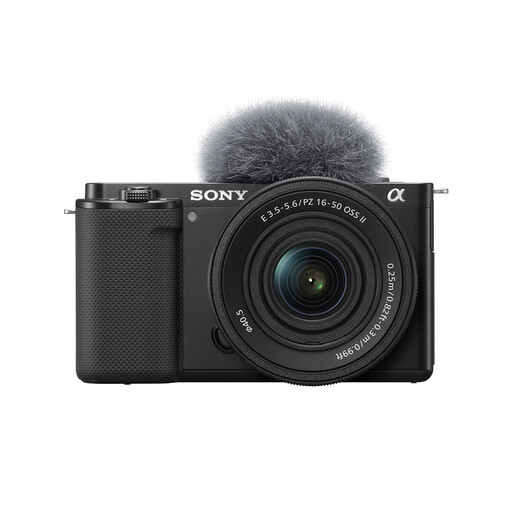
Sony ZV-E10K with 16–50mm Power Zoom
This interchangeable-lens kit is relevant if you alternate between pen stills and video at a shared bench. Its name identifies the included 16–50mm Power Zoom lens; check that lens’s close-focus specifications for your smallest subjects.
View on Joybuy
Common questions
Do I need a macro lens to photograph fountain pens?
Not for every full-pen photograph, but check the lens before assuming a kit will frame tiny details closely enough. Canon UK specifies up to 1:2 magnification for its RF 35mm F1.8 IS Macro STM; compare a prospective lens’s magnification and working distance with the nib or engraving shot you need.
Should I use a tripod for close-up pen photographs?
Stable support is useful for controlled still-life close-ups, particularly when your lighting and aperture call for a longer exposure. Canon UK advises a tripod or other support for still-life macro work; choose one whose legs will not obstruct the shared workspace.
How can I keep a pen-photography setup safe in a shared workshop?
Keep tripod legs, lights and charger leads clear of other users and walkways. The Health and Safety Executive identifies trailing cables as a workshop trip hazard. If the space is a workplace covered by the Workplace (Health, Safety and Welfare) Regulations 1992, Regulation 8 also requires suitable and sufficient workplace lighting; photographic lighting is a separate practical choice for controlling the pen’s appearance.


