Reflection-control product photographer
You photograph clear, coloured or polished paperweights under lamps, LEDs or flash. You need room to adjust the lens, exposure, lights and camera position so the glass reflects what you intend.


Choose the camera system around the detail you need to show and the control you have over the tabletop setup, rather than expecting a camera body to remove reflections. A stationary paperweight may benefit from focus bracketing when a single frame cannot keep enough detail sharp; tiny inclusions call for a lens with suitable magnification. Lighting position, camera angle and a stable support remain important whichever system you choose.
You photograph clear, coloured or polished paperweights under lamps, LEDs or flash. You need room to adjust the lens, exposure, lights and camera position so the glass reflects what you intend.
You need to show inclusions, signatures, bubbles or surface condition. Lens magnification and a way to manage shallow depth of field matter more to you than action-shooting features.
Paperweights are one subject among your wider photography. You want a body and lens system that remains practical away from the tabletop without giving up the close-focus capability your objects require.
Set up the light and camera position first, then decide how small a detail must fill the frame and whether you need more depth of field than one exposure provides. Adobe identifies aperture, shutter speed and lens choice as considerations in reflective photography; Canon describes focus stacking as combining frames focused at different distances.
| Concern | What to check | Who this matters to |
|---|---|---|
| Reflections and exposure | Check that exposure controls and the lens suit your planned light and camera positions; allow space to adjust the setup. | When I photograph polished glass under lamps, I need to place the highlights deliberately rather than rely on automatic settings. Around 46% of consumers would put reflection control first. |
| Close detail and depth | Compare the lens’s maximum magnification, then check the chosen body’s focus-bracketing workflow if one frame lacks sufficient depth. | If a signature or inclusion must fill the frame, I need close focusing without losing the surrounding detail to shallow focus. Close-detail work would be the primary need for around 36% of consumers. |
| Use beyond the tabletop | Check the body’s handling and stabilisation alongside the close-focus lenses available for its mount. | I want the same camera for paperweights and everyday subjects, so a specialised tabletop workflow is not my only priority. Around 18% of consumers would put flexibility first. |
Maximum magnification depends on the exact lens. Nikon explains that 1:1 produces a life-size image on the sensor; Canon specifies 0.5x for its RF 85mm F2 Macro, while Sony specifies 1.0x for its FE 90mm Macro.
Decide which feature must fill the frame and compare the intended lens’s magnification and minimum focusing distance before choosing a bundle.
Showing very small details may require a separate close-focus or macro lens.
Stacking combines frames taken at different focus distances; movement between them can make alignment difficult. Canon recommends a sturdy tripod for the sequence.
Stabilise the paperweight, camera and lights, and take a single frame to assess reflections before starting a sequence.
A tripod and extra time to capture and combine frames may be part of the workflow.
Image stabilisation addresses camera shake, not the objects reflected in glass. Adobe’s reflective-photography guidance instead calls for deliberate choices about exposure and lens use.
Adjust light placement and camera angle to manage reflections; assess stabilisation separately for the situations in which you shoot hand-held.
Canon’s EOS R7 is a route for stationary close-ups when you want an in-camera focus-bracketing and stacking workflow.
A Nikon Z body paired with the NIKKOR Z MC 105mm f/2.8 VR S offers a lens-led approach to fine detail.
The α6700 and a compatible E-mount macro lens provide an APS-C route for buyers who also want a camera for wider use.
The X-S20 is an APS-C body to consider if paperweights are one part of a broader photography brief.
These Sony camera listings offer different body and zoom-kit starting points for photographing paperweights and other subjects. Compare each package with the close-focus lens and depth-of-field workflow your smallest details require.
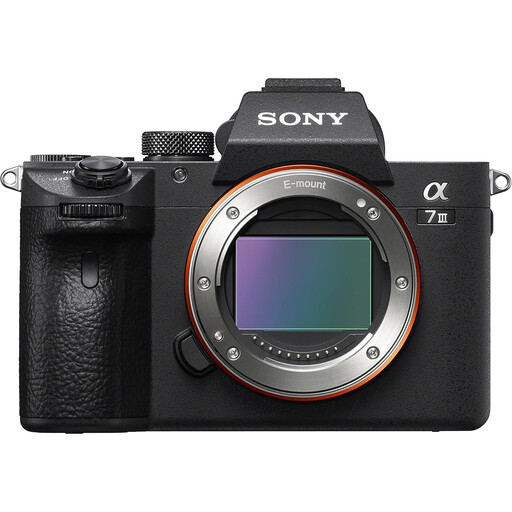 No image available
Consider this listing if you plan to select a lens for your paperweight work. The camera is described with a 24.2MP sensor, manual exposure, RAW capture, five-axis in-body stabilisation and a tilting screen.
Confirm the package contents before ordering: the body-only title conflicts with package information that mentions a zoom lens. Check your intended lens’s magnification and the focus workflow you need.
 No image available
The articulating screen and tripod thread are relevant if you need to position the camera around a fixed tabletop subject. This APS-C kit lists a 26MP camera, a 16–50mm f/3.5–5.6 power zoom lens and RAW support.
Check the zoom’s maximum magnification against the smallest detail you want to show, and confirm the body workflow if you intend to bracket or stack focus.
 No image available
The rotating screen and adjustable ISO and shutter speed make this APS-C kit worth considering for a deliberately arranged tabletop setup. Sony specifies a 26.0MP sensor and five-axis stabilisation for the α6700 body.
The included 16–50mm lens is distinct from Sony’s FE 90mm macro lens. Check the kit lens’s magnification and the camera workflow before relying on this package for tiny details or focus stacks.
 No image available
Consider this kit if you want a zoom lens for broader photography as well as a camera for tabletop subjects. It lists a full-frame 24.2MP camera, a 28–70mm zoom, five-axis in-body stabilisation and a tilting screen.
Check the zoom’s close-focus magnification before choosing it for small inclusions, and confirm the focus workflow if extended depth of field is essential.
No: choose magnification according to the smallest detail you need to show. Nikon explains that 1:1 renders an object life-size on the sensor, while 0.5x renders it at half that size. A small signature or inclusion may make higher magnification more useful than it would be for a larger paperweight shown as a whole.
Close-up photography can leave very little depth of field, even when you want more of the object in focus. For a stationary paperweight, focus stacking can combine frames focused at different distances; Canon recommends a sturdy tripod to help keep the sequence aligned.
No. Stabilisation addresses camera shake, not what the glass reflects. Adjust the lighting and camera position to change reflections, while treating aperture, shutter speed and lens choice as separate exposure and framing decisions.
For UK online orders, GOV.UK says customers have a limited right to cancel even when an item is not faulty. Check the applicable cancellation and return requirements before extended use; a change-of-mind cancellation is distinct from remedies for faulty, damaged or misdescribed goods.