What matters when buying
Decide how small a detail you must photograph, then check whether the lens and viewing position work for your usual card layout. Treat colour under your own window light as something to test with the complete setup.
| Concern |
What to check |
Who this matters to |
| Small craft details |
Compare the exact lens’s maximum magnification and minimum focus distance; confirm that it fits the camera mount. |
If embossing or tiny embellishments need their own close-up images, I want to know how tightly the lens can frame them. Around 36% of consumers place fine-detail capture first. |
| Whole-card photographs |
Check that the chosen lens frames a complete card at your intended camera distance, and whether the body offers RAW files if you plan to edit them. |
For a catalogue of finished cards, I need a setup I can position consistently for each listing; roughly 29% of consumers prioritise that whole-card workflow. |
| Tabletop framing |
Try the screen’s movement with your overhead or angled support; check whether you would use a viewfinder. |
When a card lies near the window, I need to see the composition without moving the camera out of position. Around 21% of consumers put comfortable framing first. |
| Photographs and other content |
Confirm the transfer method and the recording format you need, while checking that the lens still covers your card photographs. |
If I photograph products and also share making clips, moving between those tasks needs to fit my routine; for roughly 14% of consumers, that combined workflow comes first. |
Camera-system brands to consider
These examples show how particular documented bodies and lenses address different parts of the card-photography task. Check the exact model and lens pairing rather than treating a brand name as a specification.
Canon
An EOS R body-and-lens route for makers considering flexible tabletop composition and moderate close-ups.
- Canon UK lists a 24.2MP APS-C sensor and vari-angle touchscreen for the EOS R50.
- Canon UK specifies up to 1:2 magnification for the RF 35mm F1.8 Macro IS STM. It should not be treated as a 1:1 macro lens.
Nikon
A Z-mount route to consider when screen positioning and a documented life-size close-up lens both matter.
- Nikon UK documents a vari-angle touchscreen and a viewfinder that previews setting changes on the Z50II, alongside 1:1 magnification for the NIKKOR Z MC 50mm f/2.8.
- Check that the lens and your intended camera position leave a workable arrangement for lighting and framing the card.
FUJIFILM
An X-mount route for makers considering RAW capture on the body and a separate life-size macro option.
- Fujifilm lists a 26.1MP APS-C sensor and RAW recording for the X-M5, and 1:1 magnification for the XF30mmF2.8 R LM WR Macro.
- Fujifilm specifies a 10cm minimum focus distance for that lens; check how a close camera position affects light falling on raised or reflective details.
Sony
An E-mount route to examine if a tilting screen suits the way you position your camera beside a table.
- Sony UK documents a 180-degree tilting LCD for the α6400A.
- A tilting LCD moves differently from a side-hinged vari-angle screen. Check the exact body revision against your intended overhead support, and assess its lens separately for close-up work.
Joybuy cameras for whole-card photography
These camera-and-zoom choices are relevant when you are starting with whole-card photographs and tabletop framing. For tightly framed craft details, compare the exact lens’s close-focus specifications and any compatible macro lens before deciding on a system.
 No image available
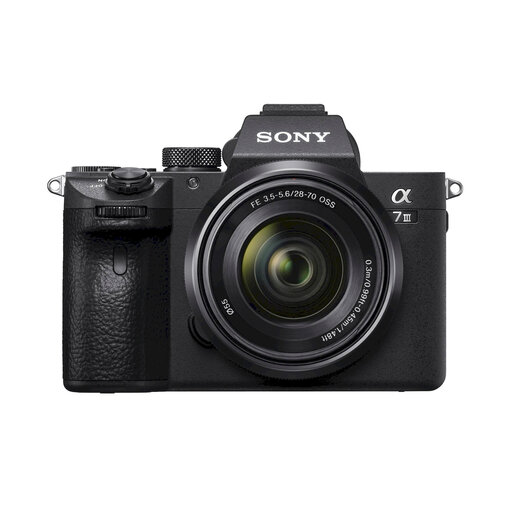
Sony Alpha 7 III full-frame camera with 28–70mm zoom
Consider the named 28–70mm zoom for your whole-card framing distance. If raised details need separate close-ups, check the exact lens’s maximum magnification; also check whether the screen moves into view on your tabletop support.
View on Joybuy
 No image available
Sony A6700 APS-C camera with 16–50mm lens
The named 16–50mm lens is a starting point for checking whole-card framing in your setup. Confirm that the lens is included in the package, and compare its close-focus capability if you also need detailed images of embossing.
View on Joybuy
 No image available
Sony Alpha ZV-E10 II K APS-C camera with 16–50mm f/3.5–5.6 Power Zoom
The named zoom gives you a lens to assess for whole-card photographs, while the exact close-focus capability remains important for small embellishments. Confirm the camera model and interchangeable-lens category before ordering, as the product’s camera-type descriptions differ.
View on Joybuy
 No image available
Sony A6400 APS-C camera with 16–50mm Power Zoom
Check whether the named 16–50mm zoom frames your entire card from the position you can use near the window. Try the screen movement with your intended support, and check lens magnification separately if close-ups are central to your listings.
View on Joybuy
 No image available
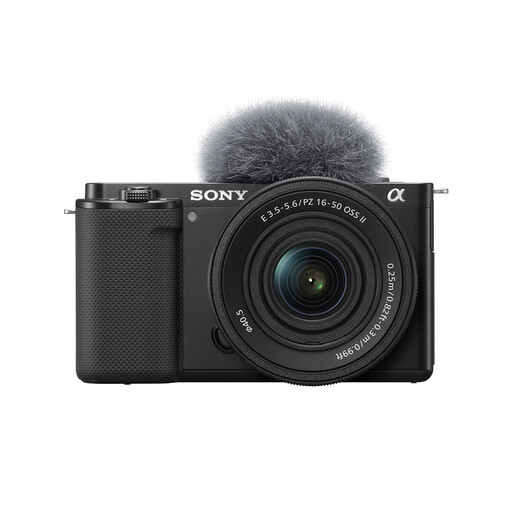
Sony ZV-E10K with 16–50mm Power Zoom
This interchangeable-lens camera is named with a 16–50mm power zoom for assessing whole-card framing. If you plan to crop or edit your photographs, check the body’s capture options; for fine paper details, check the lens’s maximum magnification.
View on Joybuy
Questions about photographing handmade cards
Do I need a true macro lens for handmade-card photographs?
Not for every photograph: a standard lens may cover whole-card views, but frequent images of small textures or embellishments make documented close-up magnification worth prioritising. Nikon UK lists the NIKKOR Z MC 50mm f/2.8 at 1:1, and Fujifilm lists the XF30mmF2.8 R LM WR Macro at 1:1; Canon UK lists the RF 35mm F1.8 Macro IS STM at up to 1:2.
Should I prioritise a vari-angle screen for tabletop shots?
Prioritise screen movement if you often compose with the camera above a flat card or low beside the table. Canon UK documents a vari-angle touchscreen on the EOS R50, while Sony UK documents a 180-degree tilting LCD on the α6400A; check the exact screen mechanism with the support you intend to use.
What if a camera or lens bought in the UK is faulty?
For qualifying faulty goods, the UK Consumer Rights Act 2015 provides a short-term right to reject, with section 22 generally setting a 30-day limit from when the relevant statutory conditions are met. Check the starting conditions for your purchase and keep evidence of the fault; a retailer’s voluntary returns or warranty terms are separate from statutory rights.
Can I use another seller’s card photographs in my listing?
Do not assume you can reuse them without permission. UK Intellectual Property Office guidance says photographs are generally protected by copyright, so use your own images or obtain permission from the rights holder before copying another seller’s photographs.


