Detail-first soap makers
If the cut face, stamped logo or embedded materials need to fill more of the frame, compare lenses by magnification and focusing distance rather than choosing a camera body by its pixel count alone.


Choose the lens and its close-focus capability before settling on a mirrorless body for handmade-soap photography. Maximum magnification and minimum focusing distance matter when you need to show stamps or fine texture; screen movement matters more for overhead framing, while product-focused video features are useful if you also film demonstrations.
If the cut face, stamped logo or embedded materials need to fill more of the frame, compare lenses by magnification and focusing distance rather than choosing a camera body by its pixel count alone.
If you photograph finished bars and also present them to camera, consider how the screen moves and which video features apply when you bring a product towards the lens. Keep the requirements for still photographs separate.
If you arrange bars or gift sets on a worktable, a movable screen can make overhead and low-angle framing easier. Stable support also matters when you want to repeat an arrangement across photographs.
Decide how closely you need to photograph the soap before comparing bodies. Then consider the framing and video features that match the work you actually do.
| Concern | What to check | Who this matters to |
|---|---|---|
| Close-up detail | Compare the exact lens’s maximum magnification and minimum focusing distance; a macro label alone does not tell you how large a detail can appear in the frame. | If a stamp or cut edge needs to be prominent without extensive cropping, lens close-focus capability comes first. Around 33% of consumers put fine soap detail ahead of their other camera-system needs. |
| Repeatable framing | Check how the screen moves for your intended camera position and whether you need separate stable support. | For a series of tabletop or overhead arrangements, I want to frame each shot without working directly behind the camera. That is the leading concern for around 27% of consumers. |
| Product video | Check the exact video modes and whether a product-presentation focus feature works in video rather than stills. | If I demonstrate a bar near the camera as well as photographing it, the filming workflow shapes my choice. Around 20% of consumers place that combined photo-and-video need first. |
| Room to expand | Confirm the lens mount and the availability of a compatible close-focus lens; distinguish that lens from the one supplied in a kit. | I may start with full-bar photographs but want the option to change lenses when I need tighter details. For around 20% of consumers, that stills-first route is the primary concern. |
A camera’s pixel count does not establish how closely its mounted lens can focus. For small stamps and surface details, the lens’s magnification can change how much of the frame the subject occupies.
Compare the exact lens’s maximum magnification and minimum focusing distance with the smallest detail you plan to photograph.
A separate close-focusing lens may be needed beyond a camera-and-zoom kit.
Canon UK specifies up to 0.5x magnification for its RF 35mm F1.8 MACRO IS STM, Nikon UK specifies 0.67x for the NIKKOR Z DX MC 35mm f/1.7, and FUJIFILM specifies 1x for the XF30mmF2.8 R LM WR Macro. The macro name alone does not convey those differences.
Use the magnification figure for the particular lens when deciding whether you need general close-ups or life-size detail.
Nikon describes the Z50II’s Product Review Mode as a video feature that shifts focus to an item presented near the camera. It does not replace lens selection or careful framing for a still photograph.
Prioritise that mode if on-camera demonstrations are part of your work; assess close-focus lenses separately for soap photographs.
The UK Intellectual Property Office says photographs are generally protected by copyright. Having access to an image online does not, by itself, establish permission to use it in a listing.
Use your own photographs or obtain permission or a licence that covers your intended commercial use.
The X-M5 and XF30mmF2.8 R LM WR Macro are worth comparing if close-detail stills are your main output.
The Z50II and NIKKOR Z DX MC 35mm f/1.7 provide a route to close-detail photographs alongside on-camera product demonstrations.
The EOS R50 offers a vari-angle screen for tabletop framing and native support for RF and RF-S lenses.
These Sony camera-and-zoom kits are options for worktable soap photographs. If stamps or fine texture need tight framing, check the exact included lens’s magnification and minimum focusing distance before choosing a kit.
 No image available
Consider this kit for general tabletop soap photographs when you want an interchangeable-lens camera.
The listed camera is APS-C and comes with a 16–50mm lens. Check that lens’s close-focus specifications before relying on it for small stamps or surface texture.
 No image available
Consider this kit if product clips are part of your soap-photography workflow as well as still photographs.
The listed APS-C camera includes a 16-50 mm f/3.5-5.6 power zoom and specifies 4K60p video. Check the included lens’s magnification and focusing distance separately for detailed stills.
 No image available
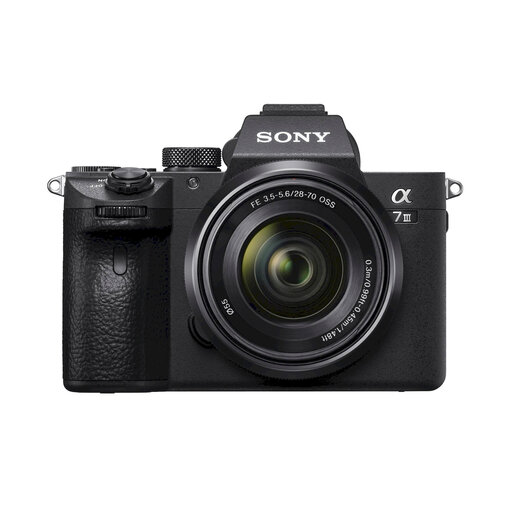
Consider this kit for full-bar and arranged soap photographs if you are choosing a full-frame system.
It pairs a full-frame camera with a 28–70mm zoom lens. Check the lens’s maximum magnification before choosing it for small details.
 No image available
Consider this kit for general soap stills before deciding whether you also need a closer-focusing lens.
The listed camera is APS-C and comes with a 16–50mm power zoom. Check the included lens’s magnification and minimum focusing distance for your smallest subject details.
Not for every full-bar photograph, but a close-focusing lens matters if small stamps or texture need to occupy more of the frame. Compare the lens you intend to use: FUJIFILM specifies 1x magnification for its XF30mmF2.8 R LM WR Macro, Nikon UK specifies 0.67x for its NIKKOR Z DX MC 35mm f/1.7, and Canon UK specifies up to 0.5x for its RF 35mm F1.8 MACRO IS STM.
Yes, it can make framing easier when the camera is above a flat-lay or at an awkward tabletop angle. Confirm screen movement on the exact body and plan stable support if you need to repeat the same composition.
No: Nikon describes Product Review Mode on the Z50II as a video feature for shifting focus towards an item presented near the camera. For still photographs, assess the lens’s close-focus capability and your intended framing separately.
Obtain permission or a suitable licence before using another person’s photographs in a listing. The UK Intellectual Property Office says photographs are generally protected by copyright and their creator is generally the first owner, although particular employment or commissioned arrangements can differ.