Who is this setup for?

Knitted-toy sellers needing close detail

If listing images need to show stitches, embroidered faces or miniature accessories clearly, choose the lens with those small features in mind. Sony and Fujifilm each specify a 1:1 macro lens among the options discussed here.

Makers photographing whole toys at home

If complete toys and small groups are your main subjects, a close-focusing kit zoom may cover the compositions you need. Check that you can fit the toy, background and lights into your available table space.

Creators making photos and video

If you also plan tutorials or handheld clips, consider the body's screen position and the lenses you might add later. Treat stitch-level close-ups as a separate lens requirement rather than assuming video or autofocus features provide macro magnification.

What matters when choosing?

Close-focusing kit zoom

Choose when: Complete toys, groups and wider tabletop scenes matter more than frame-filling stitch detail.

Trade-off: Canon specifies 0.25x magnification for its RF-S 18-45mm zoom, rather than the 1:1 magnification of the macro lenses below.

1:1 macro lens

Choose when: Yarn texture, embroidery or tiny accessories regularly need to occupy much of the image.

Trade-off: Close work leaves less room for lighting and makes depth of field harder to manage; Sony specifies a 2.4cm working distance at the closest setting of its E 30mm F3.5 Macro.

Intermediate close-up lens

Choose when: You want one normal-angle lens for complete toys and closer details without making 1:1 images the priority.

Trade-off: Nikon specifies a 0.67x reproduction ratio for the NIKKOR Z DX MC 35mm f/1.7, not 1:1 magnification.

Concern What to check Who this matters to
Small-feature detail Check the exact lens's maximum magnification and closest focus distance. If stitches and embroidered features must fill my images, magnification drives my lens choice; around 36% of consumers put close-detail capability first.
Whole-toy framing Check the lens's framing range and whether you can view the screen from your intended camera position. When I photograph complete toys or several together, I need to compose comfortably around a small table. Around 29% of consumers chiefly prioritise that framing workflow.
Repeatable sharpness Plan stable support and controllable, diffused light; consider how close focusing affects depth of field. If I photograph a batch of toys, I want consistent focus and lighting from one image to the next; roughly 21% of consumers make repeatability their main concern.
Uses beyond tabletop stills Check the body features you will use for video or handheld work, then check lens options for its mount. If tutorials or general photography are also part of my plans, the wider camera system matters to me; around 14% of consumers place that versatility first.

Mistakes to avoid

  • Assuming the bundled lens is a macro lens

    Sensor resolution does not tell you how large a stitch can appear in the frame. Canon specifies 0.25x magnification for the RF-S 18-45mm zoom; Sony and Fujifilm specify 1:1 magnification for their cited macro lenses.

    Decide how small the features in your photos will be, then compare the exact included lens's magnification before ordering.

    If close texture is essential, you may need a separate macro lens.

  • Leaving no space for light at close focus

    A lens positioned very close to a toy can obstruct the light. Sony specifies a 2.4cm working distance from the front of its E 30mm F3.5 Macro at the closest setting.

    Lay out the toy, background, camera support and diffused light together before settling on a close-up arrangement.

    A diffuser, reflector or stable support may be useful additions to the setup.

  • Expecting stabilisation to keep every detail sharp

    Stabilisation addresses camera shake, not the shallow depth of field that comes with close focusing. A sharp eye or stitch does not necessarily mean the rest of the toy will be in focus.

    Keep the camera and toy stable, choose the aperture deliberately and inspect close-up images at magnified playback.

Relevant brands to consider

Canon

The EOS R50 with an RF-S 18-45mm kit zoom is a route to complete-toy compositions and ordinary close-ups.

  • Canon specifies a 24.2-megapixel APS-C sensor and a vari-angle touchscreen for the EOS R50.
  • Canon rates the RF-S 18-45mm zoom at 0.25x maximum magnification, not 1:1 macro.

Nikon

The Z50II and NIKKOR Z DX MC 35mm f/1.7 offer a route between a basic kit zoom and a 1:1 macro lens.

  • Nikon specifies a vari-angle touchscreen on the Z50II and a 0.67x reproduction ratio for the lens.
  • The lens is not specified as providing 1:1 magnification for the smallest frame-filling details.

Sony

The α6700 offers body features for broader stills and handheld work; close-detail framing remains a lens decision.

  • Sony specifies in-body stabilisation for the α6700 and 1:1 magnification for the separate E 30mm F3.5 Macro.
  • The macro lens's 2.4cm working distance at its closest setting calls for careful light placement.

Fujifilm

The X-M5 and separate XF30mmF2.8 R LM WR Macro form another APS-C route for close knitted-toy detail.

  • Fujifilm specifies a 26.1-megapixel APS-C sensor for the X-M5 and 1:1 magnification for the macro lens.
  • Close macro compositions still need attention to lighting and depth of field.

Joybuy camera choices

These camera-and-zoom choices are most directly relevant to framing complete toys and wider tabletop scenes, with some also offering features for video or handheld use. If stitch-level detail is essential, check the exact supplied lens and its close-up capability before choosing a kit.

Sony A6700 mirrorless camera

Sony A6700 APS-C Mirrorless Camera with 16–50mm Lens

Consider this kit if tabletop stills are part of a wider photo-and-video setup. Confirm the exact included lens with the seller, then check its close-focus capability if small knitted details are a priority.

View on Joybuy

Sony Alpha ZV-E10 II K camera

Sony Alpha ZV-E10 II K with 16–50mm Power Zoom Lens

This kit is relevant if you want to photograph complete toys and make video with the same camera. Its title specifies a 26-megapixel APS-C camera and 4K60p recording; check the supplied lens's magnification before relying on it for stitch-level images.

View on Joybuy

Sony A6400 mirrorless camera

Sony A6400 APS-C Mirrorless Camera with 16–50mm Power Zoom Lens

The zoom lens makes this a choice to consider for complete-toy compositions and changes in framing. Check that the screen moves into a viewable position for your table setup, and compare the lens's magnification with your close-detail needs.

View on Joybuy
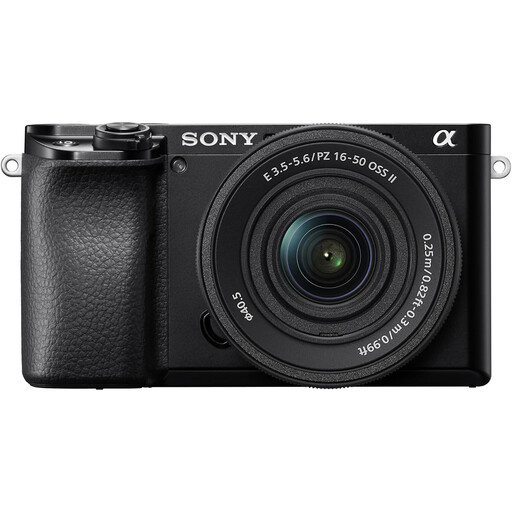
Sony A6100 mirrorless camera

Sony A6100 APS-C Mirrorless Camera with Zoom Lens

Consider this camera for whole-toy photos where a zoom lens gives you framing options. Confirm the precise lens in the kit before ordering: its descriptions give different focal-length ranges. Check that lens's magnification separately if tiny details matter.

View on Joybuy

Sony Alpha 7 III mirrorless camera

Sony Alpha 7 III Full-Frame Mirrorless Camera with 28–70mm Zoom Lens

This full-frame camera is an option if the same setup will serve photography beyond knitted toys. For a small table, check the screen movement and the supplied zoom's close-focus capability against the compositions you intend to make.

View on Joybuy

Frequently asked questions

Do I need a macro lens to photograph knitted toys?

Not for every photo: a close-focusing zoom may suit complete toys and ordinary detail shots. If stitches or miniature features must fill much of the frame, compare it with a 1:1 lens. Canon specifies 0.25x magnification for its RF-S 18-45mm zoom, while Sony and Fujifilm specify 1:1 for the macro lenses discussed here.

Will image stabilisation keep a close-up toy sharp?

Image stabilisation can help with camera shake, but it does not increase the depth of field at close focus. For repeatable tabletop photos, keep the camera stable, choose an aperture that suits the part of the toy you want sharp and provide enough light.

Why do close-up yarn photos have harsh shadows?

A close lens can block light, while hard light creates pronounced highlights and shadows. Amateur Photographer recommends diffusing bright sunlight or flash for macro work; leave room beside the toy for a diffuser or reflector when arranging the table.

What should I do if a camera or lens arrives faulty?

Contact the retailer and describe the fault, keeping your order details and any useful photos of the problem. GOV.UK says a refund must be offered for goods that are faulty or not as described; a manufacturer warranty is not a replacement for dealing with the retailer about those rights.