For detailed photographs of stationary dried flowers, choose the lens and close-up workflow before paying attention to action-focused camera features. A macro lens matters for small textures; if you also want petals sharp from front to back, check whether the body can take a focus-bracketed sequence and whether you must combine the frames yourself.
Who these setups suit
Detail-first tabletop photographers
If you want the veins of a petal and the texture of a seed head sharp across a close-up, lens magnification and a steady focus-bracketing setup deserve attention. Canon UK explains that focusing closer narrows depth of field.
Home-studio beginners
If you are moving beyond a phone camera to photograph indoor arrangements, consider how easily you can frame the shot and how close the supplied lens focuses. A flexible screen is useful when the camera sits low or above the flowers.
Stills-and-video makers
If the same camera will photograph arrangements and record craft or product videos, check its video handling alongside the close-up lens plan. Nikon UK describes the Z50II’s Product Review Mode for video, while Sony UK lists still-image focus bracketing for the α6700; these serve different tasks.
What matters when buying
For dried-flower close-ups, decide how much detail must fill the frame, then whether you need one quick photograph or a sequence with more of the flower in focus.
Canon EOS R10 and a close-up lens
Choose it when: You want focus bracketing and an in-camera depth composite for a still arrangement, as described in Canon UK’s macro guidance.
Keep in mind: The lens still needs to focus close enough, and the camera and flowers must remain steady throughout the sequence.
Sony α6700 and an E-mount macro lens
Choose it when: You want automated focus-bracketed files and are willing to select or combine the resulting images afterwards. Sony UK also specifies 5-axis in-body stabilisation.
Keep in mind: Plan for the macro lens separately, and do not mistake stabilisation for a way to keep every frame of a stack aligned.
Nikon Z and NIKKOR Z MC 50mm f/2.8
Choose it when: A specified 1:1 macro lens for small flower details matters more to you than a particular in-camera compositing workflow.
Keep in mind: Nikon UK specifies a 0.16 m minimum focus distance; working very close to the flowers calls for careful lighting and shadow control.
| Concern |
What to check |
Who this matters to |
| Sharpness through the flower |
Check focus bracketing on the exact body and whether combining frames happens in camera or afterwards. |
I want the front petals and the seed head sharp in the same close-up, even if making a stack takes longer. Around 42% of consumers put that front-to-back detail first. |
| A manageable indoor setup |
Check the supplied lens’s close-focus specification and whether the screen suits your shooting angle. |
When arranging flowers on a table, I want to frame them comfortably without building a complicated setup. For around 33% of consumers, straightforward indoor use is the main concern. |
| Stills and video from one system |
Check the exact body’s video features and plan a lens that meets your close-up needs. |
I photograph floral details but also film craft or product demonstrations, so both uses need to work with my lens choice. That combined use comes first for around 25% of consumers. |
Buying pitfalls
-
Assuming the kit zoom is a macro lens
A camera bundle can include a useful general zoom without giving you the magnification needed to fill the frame with a small seed head. Nikon UK, for example, specifies the NIKKOR Z MC 50mm f/2.8 as a 1:1 macro lens.
Compare the exact supplied lens’s maximum magnification and close-focus distance with the size of the details you want to photograph.
A dedicated macro lens, lighting or a stable support may be needed for the close-up setup you have in mind.
-
Expecting a focus stack to fix movement
Focus stacking combines photographs taken at different focus distances. If the camera or a loose stem moves between frames, the sequence is harder to align.
Secure the camera and arrangement before starting the bracketed sequence, and keep the lighting steady.
-
Treating stabilisation as a substitute for a steady setup
In-body stabilisation addresses camera shake, but it does not hold the flowers in place or keep a multi-frame composition identical.
Consider stabilisation for handheld single shots; use stable support when your priority is a repeatable close-up stack.
Relevant brands to consider
Canon
Consider Canon’s APS-C EOS R bodies if you want to compare close-up workflows as well as lenses.
- Canon UK describes focus bracketing and an in-camera depth composite for the EOS R10.
- Check compositing on the exact body: focus bracketing on another EOS R model does not establish the same in-camera workflow.
Sony
Consider Sony’s α6700 if you want an APS-C body with an automated focus-bracketing route.
- Sony UK specifies up to 299 automatically focus-shifted images and 5-axis in-body stabilisation for the α6700.
- Choose an appropriate E-mount close-up lens separately, and plan how you will select or combine the bracketed files.
Nikon
Consider Nikon Z when a specified macro lens is the starting point for your setup.
- Nikon UK specifies 1:1 reproduction for the NIKKOR Z MC 50mm f/2.8.
- At its closest focus distance, allow room to light the flower without casting a shadow; check your chosen body separately for any stacking workflow you need.
Joybuy camera choices
These camera-and-zoom bundles provide different starting points for photographing dried-flower arrangements. If your aim is to fill the frame with fine petal or seed-head detail, check the included lens’s close-focus capability and plan the lens and stacking workflow you need.
 No image available
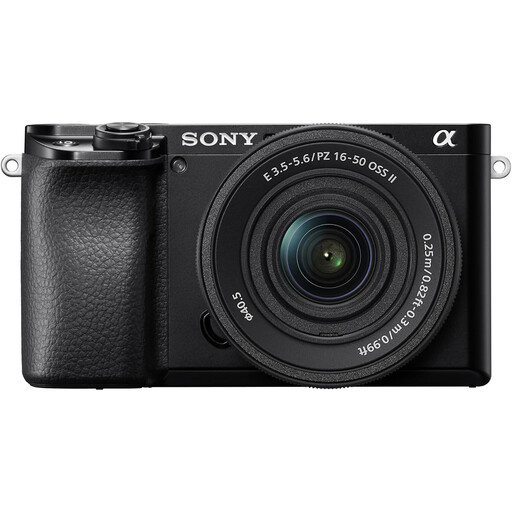
Sony A6700 with 16–50mm lens
Consider this bundle if you want to photograph arrangements and use the α6700’s focus-bracketing workflow for stationary close-ups.
The title specifies an APS-C camera and a supplied 16–50mm lens. Sony UK describes automated focus bracketing for the α6700; check the supplied zoom’s close-focus capability before relying on it for fine floral textures, and plan how you will combine bracketed frames.
Joybuy
 No image available
Sony Alpha ZV-E10 II K with 16–50 mm f/3.5–5.6 power zoom
This bundle is worth considering if you make dried-flower stills alongside video and want to start with a supplied zoom.
The title specifies an APS-C camera, a 16–50 mm f/3.5–5.6 lens and 4K60p recording. Check the lens’s close-focus capability and the exact body’s focus-bracketing options if detailed stacked stills are part of your plan.
Joybuy
 No image available
Sony Alpha 7 III with 28–70mm zoom lens
Consider this bundle for dried-flower arrangements if you want a full-frame camera with a supplied general-purpose zoom.
The title specifies a 28–70mm lens. For small petal details, check that lens’s magnification and close-focus distance; check focus bracketing on the exact body if you intend to build a stack.
Joybuy
 No image available
Sony A6400 with 16–50mm power zoom
This APS-C camera-and-lens bundle offers a starting point for framing dried-flower arrangements and making general stills or video.
The title specifies a 16–50mm power-zoom lens. Check its close-focus specifications for small floral details, and check the exact camera’s bracketing workflow before planning multi-frame close-ups.
Joybuy
 No image available
Sony A6100 with 16–55mm zoom lens
Consider this APS-C bundle for photographing whole dried-flower arrangements while deciding what additional close-up equipment you need.
The title specifies a supplied 16–55mm zoom. Compare that lens’s close-focus specifications with your intended flower details, and check the exact body’s bracketing options if front-to-back sharpness is essential.
Joybuy
Common questions
Do I need a macro lens to photograph dried flowers?
Choose a macro lens if you want small flower heads or petal textures to fill much of the frame. Nikon UK specifies 1:1 reproduction for its NIKKOR Z MC 50mm f/2.8; for any bundled zoom, check maximum magnification rather than assuming it offers the same close-up framing.
When is focus bracketing useful for dried flowers?
Use focus bracketing when a close-up leaves important parts of a stationary flower outside the sharp area of a single frame. Canon UK explains that shots focused at different distances can be combined; keep the camera and arrangement steady during the sequence.
Can image stabilisation replace a tripod for a focus stack?
No: stabilisation addresses camera shake but does not keep every frame of a focus stack aligned or stop a stem moving. Sony UK specifies 5-axis stabilisation for the α6700, while Canon UK recommends sturdy support for focus-stacking work.
What should I do if a camera bought in the UK is faulty?
Contact the seller and explain the fault, keeping your order record and details of the problem. UK statutory remedies for goods that fail applicable standards are distinct from a manufacturer’s voluntary warranty; the appropriate remedy depends on the circumstances, as reflected in GOV.UK’s consumer-rights guidance and the Consumer Rights Act 2015.


