Detail-first miniature painters
If faces, insignia and painted textures are your subjects, you need a lens that frames them closely and a way to place focus precisely.


Choose the mirrorless system around a lens that can focus closely enough for the miniature details you want to photograph, rather than choosing the camera body alone. Canon EOS R50 and Nikon Z50II have identified dedicated macro-lens routes; if you prefer Sony E-mount, check the close-focus performance of the exact lens you plan to use. Whichever system you choose, changing window light and shallow depth of field make exposure control and a stable setup important.
If faces, insignia and painted textures are your subjects, you need a lens that frames them closely and a way to place focus precisely.
If you photograph figures beside a window, you need to handle shifts in brightness and shadow while keeping the camera steady.
If you are starting with a camera-and-zoom kit, check what the supplied lens can photograph up close and whether the system offers a suitable lens for later detail shots.
For window-lit miniature figures, check the lens’s close-focus capability first, then decide how you will control focus, camera movement and changing light.
| Concern | What to check | Who this matters to |
|---|---|---|
| Close-focus detail | Check the exact lens’s maximum magnification, minimum focusing distance and compatibility with the camera mount. | For tiny painted faces or textures, I want the figure to fill the frame without assuming a kit zoom will focus closely enough; around 42% of consumers put close-focus detail first. |
| Focus and stability | Check manual-focus usability and how you would support the camera for a smaller aperture or multiple focused frames. | If I want more of a three-dimensional figure to look sharp, I need a repeatable way to place focus and keep the framing still; roughly 33% of consumers prioritise that control. |
| Changing window light | Consider screen positioning, exposure controls and whether harsh direct sunlight needs diffusing. | When brightness and shadows change during a tabletop session, I want to judge the light before taking each photograph; about 25% of consumers make straightforward window-light handling their main concern. |
A high-resolution sensor will not make a miniature fill the frame if the selected lens cannot focus closely enough. Nikon’s close-up guidance points to lens choice and closest focusing distance as key considerations.
Compare the supplied or planned lens’s magnification and minimum focusing distance, then confirm that it fits your chosen camera mount.
At close range, depth of field can leave only part of a three-dimensional miniature in focus. Image stabilisation cannot extend that depth of field.
Place focus on the detail that matters most. For a stationary figure, consider a stable support, a smaller aperture or focus stacking when you need more of it to appear sharp.
Direct sunlight and diffused daylight produce different shadows; Canon Europe notes that cloud cover makes shadows less severe.
Try your setup at the time you normally photograph figures, and diffuse harsh direct light if it hides painted detail.
The RF-mount route is worth considering if you are looking at the EOS R50 now and may add a dedicated RF macro lens later.
The E-mount route suits buyers considering the α6400 who want to choose their close-focus lens separately.
The Z-mount route is worth considering if the Z50II’s vari-angle screen suits your tabletop position and you may add a Nikon MC macro lens.
These Sony APS-C camera kits offer interchangeable-lens starting points for tabletop photography. Check the supplied zoom’s close-focus specifications before relying on any of them for frame-filling miniature details.
 No image available
The tilting touchscreen may help you frame a figure from a tabletop position. The kit lists an APS-C camera, Sony E-mount and a 16–50 mm power zoom with OSS. Check that lens’s maximum magnification and closest focusing distance for the detail shots you want; OSS does not make the entire figure sharp at close range.
 No image available
The rotating touchscreen may suit low tabletop framing. This kit lists a 26 MP APS-C camera and a 16–50 mm lens. Check the supplied lens’s maximum magnification and closest focusing distance before choosing it for tight miniature close-ups.
 No image available
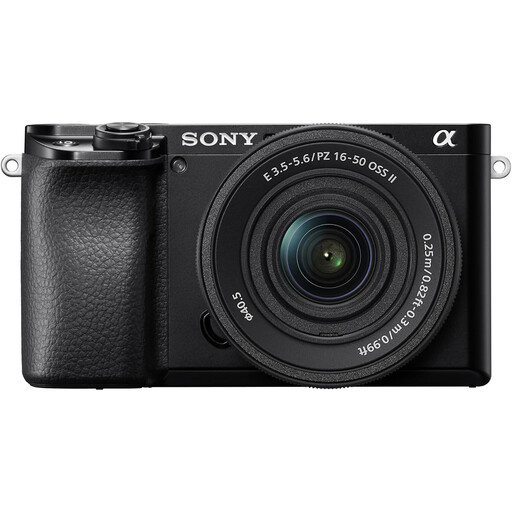
The tilting touchscreen may make tabletop framing easier. The camera is listed with a 24.2 MP APS-C sensor and Sony E-mount compatibility. Confirm the exact supplied zoom lens, its maximum magnification and its closest focusing distance before buying it for miniature close-ups.
Not for every wider tabletop photograph, but a dedicated macro lens is worth considering when you need frame-filling painted details. Check the magnification and closest focusing distance of your current lens first; Nikon’s close-up guidance emphasises both lens choice and focusing distance.
Position the figure for the direction of light and diffuse harsh direct sunlight if it obscures paint detail. Canon Europe notes that cloud cover diffuses sunlight and makes shadows less severe, so reassess exposure and shadows when conditions change.
Yes, particularly for slower shutter speeds or a series of frames focused at different depths. A stable camera position helps keep the composition consistent, though you must still choose where to focus on the figure.