Choose the macro lens and focusing workflow alongside the camera body: a low-angle screen helps with composition, while steady support matters when you want detail sharp across a mushroom. Canon documents in-camera focus stacking on the EOS R7; Sony documents focus bracketing on the α6700 for photographers willing to combine frames in software. If considering the Nikon Z50II with a dedicated macro lens, confirm its focus-shift workflow before relying on it for stacks.
Who is this setup for?
Close-up detail photographers
If you want the gills and more of a small cap sharp in one finished image, the lens’s magnification and a steady focus-stacking workflow matter. Nikon explains that stacking combines photographs focused at different distances.
Woodland low-light walkers
For mushrooms near the ground in shaded woodland, consider how you will frame the shot and steady the camera. An articulating screen can help with the angle, but Nikon advises tripod support for close-up work because camera shake becomes more noticeable.
Macro-system builders
If you are choosing a body and lens together, check the exact lens mount and maximum magnification before deciding on a camera. Nikon identifies its NIKKOR Z MC 105mm f/2.8 VR S as a 1:1 macro lens; a body alone does not establish that magnification.
What matters when choosing?
Decide how much of the mushroom you want sharp, then choose a compatible lens and a way to keep successive frames aligned. Only then is it useful to decide whether stacking should happen in the camera or in software.
| Concern | What to check | Who this matters to |
|---|
| Depth of field and stacking |
Check the exact body’s bracketing and stacking functions, and the intended lens’s maximum magnification. |
If I want the gills and cap sharp together, I need a way to capture and combine different focus distances; roughly 36% of consumers put close-up detail first. |
| Stability in shade |
Check the body and lens stabilisation details, and plan steady support for multi-frame captures. |
In shaded woodland, I want to avoid camera movement spoiling a close-up; around 29% of consumers make stability their primary concern. |
| Ground-level framing |
Check how the screen moves for your preferred shooting position and whether the planned lens fits the body. |
When a mushroom sits among leaves, I need to frame it without putting my eye behind the camera; about 21% of consumers prioritise low-angle handling. |
| Building a macro kit |
Check the complete body-and-lens combination, including whether the kit lens provides the magnification you need. |
If I am assembling a kit, I would rather secure a suitable macro lens than choose body features I will not use; roughly 14% of consumers put system-building first. |
Buying pitfalls
-
Choosing the body before the macro lens
A camera body does not determine how large a mushroom appears on the sensor. Nikon describes 1:1 as life-size reproduction on the sensor and notes that depth of field becomes narrow at high magnification.
Check the exact lens’s maximum magnification, minimum focus distance, mount compatibility and kit contents before settling on a body.
A dedicated macro lens and steady support may need to be carried alongside the camera.
-
Expecting stabilisation to hold a stack together
Stabilisation addresses camera shake, not movement of the mushroom or changes between frames. Nikon advises a tripod for macro work, where the effects of shake can be magnified.
For repeated focus-bracketed frames, plan how you will steady the camera and check the sequence for movement before combining it.
-
Assuming bracketing produces a finished image
Bracketing captures different focus distances; stacking combines the frames. Canon documents both functions for the EOS R7, while Sony describes combining α6700 bracketed frames in post-processing.
Confirm which functions the exact camera offers and whether you are willing to use software to finish the image.
A software-based workflow also takes processing time and space for the sequence of frames.
-
Moving fungi or overlooking access signs
Forestry England encourages photographers to leave fungi in their natural habitat. The Countryside Code for England and Wales also directs visitors to follow signs about where they may go.
Photograph fungi in place and check the relevant land manager’s rules and local signs before setting up.
Brands to consider for this setup
Canon
The EOS R7 is worth considering if finishing a focus stack in the camera is central to your mushroom-photography workflow.
- Canon UK lists a 32.5MP APS-C sensor and sensor-shift stabilisation for the EOS R7, and Canon describes its built-in focus bracketing and stacking.
- A suitable close-focusing lens and stable support remain separate decisions for multi-frame close-ups.
Sony
The α6700 offers a documented bracketing route for photographers prepared to combine frames after shooting.
- Sony UK says the α6700 can capture up to 299 images with sequentially shifted focus points and has five-axis in-body stabilisation.
- Plan for post-processing if you want a combined stack; a stabilisation specification does not ensure that close-up frames will align.
Nikon
The Z50II is an option to assess alongside a compatible dedicated macro lens when ground-level composition matters.
- Nikon UK lists a vari-angle touchscreen for the Z50II and identifies the NIKKOR Z MC 105mm f/2.8 VR S as a 1:1 macro lens.
- Confirm the Z50II’s exact focus-shift and stacking functions before choosing it for an automated stacking workflow.
Mirrorless camera options on Joybuy
These Sony interchangeable-lens camera kits are options for building a mushroom-photography setup. Choose between them only after checking the exact kit lens’s close-focus capability and the body functions your focusing workflow requires.
 No image available
Sony Alpha ZV-E10 II K with 16–50 mm f/3.5–5.6 lens
Consider this APS-C interchangeable-lens kit if you intend to choose a lens for close-up mushroom work. The product title states 26 megapixels and an included 16–50 mm f/3.5–5.6 lens; check that lens’s maximum magnification and the body’s focus-bracketing functions before relying on the kit for detailed stacks.
View on Joybuy
 No image available
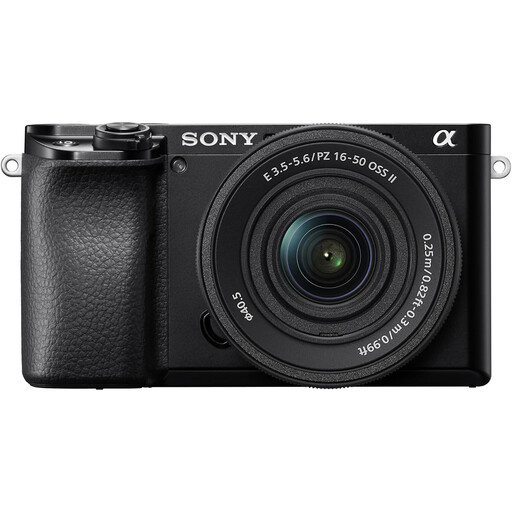
Sony A6400 APS-C with 16–50mm Power Zoom lens
This mirrorless kit is another starting point if you plan to assess the included lens before adding a dedicated macro lens. Check its maximum magnification and the A6400’s focus-bracketing workflow if sharp detail across a small mushroom is your priority.
View on Joybuy
 No image available
Sony A6100 APS-C with zoom lens
Consider the A6100 as a body-and-zoom kit if you are prepared to check the lens and focusing workflow separately. Confirm the exact included lens before purchase, as its stated focal range differs between the kit title and description; also check its close-focus capability and the body functions needed for stacks.
View on Joybuy
Common questions
Do I need a true macro lens to photograph mushrooms?
Choose a true macro lens if life-size detail on the sensor is your goal. Nikon describes 1:1 as life-size reproduction; for larger fungi, check a standard lens’s actual maximum magnification and minimum focus distance before deciding it is sufficient.
Is a tripod useful if my camera has stabilisation?
Yes, particularly for focus stacks, because successive close-up frames need steady alignment. Nikon advises tripod use in macro photography, where camera-shake effects can be magnified; stabilisation may still assist handheld single frames.
Are focus bracketing and focus stacking the same thing?
No. Bracketing records frames at different focus distances; stacking combines them into an image with more of the subject in focus. Check whether the particular body performs that second step in camera or requires software.
Can I move mushrooms for a photograph in woodland?
Leave fungi in place unless the relevant land manager’s rules permit otherwise. Forestry England encourages leaving fungi in their natural habitat; check local signs and access rules, including the Countryside Code’s direction to follow signs in England and Wales.


