Tabletop tutorial makers
If you photograph finished models alongside folding stages, you need to check the composition from above or beside a small table. A screen you can view from those camera positions is particularly useful.


Choose a mirrorless body whose screen you can see from your intended position above or beside the table, then choose the lens according to the photograph: a close-focusing kit zoom is a starting point for whole models and layouts, while a macro lens is worth considering when tiny folds must fill the frame. At close distances, careful focus and stable support still matter; greater magnification does not make every layer of a model sharp.
If you photograph finished models alongside folding stages, you need to check the composition from above or beside a small table. A screen you can view from those camera positions is particularly useful.
If small creases, layered edges or paper texture are your subject, compare lenses by maximum magnification and the space available between lens and model, not just by zoom range.
If you make still photographs and short folding clips, consider the body and lens together. A compact body alone will not tell you whether the kit lens frames your smallest details closely enough.
Start with the camera position you can use on your table, decide how much of the model must fill the frame, then plan how you will keep close shots steady.
| Concern | What to check | Who this matters to |
|---|---|---|
| Framing from above | Check the exact body’s screen movement and whether you can see it with your intended overhead support. | If I photograph folding stages from above, I need to judge the layout without putting my eye behind the camera. Around 31% of consumers put accessible tabletop framing first. |
| Small-fold detail | Compare the exact lens’s maximum magnification and minimum focus distance; confirm that its mount fits the body. | When a crease or paper texture needs to occupy much of the photograph, whole-model framing is not close enough. For around 31% of consumers, detail reproduction is the primary need. |
| Consistent stills | Plan stable support and test focus and aperture at the distance you will actually use. | I want the layers of a finished model to look deliberately focused, even if setting up each shot takes longer. Consistent still-image results come first for around 23% of consumers. |
| Compact mixed use | Consider body-and-lens size together, screen visibility and the lens included in the kit. | If I also record short folding clips, I need a manageable system without losing sight of my still-photo requirements. Around 15% of consumers prioritise compact photo-and-video use. |
A lens that frames a whole origami model closely may still leave a tiny fold occupying only a small part of the image. For comparison, Sony and Nikon specify 1:1 magnification for their E 30mm F3.5 Macro and Z MC 50mm f/2.8 lenses respectively.
Decide whether your subject is the complete model or a small detail, then compare maximum magnification for the exact lens you intend to buy.
Choosing a kit zoom for a detail-led project may mean carrying and changing a second lens later.
A movable screen is useful only if you can still see it when the camera is positioned for your shot. Canon and Nikon specify vari-angle touchscreens for the EOS R50 and Z50II, but your support arrangement determines where you can stand and work.
Before choosing a body, plan where its screen, the support and your hands will be around the table.
Canon’s close-up guidance notes that depth of field is typically very small, making accurate focus demanding. Enlarging a detail does not remove that limitation.
Test focus and aperture at the intended shooting distance, and use stable support for a stationary model where practical.
A fixed support also needs setup time and space around a small table.
The EOS R50 is a route to consider for whole-model tabletop photographs when a vari-angle screen matters, with a separate RF macro-lens option for tighter details.
The Z50II offers a vari-angle-screen route for tabletop composition, with a kit zoom for general framing and a separate true-macro option.
The Alpha 6400 and E 30mm F3.5 Macro form a detail-led APS-C route to assess if close photographs are the priority.
The X-M5 with the XC15-45mm kit zoom is worth considering for a compact setup used for whole-model stills and short clips.
These interchangeable-lens Sony kits are choices to assess for framing whole origami models or combining tabletop stills with process clips. If tiny folds must fill the frame, check the included lens’s close-focus distance and maximum magnification before choosing a kit.
 No image available
Consider this zoom kit for photographs of complete models at different framing sizes. Check whether the screen remains visible with your intended overhead support, and compare the included lens’s close-focus capability if small folds are your priority.
 No image available
Consider this kit if you want to assess one camera for origami stills and short process videos. Check the screen’s movement with your overhead setup and the included lens’s magnification before relying on it for close detail.
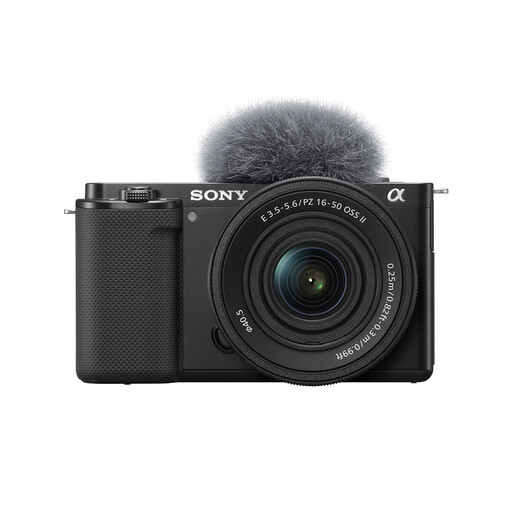 No image available
Consider this interchangeable-lens kit if you need to compose from varied positions around a small table. Plan where the screen will sit beside your support, and check the included zoom’s close-detail capability for your smallest models.
Not if complete models or a tabletop layout are your main subjects; start by checking how closely the kit zoom can frame them. If a tiny fold must fill much of the image, compare dedicated macro lenses: Nikon and Sony specify 1:1 reproduction for the Z MC 50mm f/2.8 and E 30mm F3.5 Macro respectively. Test focus at your intended distance, because close-up depth of field is demanding.
Use a screen you can see from the overhead camera position and keep the camera stable while you compose and focus. Canon and Nikon specify vari-angle touchscreens on the EOS R50 and Z50II; check the exact screen position with the tripod, copy stand or other support you intend to use.
Keep the body capped when a lens is off and minimise lens changes around loose paper fibres. Canon notes that dust can reach the sensor during lens changes; if cleaning is needed and you are unsure how to do it safely, use an appropriately qualified service provider.
For a UK distance purchase that you simply change your mind about, GOV.UK says you must tell the seller within 14 days of receiving the item that you want to cancel. Faulty or misdescribed goods raise separate consumer-rights questions, rather than depending solely on a retailer’s voluntary returns policy. Keep the listing and order details, and check the contents and condition of the exact bundle when it arrives.