What matters when choosing a camera?
For glossy pottery against a dark background, decide whether your main priority is repeatable lighting, close surface detail or flexibility away from the tabletop. That choice should guide the lens and setup as well as the camera body.
| Concern |
What to check |
Who this matters to |
| Highlights and dark tones |
Plan an adjustable light, a plain backdrop and stable camera support; check that the camera offers the exposure controls you intend to use. |
I need the glaze highlights and the vessel’s edge to look consistent across catalogue shots. Around 42% of consumers would put controlled highlights and tones first. |
| Close detail and cropping |
Check the exact lens’s minimum focusing distance and maximum magnification; consider focus stacking for a stationary curved piece. |
When small glaze features must remain visible in a close crop, I need a lens and focusing workflow suited to that detail. Around 33% of consumers would prioritise close detail and cropping. |
| Handheld and video use |
Compare the body’s stabilisation and handling with your intended lens and video use; do not treat an ISO range as a substitute for lighting control. |
If I also photograph at markets or film my process, I need a camera I can use beyond the fixed table. Around 25% of consumers would make handheld or hybrid flexibility their primary concern. |
Camera brands to consider
These brands offer different camera-system routes relevant to pottery photography; the examples are not a claim that every model or lens in a brand’s range suits close glaze work.
FUJIFILM
The X-T5 is an APS-C route for stationary, detail-led pottery images.
- FUJIFILM specifies a 40.2MP sensor and says its Pixel Shift Multi-Shot workflow can produce a 160MP image using Pixel Shift Combiner software.
- That multi-shot process calls for a stable camera, pottery and reflected lighting; a suitable close-focus lens remains a separate choice.
Nikon
The Z5II offers a stabilised full-frame route, with a separate macro-lens option for surface detail.
- Nikon describes the Z5II as a 24.5MP full-frame camera with in-body stabilisation and specifies 1:1 reproduction for its NIKKOR Z MC 105mm f/2.8 VR S lens.
- Check whether that lens’s working distance suits your pottery size and shooting space; it is not an included feature of the camera body.
Sony
The Alpha 7C II is a compact full-frame route for pottery stills alongside handheld or video work.
- Sony specifies a 33.0 effective-megapixel sensor and an up-to-7.0-stop stabilisation advantage measured under CIPA standards.
- Confirm the close-focus distance and magnification of the particular E-mount lens you intend to use.
Canon
The EOS R8 is a full-frame option to consider for a largely tripod-based setup.
- Canon specifies a 24.2MP full-frame sensor and a native ISO range of ISO 100–102,400 for the EOS R8.
- The EOS R8 does not have in-body stabilisation; if you often shoot handheld, check the selected RF lens and how the combination handles.
Joybuy cameras for pottery photography
These Sony camera-and-zoom kits offer starting points for tabletop compositions or broader photography. Before relying on any supplied zoom for close glaze detail, check the exact lens and its focusing specifications.
 No image available
Sony Alpha 7 III Full-Frame Mirrorless Camera with 28–70mm Zoom Lens
Consider this kit if you want to frame whole pieces on a tabletop and also use the camera away from the fixed setup.
The supplied zoom is labelled 28–70mm. Check its maximum magnification before choosing it for small glaze features.
View on Joybuy
 No image available
Sony A6700 APS-C Mirrorless Camera with 16–50mm Lens
Consider this lens-changeable kit for tabletop framing if you are prepared to select a separate lens should close glaze details require one.
The supplied lens is labelled 16–50mm; check its minimum focusing distance and maximum magnification. Confirm the camera type against the full product details, as the listing also uses a compact-camera description.
View on Joybuy
 No image available
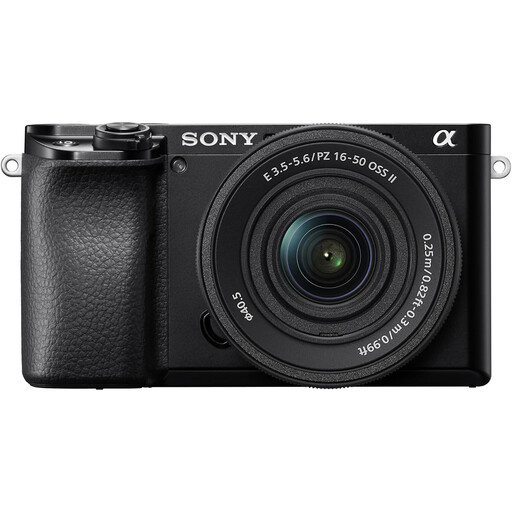
Sony A6400 APS-C Mirrorless Camera with 16–50mm Power Zoom Lens
The supplied zoom offers a starting point for framing pottery on a tabletop, with lens choice still important for close surface shots.
The kit is labelled with a 16–50mm power zoom. Check that lens’s minimum focusing distance and maximum magnification for the glaze detail you intend to photograph.
View on Joybuy
 No image available
Sony A6100 APS-C Mirrorless Camera with Zoom Lens
Consider the A6100 as a lens-changeable starting point for pottery stills, provided the bundle contains the lens you need.
The lens range is described differently across the listing, as 16–55mm and 16–50mm. Confirm the exact included lens, then check its minimum focusing distance and maximum magnification before planning close-ups.
View on Joybuy
Frequently asked questions
Do I need a full-frame camera for pottery glazes on a dark background?
No: for stationary tabletop pottery, start with controlled lighting, stable camera support and a lens that focuses closely enough for the images you need. A stabilised full-frame option becomes more relevant if the same camera must also serve handheld or dim-room work, but it will not position reflections on the glaze.
Should I buy a macro lens for close glaze photographs?
Choose a macro-capable lens if small glaze features need to fill the frame, rather than assuming a supplied zoom will focus closely enough. Nikon specifies 1:1 reproduction for its NIKKOR Z MC 105mm f/2.8 VR S; for any lens, check maximum magnification, minimum focusing distance and the working space around your pottery.
When is Pixel Shift useful for pottery photography?
Pixel Shift is worth considering for stationary pottery when you need detailed source images or substantial crops. FUJIFILM says the X-T5 can produce a 160MP image using its Pixel Shift Combiner software; keep the camera, subject and reflected lighting stable during the multi-shot capture.
What should I do if a camera arrives faulty?
Contact the seller about the fault and keep your order and fault records; a manufacturer warranty does not replace consumer rights. GOV.UK states that sellers cannot remove or mislead consumers about refund rights, so distinguish a fault from a change-of-mind return when explaining the problem.


