Choose the camera system around the photographs you need: a close-focusing lens matters most for small glaze features, while stabilisation helps when you photograph static pots handheld. If faithful colour across sessions is the priority, use a consistent window-light setup and a white-balance reference; neither sensor size nor stabilisation replaces that workflow.
Who is this for?
Colour-critical pottery sellers
If you photograph pieces for listings, commissions or records, consistent glaze colour between sessions may matter more than a camera specification. X-Rite recommends setting a custom white balance with a reference photographed under the lighting used for the subject.
Detail-focused makers
For glaze texture, crackle, crystalline surfaces or maker’s marks, check what the lens can reproduce at close range. Fujifilm specifies 1:1 magnification for its XF30mmF2.8 R LM WR Macro; body resolution alone does not establish a lens’s close-focus capability.
Window-light handheld shooters
If you cannot always set up a tripod, in-body stabilisation can help limit camera shake when photographing static pottery. Nikon and Fujifilm publish stabilisation ratings for the Z5II and X-S20 respectively, but those ratings do not control changing light or reflections.
What matters when choosing?
Start with the problem that most affects your photographs: consistent colour calls for a repeatable lighting and white-balance routine, fine detail calls for a suitable lens, and handheld shooting makes stabilisation more relevant.
| Concern |
What to check |
Who this matters to |
| Repeatable glaze colour |
Check access to custom white-balance settings and whether your intended camera and editing workflow support RAW files. Use a reference under the same light as the pot. |
If glaze colours shift between listing sessions, I need a consistent reference rather than relying on the camera to correct changing daylight; around 44% of consumers put repeatable colour first. |
| Fine glaze detail |
Check the exact lens’s maximum magnification and minimum focus distance, as well as whether its working distance leaves room to light the surface. |
When I need to show a tiny mark or patch of texture, the lens must let me frame it closely; roughly 33% of consumers prioritise close-detail capability. |
| Handheld sharpness |
Check whether stabilisation is in the body or the chosen lens, and assess its stated rating against your intended shooting distance and focal length. |
When a tripod is impractical, I want to reduce camera shake while photographing a static pot; about 23% of consumers make handheld stability their primary need. |
Buying pitfalls
-
Choosing the body before checking close focus
A high-resolution body does not establish how large a small glaze feature can appear in the frame. Fujifilm specifies 1:1 magnification for the XF30mmF2.8 R LM WR Macro, but a different lens needs its own close-focus check.
Confirm the exact lens’s magnification, minimum focus distance, working distance and mount compatibility before choosing a system for detailed images.
A separate macro or other suitable close-focusing lens may be needed.
-
Treating stabilisation ratings as a guarantee
Nikon and Fujifilm state stabilisation ratings for the Z5II and X-S20 under their test conditions. Stabilisation addresses camera movement; it does not keep window light constant, remove reflections or increase depth of field in a close-up.
Consider support for repeatable framing and assess handheld results at the focal length and distance you expect to use.
-
Relying on Auto White Balance alone
Changing daylight and reflections can make the same glaze look different between photographs. X-Rite advises setting white balance from a reference under the light used for the subject.
Photograph a neutral reference when the lighting changes and keep the RAW editing and export routine consistent.
Using a colour reference also adds a step to each lighting setup and to editing.
-
Overlooking the complete shooting setup
A camera body or supplied zoom does not, by itself, establish whether you can frame tiny glaze details or make repeatable catalogue photographs.
Check the exact lens, package contents, support and colour-reference accessories against the photographs you need to make.
Relevant brands to consider
Nikon
The Z5II is a full-frame body to consider when handheld window-light photographs are a frequent part of your pottery work.
- Nikon rates its in-body stabilisation at up to 7.5 stops under its stated conditions.
- That rating does not establish close-focus capability for the lens you choose or keep glaze colour consistent as daylight changes.
Fujifilm
The APS-C X-S20 and XF30mmF2.8 R LM WR Macro offer a specific body-and-lens route for close glaze detail.
- Fujifilm specifies up to 7.0 stops of in-body stabilisation for the X-S20 and 1:1 magnification for the macro lens.
- At close distances, limited depth of field and space for lighting can complicate a detailed photograph.
Sony
The α7C II is a compact full-frame option for photographers who want to retain stated resolution when cropping whole-vessel images.
- Sony specifies a 33.0MP full-frame sensor for the α7C II.
- Resolution does not correct mixed lighting or establish whether the selected lens focuses closely enough for small glaze features.
Canon
The EOS R8 is a lightweight full-frame body to consider for whole-vessel photographs and other general photography.
- Canon specifies a 24.2MP full-frame sensor and an approximately 414g body-only weight.
- Check the chosen lens separately if photographs of small glaze features are part of the task.
Joybuy camera options
These Sony listings include supplied-zoom configurations and a listing titled body only. For pottery photography, check the exact package and lens before planning close-up glaze images.
 No image available
Sony Alpha ZV-E10 II K with 16–50 mm f/3.5–5.6 power zoom
The supplied zoom makes this a camera-and-lens option for framing whole pots under window light.
The product title specifies an APS-C camera and 26 megapixels. Check the supplied lens’s magnification and minimum focus distance before relying on it for fine glaze detail.
View on Joybuy
 No image available
Sony Alpha 7 III with 28–70mm zoom lens
The listed zoom provides a lens configuration to assess for whole-vessel photographs.
This is a full-frame camera listing. Check the supplied 28–70mm lens’s close-focus specifications if texture or maker’s marks also need their own photographs.
View on Joybuy
 No image available
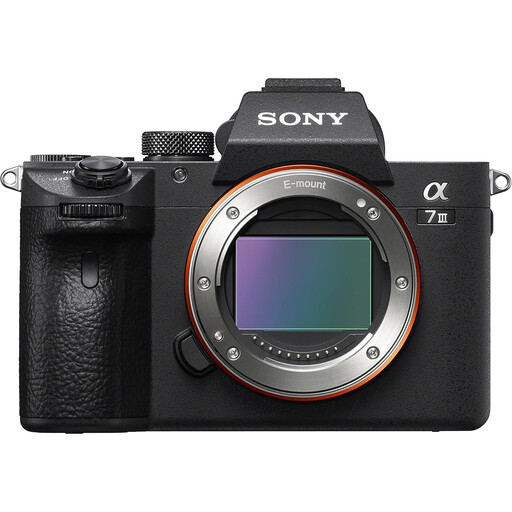
Sony Alpha 7 III full-frame camera body only
This listing is worth assessing if you intend to choose a lens specifically for your pottery photographs.
Confirm the package contents before ordering: the body-only title conflicts with the package description about whether a 28–70mm lens is included. Check any intended lens’s close-focus capability separately.
View on Joybuy
Frequently asked questions
Will a different camera body make glaze colours accurate automatically?
No camera body can keep changing window light and reflections consistent on its own. For colour-critical photographs, use a neutral white-balance reference under the same light as the pottery and apply it consistently in a RAW editing workflow; the viewer’s display can still affect how the finished image appears.
Do I need a macro lens to photograph pottery?
Not necessarily for photographs of a whole pot, but check the exact lens if you need close images of glaze texture or small marks. Fujifilm specifies 1:1 magnification and a 10cm minimum focus distance for its XF30mmF2.8 R LM WR Macro; those specifications do not apply to other lenses.
Is stabilisation or a tripod more useful under window light?
Stabilisation is useful when you need to handhold photographs of static pottery; a tripod is the more practical choice when repeatable framing and careful close-up composition matter. Nikon and Fujifilm rate the cited Z5II and X-S20 bodies at up to 7.5 and 7.0 stops respectively under their test conditions, but stabilisation cannot prevent lighting changes or resolve limited depth of field.


