Choose a mirrorless system around the close-up work your portfolio requires, rather than body resolution alone. For small shell markings, check the magnification of a compatible macro lens; for a curved shell that needs to look sharp throughout, plan how you will keep it still and capture different focus positions. If you also photograph finds at the shore, weigh that controlled tabletop workflow against the kit you are willing to carry.
Who is this for?
Detail-first craft portfolio makers
If viewers need to inspect shell ridges, apertures and small markings, lens magnification and precise focus deserve attention before burst speed. Canon UK explains how combining images focused at different distances can show more of a subject in focus; Nikon UK notes that depth of field becomes extremely narrow at high magnification.
Tabletop stylists photographing shell collections
For arranged still lifes, consider how you will hold the camera and shells steady, frame each composition consistently and edit the resulting files. A high-resolution capture mode is worth assessing against the conditions of a static setup, not just its output dimensions.
Beach-to-portfolio photographers
If you photograph finds outdoors as well as at a table, consider the body and lens together as a kit to carry. Stabilisation may help with camera movement, but you still need a compatible close-up lens and a way to manage the subject and its surroundings.
What matters when choosing?
Start with the size of the shell detail you need to record, then decide whether you will mainly work with stationary arrangements or carry the camera to the shore. Compare file and editing options after checking the lens and focusing workflow.
| Concern | What to check | Who this matters to |
|---|
| Sharp detail across a shell |
Check a compatible lens’s maximum magnification and whether the exact camera supports focus bracketing, in-camera stacking or neither. Plan stable support if you need aligned frames. |
When I photograph a curved shell close enough to show its markings, I need more than one narrow plane of focus to appear sharp. Around 50% of consumers put that close-detail need first. |
| Close-ups at the shore |
Compare the size of the body-and-lens kit and stabilisation for the exact combination. Stabilisation does not keep a moving subject still. |
If I take the camera outside, I want a kit I can carry and hold steadily without mistaking stabilisation for a solution to subject movement. This is the primary need for around 30% of consumers. |
| Portfolio files and editing |
Check RAW support, effective pixel count and the conditions for any high-resolution mode against your intended output and editing workflow. |
For layouts that may need cropping or colour adjustments, I want files that suit the edits I plan to make. Around 20% of consumers place that flexibility first. |
Buying pitfalls
-
Choosing body resolution without checking the lens
More sensor pixels do not tell you how large a small marking will appear on the sensor. Nikon UK describes a 1:1 reproduction ratio as a life-size image on the sensor; the maximum magnification of the lens is therefore an important separate check.
Identify a lens for the chosen mount and compare its magnification and focusing distance with the shell size and lighting arrangement you have in mind.
A suitable macro lens may be a separate addition to a camera kit.
-
Expecting stabilisation to extend depth of field
Stabilisation addresses camera movement, not the narrow depth of field Nikon UK describes at high magnification. A deep shell may still need images taken at different focus distances.
For a stationary portfolio setup, consider stable support and check whether your chosen body provides the bracketing or stacking workflow you intend to use.
That workflow can also call for a tripod and, if the images are not combined in-camera, suitable editing software.
-
Relying on high-resolution mode for every outdoor shot
Panasonic UK lists a High Resolution Mode for the LUMIX G9 II, but its large output dimensions alone do not establish how it will handle a changing scene.
Assess the mode for a still arrangement and check the exact camera’s instructions before relying on it for handheld shots or moving surroundings.
-
Treating every macro label as the same magnification
Published maximum magnifications differ: Canon UK lists 1.4x for the RF 100mm F2.8L Macro IS USM, while Sony UK and Nikon UK list 1:1 for the FE 90mm F2.8 Macro G OSS and NIKKOR Z MC 105mm f/2.8 VR S respectively.
Compare the figure for the exact lens, then decide whether your portfolio calls for a small feature to fill the frame or a wider arrangement of several shells.
Brands to consider for seashell photography
These camera-system examples help frame a body-and-lens decision; a brand name by itself does not establish the magnification or focusing workflow of a particular kit.
Canon
An RF-mount route to consider if close-detail work leads your choice.
- Canon UK lists a 32.5MP APS-C sensor and sensor-shift stabilisation for the EOS R7, and 1.4x maximum magnification for the separate RF 100mm F2.8L Macro IS USM.
- Check the exact body’s bracketing and stacking controls for your workflow; the body and an ordinary kit lens alone do not establish the macro magnification you need.
Sony
An E-mount route for pairing a mirrorless body with a dedicated macro lens.
- Sony UK lists the Alpha 7 IV with an approximately 33.0MP full-frame sensor and 14-bit RAW recording. Its FE 90mm F2.8 Macro G OSS lens offers up to 1:1 magnification and built-in stabilisation.
- Those lens and file specifications do not mean a single handheld exposure will show an entire deep shell sharply; assess support and focus technique separately.
Nikon
A Z-mount route to examine if a dedicated 105mm macro lens is central to the setup.
- Nikon UK lists 1:1 reproduction for the NIKKOR Z MC 105mm f/2.8 VR S and describes its in-lens vibration reduction.
- Even with stabilisation, plan how to hold a shell and camera steady when several focus positions must align.
Panasonic
A Micro Four Thirds option to assess for controlled tabletop compositions and high-resolution output.
- Panasonic UK lists a LUMIX G9 II High Resolution Mode output of up to 11,552 × 8,672 pixels in 4:3.
- Choose a compatible macro lens by its actual magnification, and assess the high-resolution workflow against a stationary scene rather than assuming it suits every handheld shot.
Joybuy product choices
These Sony interchangeable-lens camera kits are choices to examine if you want an E-mount starting point for both portable photography and arranged shell images. Check the supplied lens separately for the close-up magnification your portfolio requires, and confirm focus-bracketing or stacking features on the exact body if those are important to you.
 Image unavailable
Sony Alpha ZV-E10 II K with 16–50 mm power zoom lens
Consider this E-mount kit if you want to alternate between portable shooting and still-life arrangements.
The product information describes a 26MP APS-C camera, a 16–50 mm f/3.5–5.6 kit lens, RAW still-image support and a tripod thread.
Check the kit lens’s maximum magnification before relying on it for small shell markings. Confirm the exact body’s focus-bracketing and stacking options if you plan to use them.
View on Joybuy
 Image unavailable
Sony A6400 with 16–50 mm power zoom lens
Consider this E-mount kit if a camera to carry outdoors is part of the plan, while keeping a separate macro-lens choice in mind for fine shell detail.
The product information describes a 24.2MP APS-C body and stabilisation in the supplied 16–50 mm OSS lens.
Check that lens’s maximum magnification, and confirm any focus-bracketing or stacking features you need on the exact body.
View on Joybuy
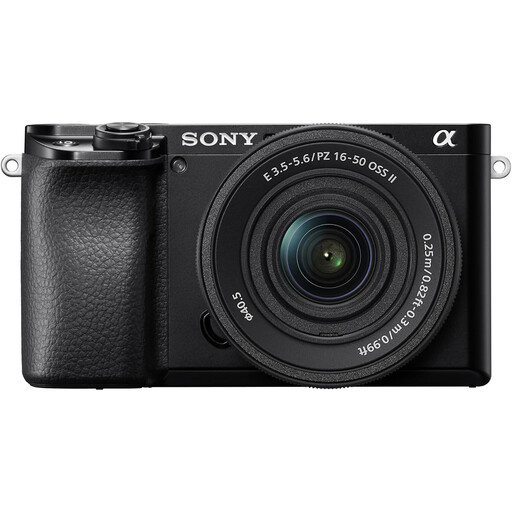 Image unavailable
Sony A6100 APS-C zoom kit
Consider this E-mount body if you want a camera to carry for outdoor shell photographs and are prepared to select a suitable lens for detailed close-ups.
The product information describes a 24.2MP camera. Confirm which zoom the kit contains: the title and English description give 16–55 mm, while the detailed product table gives 16–50 mm.
Check the supplied lens’s magnification and the exact body’s focus-bracketing or stacking options before choosing it for close-detail work.
View on Joybuy
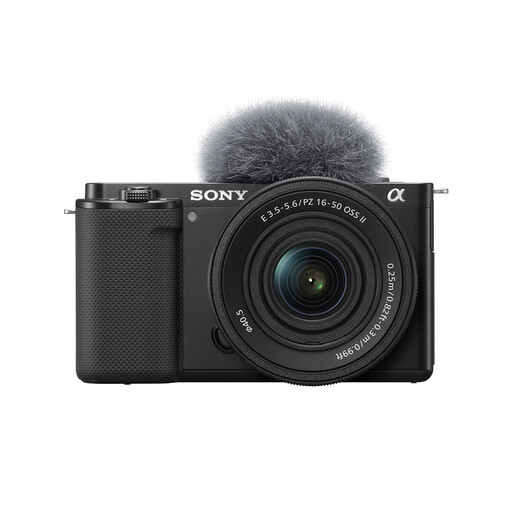 Image unavailable
Sony ZV-E10K with 16–50 mm power zoom lens
Consider this interchangeable-lens kit for portable shell photographs if you also intend to check compatible E-mount macro lenses for your portfolio close-ups.
The kit includes a 16–50 mm power zoom lens. Check its maximum magnification rather than assuming the supplied zoom meets a true-macro requirement.
If automated focus capture or stacking is part of your tabletop workflow, confirm the relevant features on this exact body.
View on Joybuy
Frequently asked questions
Do I need a macro lens for a seashell portfolio?
Choose a compatible true-macro lens if small textures or markings need to fill much of the frame. Nikon UK describes 1:1 as a life-size image on the sensor; for a wider arrangement of shells, a general zoom may meet your framing needs, but check its actual close-focus magnification before deciding.
How can I keep a curved shell sharp from front to back?
Keep the camera and shell steady, then consider focus bracketing and stacking if one exposure cannot cover the depth you need. Canon UK describes stacking as combining frames focused at different distances, while Nikon UK notes how narrow depth of field becomes at high magnification. Check whether your chosen body combines frames in-camera or whether you will need an editing workflow.
Will any macro lens fit my mirrorless camera?
No: match the lens mount and any adapter requirements to the exact camera body. The cited Canon RF 100mm lens, Sony FE 90mm E-mount lens and Nikon Z MC 105mm lens belong to different mount systems. Check compatibility as well as magnification before selecting a lens.


