Coin-detail collectors
If you photograph relief, mint marks or inscriptions, you need enough magnification to frame the detail and a way to keep the required parts sharp. A close-up focus sequence also calls for a coin and camera that stay still.


Choose a mirrorless system around the whole tabletop setup, not body resolution alone: the macro lens determines close-up framing, while stable support and controllable lighting help you capture sharp detail without distracting reflections. The OM SYSTEM OM-5 Mark II offers in-camera Focus Stacking with a compatible lens; the Sony α6700 offers automated focus bracketing if you are prepared to work with the resulting frames in software. A simpler APS-C body can also suit the task if you plan the lens, focus method and lighting separately.
If you photograph relief, mint marks or inscriptions, you need enough magnification to frame the detail and a way to keep the required parts sharp. A close-up focus sequence also calls for a coin and camera that stay still.
If glare or a colour cast obscures the surface, lighting is a purchase consideration alongside the camera. The Professional Coin Grading Service notes that ambient light and reflections can cause problems when photographing coins.
A body with a supplied zoom lens gives you a starting camera setup, but check that lens’s maximum magnification before relying on it for small coin details. Plan stable support and controllable lights as parts of the same setup.
For coins photographed on a fixed tabletop under artificial light, decide how you will handle close-up focus, then check lens magnification and control over reflections.
Choose when: You want the camera’s Focus Stacking function to combine focus distances for raised coin detail; OM SYSTEM describes this function in its OM-5 Mark II manual.
Allow for: Confirming that your chosen macro lens works with the stacking function and keeping the camera and coin still during the sequence.
Choose when: You want a 26.0MP APS-C body with automated focus bracketing; Sony says the α6700 can capture up to 299 sequentially shifted focus positions.
Allow for: Selecting frames or merging them in software rather than assuming that bracketing produces a finished stack in the camera.
Choose when: You want a 24.2MP APS-C body and intend to build the close-up setup around a suitable RF-mount macro lens, support and lights.
Allow for: Checking the exact body-and-lens focus workflow before planning a stack; a kit zoom’s macro magnification should not be assumed.
| Concern | What to check | Who this matters to |
|---|---|---|
| Depth of field | Check manual-focus control, the exact body-and-lens stacking or bracketing function, and space for stable support. | If raised lettering slips out of focus in a close-up, I need a repeatable way to keep more of it sharp; around 42% of consumers would make depth of field their primary concern. |
| Macro framing | Compare the lens’s stated maximum magnification and mount compatibility before judging how tightly it can frame coin details. | When I want to isolate a small mark, I need the lens to frame it at a useful scale before I rely on cropping; roughly 33% of consumers would put macro framing first. |
| Reflections and colour | Check how you will position and diffuse controllable lights; consider manual white balance or RAW capture if editing is part of your workflow. | If a reflective surface shows the room lights instead of the coin’s detail, I need more control over the illumination; about 25% of consumers would prioritise reflections and colour. |
Sensor resolution alone does not tell you how large a small coin feature will appear in the frame. A supplied zoom lens should not be treated as a dedicated macro lens without checking its stated magnification.
Compare the exact lens’s maximum magnification and mount compatibility, then plan the camera, support and lighting as one setup.
A well-exposed coin can still show glare, room reflections or an unwanted colour cast. The Professional Coin Grading Service identifies ambient light and reflections as practical difficulties in coin photography.
Control stray room light and adjust the angle and diffusion of your lights rather than relying on exposure adjustments alone.
Focus stacking combines frames taken at different focus distances; movement between those frames can disrupt the result.
Secure both camera and coin, and test the chosen body-and-lens combination before using a focus sequence for important images.
Sony describes the α6700 capturing images at shifted focus positions. Capturing those frames is a different step from producing a merged image.
Decide whether you want to select a single frame or combine frames, and confirm the software workflow you will use.
Combining a sequence also takes editing time and storage for the individual frames.
The OM-5 Mark II is a Micro Four Thirds route for consumers who want an in-camera close-up stacking workflow.
The α6700 is an APS-C E-mount route for consumers comfortable working with an automated focus-bracketing sequence.
The EOS R50 is an APS-C RF/RF-S body to assess alongside a separately chosen close-up lens.
Nikon’s Z-mount range includes a dedicated macro-lens option for consumers planning a compatible close-up system.
These Sony APS-C mirrorless cameras come with zoom lenses. For coin close-ups, compare each supplied lens’s maximum magnification with your intended framing, and plan stable support and controllable lighting alongside the camera.
 Image unavailable
Consider this model if automated focus bracketing fits your stationary coin-photography workflow. Sony specifies approximately 26.0 effective megapixels for the α6700 and says it can capture up to 299 shifted focus positions; allow for frame selection or software merging.
The supplied lens is identified as 16–50mm. Check its maximum magnification against the coin details you want to frame, or select a compatible macro lens.
 Image unavailable
This APS-C mirrorless kit may suit consumers starting a fixed tabletop setup with a supplied zoom lens. The product title specifies 26 megapixels and a 16–50mm f/3.5–5.6 lens.
Check the lens’s maximum magnification for small coin features and confirm the focus workflow you intend to use with the exact body and lens.
 Image unavailable
Consider this APS-C mirrorless kit if you want a supplied zoom lens while planning the close-up equipment separately. Its product title identifies a 16–50mm power zoom lens.
Compare the lens’s stated maximum magnification with your coin-framing needs, and check how you would capture any required focus sequence.
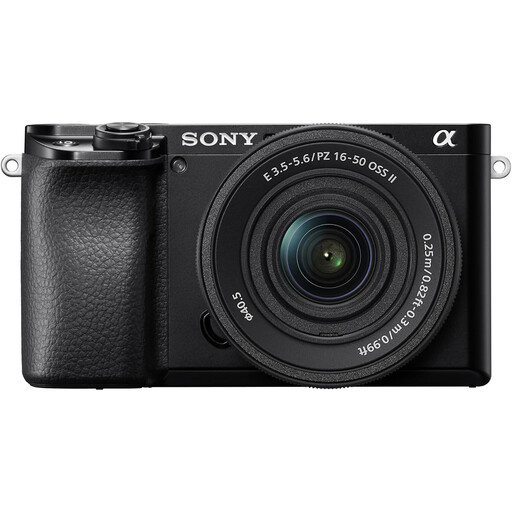 Image unavailable
This APS-C mirrorless camera with a zoom lens is another starting point for a tabletop setup if you will assess macro framing separately. The product title identifies the supplied lens as 16–55mm.
Before choosing it for small inscriptions or marks, check the exact lens’s maximum magnification and the focus method available with your intended setup.
For frame-filling images of small coin details, choose by the lens’s stated maximum magnification rather than assuming a supplied zoom will frame them closely enough. Nikon explains that 1:1 reproduces a subject life-size on the sensor; its NIKKOR Z MC 105mm f/2.8 VR S is specified at 1:1, while Canon specifies 1.4x maximum magnification for the RF 100mm F2.8L Macro IS USM.
Use a tripod, copy stand or other stable support when repeatable framing and focus sequences matter. Nikon advises tripod use for macro photography because camera movement becomes more noticeable at close range; stabilisation does not hold the coin and camera in the same positions throughout a sequence.
Reflective coin surfaces can show ambient lamps and other surroundings, so more brightness alone may not solve the problem. The Professional Coin Grading Service describes reflections and colour casts as lighting difficulties; control room light, then adjust your lights’ position and diffusion while checking the result.
Confirm the exact body and lens models, mount compatibility and included accessories before ordering, and keep the listing and order confirmation. GOV.UK states that consumer law protects purchases made remotely as well as in person; check the seller’s return terms separately from your statutory rights.