For repeatable photos of folded textiles, choose a mirrorless camera and standard zoom that let you control exposure and frame the largest item from your available shooting distance. A tripod helps keep successive shots aligned, while light placement and a consistent white-balance reference matter more to a dark backdrop and believable fabric colour than action-focused camera features.
Who is this setup for?
Online catalogue sellers
If you photograph several folded items for listings, consistent framing and backdrop placement make the images easier to keep uniform. Canon Europe’s product-photography guidance recommends a tripod for maintaining the same framing and background between shots.
Textile makers focused on colour and detail
When customers need to judge fabric colour, weave and folds from an image, keep the lighting and white-balance method consistent. Nikon School explains that a white-card preset records the colour temperature of light reflected from the card.
Creators making stills and product videos
If you also film demonstrations, check video requirements alongside the still-photography setup. The camera, lens, lighting and support you choose must still work for the folded-textile photographs that prompted the purchase.
What matters when choosing?
Start with the size of the folded items and the space available above the set. Then check exposure control, lens coverage and colour workflow before weighing features intended chiefly for video or moving subjects.
| Concern |
Buying checks |
Who this matters to |
| Dark background and repeatable exposure |
Check exposure controls and a practical way to fix the camera in position. Plan how to light the textile without directing light onto the backdrop. |
If I shoot a series of listings, I need the textile lit while the background and framing stay consistent. Around 40% of consumers put background and exposure control first. |
| Fabric colour and detail |
Check RAW capture and manual or preset white-balance options; match the available image detail to your intended crop. |
When colour and weave affect how customers judge my fabric, I need a repeatable lighting and colour reference. Roughly 30% of consumers make colour and detail their primary concern. |
| Flat-lay framing |
Measure your largest folded item and available camera height. Check the exact lens range, close-focus distance and screen or viewfinder arrangement. |
With limited room above the set, I need to fit the whole item in the frame without moving into an awkward shooting position. For around 20% of consumers, framing is the main priority. |
| Stills and video in one system |
Decide whether video is a recurring task; if so, check the exact camera’s recording modes and audio connections. |
If I regularly film product demonstrations as well as catalogue images, I need one setup that accommodates both. About 10% of consumers prioritise that combined use. |
What should you avoid?
-
Choosing the body before planning the set
A camera body cannot hold framing constant or prevent light from reaching the backdrop. Canon Europe’s product-photography guidance identifies a tripod as useful for keeping successive shots aligned.
Check the camera and lens alongside the support, lighting and backdrop arrangement you will actually use.
A tripod, light modifier, backdrop support or white-balance reference may also be needed for the planned workflow.
-
Expecting a dark backdrop to photograph as black automatically
Light falling on the backdrop can make it appear lighter even when the material itself is dark. Canon UK’s low-key lighting guidance distinguishes the background material from how it is illuminated.
Take a test shot, then adjust the light’s direction and the separation between textile and backdrop before changing cameras.
-
Treating resolution as a substitute for colour control
Pixel count does not determine whether fabric colour looks consistent under changing light. Nikon School’s white-balance guidance explains how a white-card preset fixes a reference for the light reflected from the card.
Keep the lighting consistent and refresh your white-balance reference when the setup changes.
-
Checking the camera but not the supplied lens
A zoom’s focal range and close-focus distance affect whether you can frame a folded item at the distance your space allows.
Measure the largest item, backdrop and available camera height, then confirm the specifications of the lens in the exact bundle.
If that lens cannot provide the framing you need, changing lenses later adds another setup decision.
Relevant camera brands
These examples refer to particular camera-and-lens routes, not every product made by each brand. Compare the exact bundle with your shooting distance and lighting arrangement.
Canon
The EOS R50 with RF-S 18-45mm F4.5-6.3 IS STM is a standard-zoom route for a fixed textile-photography set.
- Canon UK specifies a 24.2MP APS-C sensor for the EOS R50 and a 29–72mm full-frame-equivalent range for this lens.
- The lens’s f/4.5–6.3 maximum aperture does not remove the need to light the textile and control spill onto the backdrop.
Nikon
The Z50II and NIKKOR Z DX 16-50mm f/3.5-6.3 VR suit buyers who want to inspect setting changes through a viewfinder or vari-angle screen.
- Nikon UK describes a real-time electronic viewfinder preview, a vari-angle touchscreen and a 0.2m minimum focus distance for the lens.
- Those viewing and close-focus features do not keep stray light off a dark backdrop.
Fujifilm
The X-M5 with XF18-55mmF2.8-4 R LM OIS is a route for buyers intending to adjust product images from RAW files.
- Fujifilm specifies 26.1MP APS-C capture and 14-bit RAW for the X-M5; its lens spans a 27–84mm full-frame-equivalent field of view.
- RAW capture and lens specifications alone do not establish accurate textile colour without consistent light and a suitable colour reference.
Sony
The Alpha 6400 is an E-mount APS-C option to consider if access to a suitable E-mount lens matters to your setup.
- Sony UK specifies a 24.2MP APS-C sensor and 14-bit RAW support for the Alpha 6400.
- Confirm the lens and accessories in the particular bundle against your working distance and camera position.
Mirrorless cameras on Joybuy
These camera-and-zoom bundles offer different starting points for folded-textile photography. Check the exact supplied lens and the controls important to your colour and exposure workflow; the tripod and lighting arrangement remain separate choices.
 No image available
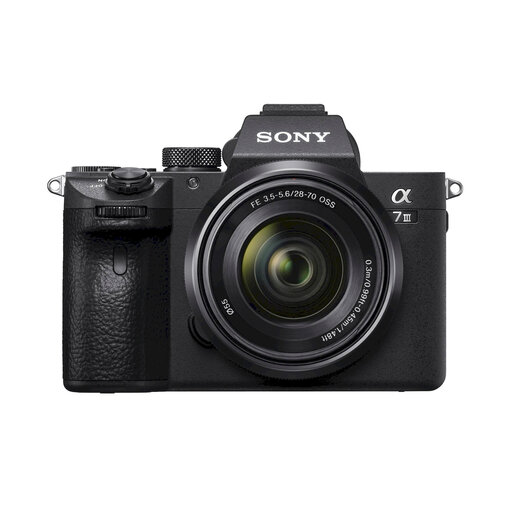
Sony Alpha 7 III full-frame with 28–70mm zoom lens
Consider this bundle if a full-frame camera and the stated zoom range suit your fixed shooting position. Check the supplied lens’s close-focus distance against your smallest textile details before choosing it.
View on Joybuy
 No image available
Sony Alpha ZV-E10 II K APS-C with 16–50mm power zoom
This APS-C zoom bundle is worth checking if you make product stills alongside video. Its title specifies a 26MP camera and 16–50mm f/3.5–5.6 lens; confirm still-photo exposure controls and the lens’s close-focus distance for your set.
View on Joybuy
 No image available
Sony A6700 APS-C with 16–50mm lens
The stated 16–50mm zoom gives you a range to assess for framing folded items. If RAW editing or fixed manual exposure is central to your workflow, confirm those still-photo controls and the supplied lens’s close-focus distance before buying.
View on Joybuy
 No image available
Sony A6400 APS-C with 16–50mm power zoom
This bundle may suit a buyer planning to refine textile images from RAW files: Sony UK specifies 14-bit RAW support for the Alpha 6400. Check the supplied lens’s close-focus distance and the camera controls you need for repeatable exposure and white balance.
View on Joybuy
 No image available
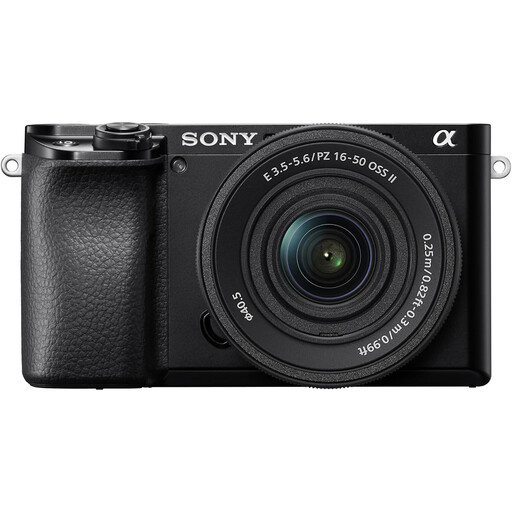
Sony A6100 APS-C with zoom lens
For a flat-lay setup, establish exactly which zoom lens this bundle supplies before assessing its framing range and working distance. Also check RAW, manual exposure and white-balance controls if those are required for your catalogue workflow.
View on Joybuy
Frequently asked questions
Do I need a specialist low-light camera for a dark background?
Not necessarily: keeping the backdrop dark is chiefly a matter of controlling where the light falls. Canon UK’s low-key lighting guidance notes that preventing light from reaching a background can darken its appearance; light the textile separately and check the result in a test shot.
Should I leave white balance on automatic for fabric photos?
A preset white-balance reference is useful when consistent fabric colour matters, particularly if the lighting changes. Nikon School explains that a white-card preset fixes the colour temperature measured from reflected light; take a new reference when you change the lighting setup.
What lens should I start with for folded textiles?
A standard zoom gives you framing choices, provided its range and close-focus distance work in your available space. Measure the largest folded item and your camera-to-subject distance before selecting the exact lens bundle.
Is a tripod useful if the lens has stabilisation?
Yes, when matching one catalogue image to the next is important. Stabilisation addresses handheld shake, while a tripod keeps the camera position and framing fixed; Canon Europe’s product-photography guidance specifically highlights that consistency between shots.


