Choose the lens and shooting method before the camera body: fine markings call for adequate close-up magnification, careful focus and stable support, while whole-tool photographs need room to frame the subject. Canon’s EOS R50 with the RF 35mm close-focus lens suits a mix of wider and moderately close shots; Nikon’s Z50II with its 1:1 macro lens puts tiny details first; and Sony’s α6400 offers an E-mount route with a compact 1:1 macro option. Check the exact lens, available bench space and box contents before choosing a kit.
Who is this setup for?
Detail-documenting makers
If engravings, cutting edges, wear or surface texture must be clear in records or instructions, the lens’s magnification and close-focus distance deserve particular attention. Nikon and Sony specify 1:1 magnification for the macro lenses discussed below.
Workshop cataloguers
If you photograph complete tools as well as details, consider how easily you can change framing around benches and shelving. Canon and Nikon list vari-angle screens on the camera bodies discussed here.
Space-conscious shared-workshop users
If equipment must be moved and packed away between sessions, consider the lens and any support alongside the camera body. A tripod can help with static close-ups, but its position also needs to leave the shared bench accessible.
What matters when choosing?
For photographing craft tools in a shared workshop, establish how small a detail needs to fill the frame, then assess the lighting and space available for a stable setup. These lens-and-body routes address different priorities rather than offering one answer for every tool.
Canon EOS R50 with RF 35mm F1.8 MACRO IS STM
Consider it when: You need whole-tool photographs and moderately close views of labels or surfaces from one setup.
Allow for: Canon specifies up to 0.5x magnification, not the 1:1 reproduction offered by the Nikon and Sony macro lenses here.
Nikon Z50II with NIKKOR Z MC 50mm f/2.8
Consider it when: Small marks or components need to fill the frame; Nikon specifies 1:1 magnification for this lens.
Allow for: Its angle of view on the DX-format Z50II is relatively tight for whole tools where stepping back is difficult.
Sony α6400 with E 30mm F3.5 Macro
Consider it when: You want an APS-C E-mount camera and Sony’s compact 1:1 macro lens for tool details.
Allow for: At close range, the camera or photographer may obstruct light or appear in reflective surfaces.
| Concern |
What to check |
Who this matters to |
| Fine-detail reproduction |
Check the exact lens’s maximum magnification and how much room you have to focus and position it. Plan stable support for static close-ups. |
If a maker’s mark or worn edge must occupy much of the photograph, I need a lens that can frame it closely rather than relying on the body’s pixel count. About 33% of consumers would put fine-detail reproduction first. |
| Mixed lighting and focus |
Compare the lens’s maximum aperture and the body’s stated focus conditions; consider whether you can position a support or task light without disrupting others. |
When light varies across the bench, I want control over focus and exposure without losing the depth of field the tool needs. Roughly 27% of consumers would make lighting and focus their primary concern. |
| Shared-space handling |
Check screen movement, the complete camera-and-lens setup and the footprint of any support. |
I may need to frame a tool from above and then clear the bench for someone else. Around 20% of consumers would prioritise a setup they can position and put away readily. |
| Complete kit |
Confirm the exact lens, charging equipment, storage and support needed for your intended shots against the contents of the chosen kit. |
I do not want to unpack the camera and discover that an essential item for my close-up workflow still needs to be selected. About 20% of consumers would put kit completeness first. |
Mistakes to avoid
-
Choosing the body before the close-up lens
A body’s resolution does not establish how closely its lens can focus. Canon specifies 0.5x magnification for the RF 35mm F1.8 MACRO IS STM, while Nikon and Sony specify 1:1 for the macro lenses discussed here.
Decide how large the smallest detail must appear, then confirm the exact lens, mount and workable shooting distance for the space you have.
-
Assuming 1:1 macro makes every shot easier
At high magnification, depth of field is narrow. Working close to reflective metal can also make it harder to keep the camera and surrounding objects out of the image.
Check the lens’s working distance and make trial shots with stable support and an aperture suited to the depth you need.
-
Assuming every essential item is in the camera box
Kit contents vary by listing. Canon’s UK EOS R50 body listing, for example, says that a USB-C charger is not included.
Check the contents of the exact camera kit and identify the lens, charging equipment and support your photographs require.
-
Leaving disposal until the old camera is retired
GOV.UK’s guidance on waste electrical and electronic equipment describes recovery, reuse and recycling routes for electrical equipment.
When replacing equipment, check an appropriate retailer or local-authority collection route, and remove personal data from memory cards before disposal or resale.
Relevant brands to consider
Canon
Canon’s RF system offers an EOS R50 route for wider workshop views alongside moderately close photographs with the RF 35mm F1.8 MACRO IS STM.
- Canon specifies a 24.2MP APS-C sensor for the EOS R50 and up to 0.5x magnification for the RF 35mm lens.
- The RF 35mm does not provide 1:1 magnification. Canon’s UK EOS R50 body listing also says a USB-C charger is not included.
Nikon
Nikon’s Z50II and NIKKOR Z MC 50mm f/2.8 route puts life-size tool details ahead of easy framing of whole tools in confined space.
- Nikon specifies 1:1 magnification and a 0.16m minimum focus distance for the lens; the Z50II has a vari-angle screen.
- On the DX-format Z50II, the 50mm lens gives a relatively tight view, so check whether you can step back far enough for larger tools.
Sony
Sony’s APS-C E-mount route pairs a camera such as the α6400 with the compact E 30mm F3.5 Macro when close detail is the priority.
- Sony specifies a 24.2MP APS-C sensor for the α6400 and 1:1 magnification for the E 30mm F3.5 Macro.
- The macro lens’s short close-focus distance can complicate lighting and reflections. Check how you will position the camera around the tool.
Sony camera kits on Joybuy
These Sony camera kits pair APS-C bodies with zoom lenses for workshop photographs. If very small markings must fill the frame, check the bundled lens’s close-focus capability and consider a compatible, separately selected macro lens and stable support.
 No image available
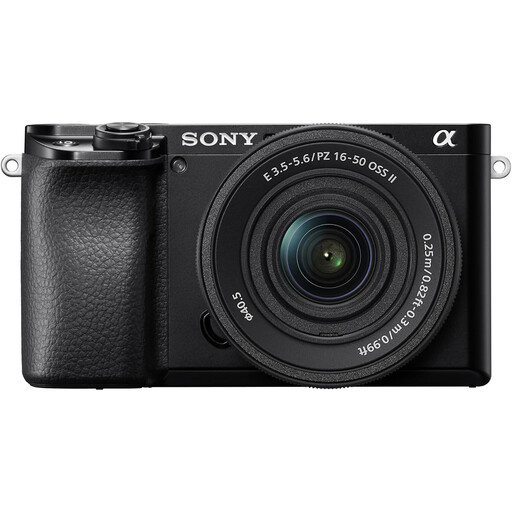
Sony A6400 with 16–50mm Power Zoom
Consider this kit for whole-tool photographs while planning your close-detail lens separately. Sony specifies a 24.2MP APS-C sensor for the α6400; check the bundled 16–50mm zoom’s magnification against your smallest subject and leave room for stable support.
View on Joybuy
 No image available
Sony Alpha ZV-E10 II K with 16–50mm f/3.5–5.6 Power Zoom
Consider this kit if you need to reposition the camera around a shared bench and also photograph wider tool arrangements. Its listed configuration has a 26MP APS-C body and a 16–50mm power zoom; for fine 1:1 detail, check a compatible macro lens and how you will support the camera.
View on Joybuy
 No image available
Sony A6100 with 16–55mm Zoom
Consider this kit for wider views of tools and the workbench, with a separate decision about fine-detail photography. Its title identifies a 16–55mm zoom; confirm the exact bundled lens and its close-focus capability before relying on it for small markings.
View on Joybuy
Common questions
Do I need a 1:1 macro lens to photograph craft tools?
Not for every photograph: a 0.5x close-focus lens can suit larger details and shots that retain some context. Choose a 1:1 lens when small marks or components need to fill much more of the frame, and allow for careful focusing and stable support.
Why use a tripod for static tool photographs?
A tripod or other support helps limit camera movement during close-up photographs. Canon recommends support for still-life macro work and notes that touching the camera just before exposure can introduce vibration; position the support so it does not obstruct a shared bench.
Is a USB-C charger included with the Canon EOS R50 body?
Canon’s UK EOS R50 body listing says that a USB-C charger is not included, although the camera supports USB charging. Check the contents of the exact kit you intend to buy rather than assuming every bundle contains the same charging equipment.
What should I do with an old camera when replacing it?
Check an appropriate electrical-equipment collection or recycling route rather than assuming general rubbish is suitable. GOV.UK’s waste electrical and electronic equipment guidance describes recovery, reuse and recycling; remove personal data from memory cards before handing equipment over or reselling it.


