Close-up flower-detail photographers
If you want petals, stamens or small blossoms to fill much of the frame, the lens's magnification and your approach to depth of field matter more than a general-purpose zoom alone.


Choose the camera system around the flower photographs you want to make, particularly the lens you would use for close-ups. A lens specified at 1:1 magnification or greater suits frame-filling detail, while focus stacking can extend depth of field when the flower stays sufficiently still. For walks around the garden, weigh those options against the complete kit's carrying weight and how easily you can compose from a low viewpoint.
If you want petals, stamens or small blossoms to fill much of the frame, the lens's magnification and your approach to depth of field matter more than a general-purpose zoom alone.
If you carry the camera as you explore and photograph flowers near ground level, consider the weight of the body and lens together, screen movement and stabilisation.
If flowers move in a breeze or the light changes while you work, you may prefer to make several individual frames rather than rely on a multi-shot stacking sequence.
Decide whether you mainly want wider garden scenes or small flowers filling the frame. Then compare the appropriate lenses and shooting workflow before judging how comfortable the complete kit will be to carry and use.
| Concern | What to check | Who this matters to |
|---|---|---|
| Close-up detail and depth of field | Check the exact lens's maximum magnification and mount compatibility. If you want more of a still flower sharp, check the camera's focus-bracketing or stacking options. | When a small blossom needs to fill the frame, I care about capturing its detail without losing too much to shallow depth of field; around 40% of consumers would put this close-up need first. |
| Low-angle, handheld use | Compare body-and-lens carrying weight on the same basis, screen articulation and the applicable stabilisation specifications. | For a garden walk, I want to frame flowers near the ground without an awkward shooting position or an unwieldy kit; roughly 30% of consumers would make ease of carrying and low-angle use their priority. |
| Responsive single frames | Check close focusing, the controls you would use to focus and a shutter-speed approach suited to flower movement. | If a breeze keeps shifting the flower, I would rather try individual exposures than depend on a sequence aligning; about 30% of consumers would prioritise this straightforward shooting approach. |
Sensor resolution or a stacking mode does not determine whether a small flower can fill the frame. The lens's magnification and focusing distance are central to that decision.
Choose your intended framing first, then check the specifications and mount compatibility of the particular lens you plan to use.
A dedicated macro lens is another item to buy and carry if it is not part of your chosen kit.
Stacking uses images made at different focus distances, so movement between exposures can interfere with the combined result.
Reserve a stacking sequence for a sufficiently still flower. When it moves, consider a suitable shutter speed and several individual frames instead.
Stabilisation specifications can change with shooting conditions. Canon specifies 2 stops of optical stabilisation for its RF 100mm F2.8L Macro IS USM at 1.0x magnification under its test standard.
Read the rating and its conditions for the exact lens; stabilisation also addresses camera movement, not a flower moving in the wind.
GOV.UK's Countryside Code advises visitors to leave plants as they find them. Access to a particular garden may also depend on its signs or the landowner's permission.
Work from a permitted position and adjust your camera angle or framing rather than disturbing flowers.
Canon's RF system offers the EOS R7 body alongside an RF 100mm F2.8L Macro IS USM lens for a dedicated close-up setup.
Nikon Z offers a dedicated macro-lens route for buyers who want small flower details to fill the frame.
Sony E-mount gives buyers a dedicated FE 90mm F2.8 Macro G OSS lens option alongside APS-C camera bodies.
The OM-5 Mark II is an option for photographers considering a lighter body and an in-camera close-up workflow.
These interchangeable-lens Sony camera kits are starting points for garden photographs and low-angle compositions. If frame-filling wildflower detail is your priority, check the supplied lens's close-focus specifications and any compatible macro lens you would use.
 Image unavailable
Consider this APS-C interchangeable-lens kit if you want a zoom-equipped starting point for garden photography. The product title specifies a 16–50 mm f/3.5–5.6 Power Zoom lens; check that lens's close-focus magnification and the camera's focus-sequence options if small-flower detail is your aim.
Compare the weight of the complete kit, including the lens, when judging how it will carry on a walk.
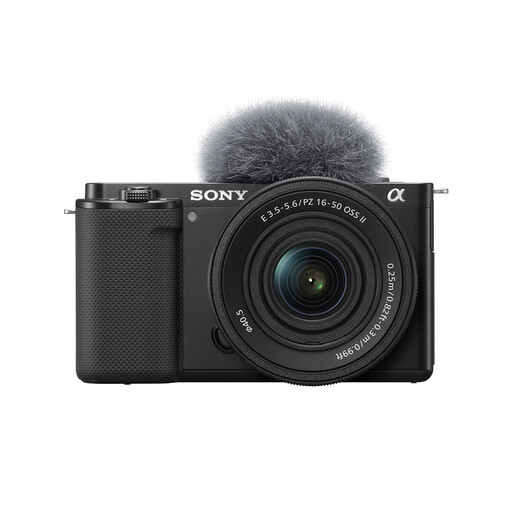 Image unavailable
This interchangeable-lens kit may suit consumers starting with wider flower and garden compositions. Its product title identifies a supplied 16–50 mm Power Zoom lens; check its maximum magnification and closest focusing distance before choosing it for tight close-ups.
If low viewpoints or a light carrying setup matter to you, check the screen movement and the weight with the lens attached.
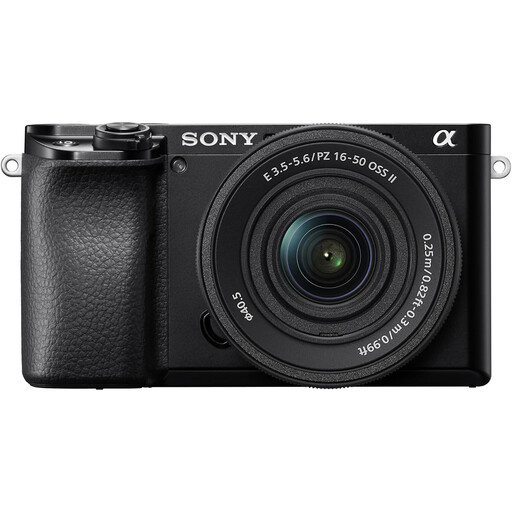 Image unavailable
This interchangeable-lens kit is a starting point for general garden photographs, provided its supplied zoom gives you the framing you want. Confirm the exact lens before ordering: the product title identifies a 16–55 mm zoom, while the accompanying kit information identifies a 16–50 mm lens.
For small blossoms, check the actual lens's close-focus specifications. Compare the weight of the complete kit if you will carry it around the garden.
Not for every photograph: a general-purpose zoom can frame larger blooms or a wider garden scene. For life-size or greater reproduction of a small flower, check a dedicated lens's specification; Nikon UK describes true macro as at least 1:1 magnification, and lists its NIKKOR Z MC 105mm at 1:1.
Use it when the flower and camera can remain sufficiently still while several focus-shifted frames are captured. OM SYSTEM's OM-5 Mark II manual describes combining such images for greater depth of field; a flower moving between frames makes that sequence harder to use.
Stabilisation helps with camera movement, not movement of the flower itself. Choose a shutter speed suited to the subject's movement or wait for a calmer moment, and read any stabilisation rating under its stated conditions: Canon specifies 2 stops of optical stabilisation for its RF 100mm macro lens at 1.0x magnification under Canon's test standard.
Leave the plants where they are. GOV.UK's Countryside Code advises visitors to leave plants as they find them; follow the garden's signs and obtain the landowner's permission where access requires it. Change your position or framing instead of moving the flowers.