Detail-first moss photographers
If individual structures need to fill much of the frame, check the lens’s maximum magnification and close-focus behaviour before comparing camera bodies.


Choose the lens before the camera body if tiny moss structures are your priority: a lens capable of 1:1 reproduction lets you frame finer details than a 0.5x close-focusing lens. If you also want campsite and woodland photographs, weigh that detail against the complete kit’s carried bulk, low-angle framing, stabilisation and protection for both body and lens.
If individual structures need to fill much of the frame, check the lens’s maximum magnification and close-focus behaviour before comparing camera bodies.
If the same kit must photograph moss, woodland and the campsite, consider how much close-up detail you need alongside the lens’s wider framing options and the full kit’s carried bulk.
If you often shoot beneath a canopy or late in the day, consider stabilisation for camera shake and a screen you can see while composing near the ground. Moving moss still calls for an appropriate shutter speed or calmer conditions.
For camping moss photography, decide how closely the lens must frame the subject, then check whether the complete kit works for the conditions in which you will carry and use it.
| Concern | What to check | Who this matters to |
|---|---|---|
| Close detail | Check the exact lens’s maximum magnification and minimum focusing distance. Nikon specifies 1:1 for the NIKKOR Z MC 50mm f/2.8; Canon specifies up to 0.5x for the RF 35mm F1.8 MACRO IS STM. | I want tiny moss structures, rather than just a wider patch, to fill the photograph. Around 33% of consumers would put that close-detail need first. |
| Outdoor handling | Check how the screen moves at ground level and the stated protection of both the body and fitted lens; plan separate rain protection. | When I am framing moss near damp ground, I need to see the screen without treating the camera kit as waterproof. For around 27% of consumers, that handling need comes first. |
| Handheld shooting | Check whether stabilisation is in the body or lens. It can address camera movement, not moss moving in the wind. | Under a woodland canopy, I may need to photograph by hand without camera-shake blur. Around 20% of consumers would prioritise that need. |
| Carried kit | Compare the ready-to-use body, lens and protective gear, and confirm whether the offer includes the lens you intend to use. | I need a kit I will carry while camping that can also frame wider woodland and campsite scenes. That flexibility would come first for around 20% of consumers. |
A camera body does not determine how large a moss structure appears in the frame. Nikon specifies 1:1 reproduction for its NIKKOR Z MC 50mm f/2.8, while Canon specifies up to 0.5x for its RF 35mm F1.8 MACRO IS STM.
Decide whether you need life-size detail or a less tightly framed close-up, then check the magnification of the exact lens in your kit.
A dedicated macro lens adds another item to carry if your chosen kit includes only a general-purpose zoom.
In-body or lens stabilisation can reduce blur from camera movement, but it cannot stop moss moving in the wind.
For a moving subject, wait for calmer conditions or use a suitable shutter speed; use support when camera movement is the problem.
Protection depends on the fitted lens and how the equipment is used. Canon identifies weather sealing on the EOS R7 but advises checking conditions before shooting in a downpour.
Check the limits for your exact body-and-lens combination and keep rain and drying protection with your camping gear.
A body or walkaround zoom may not provide the magnification you want for moss detail. Nikon’s Z50II with 16–50 mm VR kit listing also states that a charger is not included.
Read the contents of the exact offer, including its lens and charging equipment, before choosing the kit.
These camera-system examples show different ways to assemble a moss-photography kit; the fitted lens determines its close-up capability.
The Z50II paired with the NIKKOR Z MC 50mm f/2.8 is a route for close studies of small moss structures.
The EOS R7 with the RF 35mm F1.8 MACRO IS STM suits buyers who want moss close-ups alongside broader camping scenes.
The α6700 is an APS-C body to consider if in-body stabilisation and subject-recognition autofocus matter alongside a separately chosen close-focus lens.
These Sony mirrorless kits include zoom lenses for considering wider camping and woodland photographs. If close moss detail is the deciding factor, check the supplied lens’s magnification and focusing distance before choosing one.
 No image available
Consider this APS-C kit if low-angle framing and a zoom for camping scenes matter alongside moss photographs.
Sony specifies in-body stabilisation for the α6700. Check the included lens’s close-focus capability and the protection of the complete kit before using it in damp conditions.
 No image available
Consider this APS-C kit if you want one supplied zoom for wider campsite views as well as photographs of moss.
The product name specifies a 16–50 mm f/3.5–5.6 power zoom. Check its maximum magnification for your intended close-ups and protect the equipment from rain.
 No image available
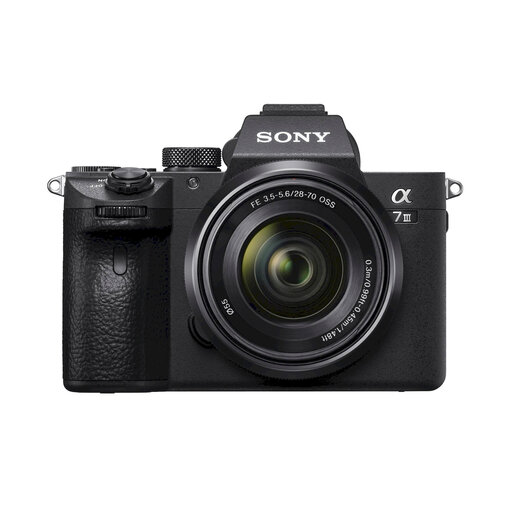
Consider this full-frame kit if a supplied zoom for broader woodland and campsite framing is part of your plan.
Check whether the 28–70 mm lens focuses closely enough for the moss details you want, and confirm protection for the fitted lens as well as the camera.
 No image available
Consider this APS-C kit for general camping photographs if the supplied zoom covers the wider views you want.
Its product name specifies a 16–50 mm power zoom. Check that lens’s maximum magnification before relying on it for fine moss detail, and plan protection for damp conditions.
No, not for every moss photograph: a close-focusing lens can capture textures and wider surroundings. For smaller structures to occupy more of the frame, compare maximum magnification; Nikon specifies 1:1 for the NIKKOR Z MC 50mm f/2.8, while Canon specifies up to 0.5x for the RF 35mm F1.8 MACRO IS STM.
Yes, a kit zoom can be used for moss patches and their surroundings, but its suitability for tiny details depends on the exact lens. Check its maximum magnification and minimum focusing distance rather than assuming that a zoom supplied with a camera provides 1:1 reproduction.
Weather sealing is not a promise that the complete camera-and-lens kit is waterproof. Canon identifies weather sealing on the EOS R7 but advises checking conditions before a downpour; confirm the protection of the fitted lens and keep the equipment sheltered when needed.
In England and Wales, the Countryside Code published by GOV.UK, Natural England and Natural Resources Wales advises following local signs and keeping to marked paths unless wider access is available. Check the rules for the particular campsite or location; access rules in Scotland and Northern Ireland need to be considered separately.
Confirm that the offer includes the lens needed for your intended moss detail and the charging equipment you require. Nikon’s Z50II with 16–50 mm VR kit listing, for example, states that a charger is not included, so check the contents of the specific kit you choose.