Ceramic sellers making repeatable listing images
If you photograph one complete bowl after another, consistent framing and a setup that another workshop user can reproduce matter more than close-up capability you rarely use.


Choose the lens route before the camera body: a standard zoom can suit repeatable photographs of complete bowls, while a true 1:1 macro lens is worth considering when tiny marks or glaze details need to fill the frame. In a shared workshop, plan for stable support and controllable light; a lens that works very close to the bowl can leave little room for lighting.
If you photograph one complete bowl after another, consistent framing and a setup that another workshop user can reproduce matter more than close-up capability you rarely use.
If small marks or textures are the subject, compare lens magnification and working distance. Canon UK specifies 1:2 magnification for its RF 35mm F1.8 Macro lens, while Nikon UK and Sony UK specify 1:1 for the macro lenses discussed below.
If camera positions and setup time are constrained by other workshop users, consider how you will view the screen, support the camera and position a lamp without obstructing the space.
Decide whether complete bowls or small surface details are your primary subject, then check how the camera and lighting will fit around your bench.
| Concern | What to check | Who this matters to |
|---|---|---|
| Repeatable full-bowl images | Check framing options and whether you can use stable support while controlling aperture for the depth of field you need. | I need the rim and foot to remain consistently framed and sharp across a set of listings. Around 36% of consumers put repeatable full-bowl images first. |
| Small ceramic details | Compare maximum lens magnification and working distance; 1:2 and 1:1 are different close-up capabilities. | When a maker’s mark or glaze texture is the subject, I need it to occupy enough of the image without crowding out my light. For around 27% of consumers, close detail is the primary need. |
| Shared-bench flexibility | Check screen movement and whether your intended camera support fits the positions available around the bench. | I may have to compose from above or beside the bench while others work nearby. Flexible positioning comes first for around 19% of consumers. |
| Changing light | Consider where an adjustable lamp will fit and how you will keep the camera steady when a smaller aperture calls for a slower shutter speed. | If light changes between work areas, I want a setup I can adjust without losing the bowl’s shape or surface detail. Around 18% of consumers prioritise lighting control. |
The lens determines the available magnification and working distance. Canon UK specifies up to 1:2 for the RF 35mm F1.8 Macro lens; Nikon UK and Sony UK specify 1:1 for the macro lenses discussed here.
Identify the smallest detail you need to show, then compare suitable lenses before committing to a camera mount.
If your first lens cannot frame that detail closely enough, you may need a separate macro lens later.
Nikon UK says the front of its Z MC 50mm f/2.8 can be about 5 cm from the subject at close focus; Sony UK specifies a 2.4 cm minimum working distance for its E 30mm F3.5 Macro. That leaves limited space for a lamp or reflector.
Plan where the light will go at your intended shooting distance, especially around reflective glazes.
A wide aperture admits more light, but close work can leave too little of a three-dimensional bowl in focus. Nikon UK’s macro guidance recommends a tripod and adjustable light for small subjects.
Build a repeatable tabletop arrangement, then choose the aperture for the parts of the bowl that must remain sharp.
Allow space and setup time for a tripod and lamp if consistent images are important.
The EOS R50 is a body to consider for whole-bowl compositions and awkward camera angles, with the lens chosen separately for the detail required.
The Z50II and Z MC 50mm f/2.8 form a detail-focused route when small marks or textures are a primary subject.
Sony E-mount is relevant if you already use that system and want to consider a 1:1 lens for ceramic details.
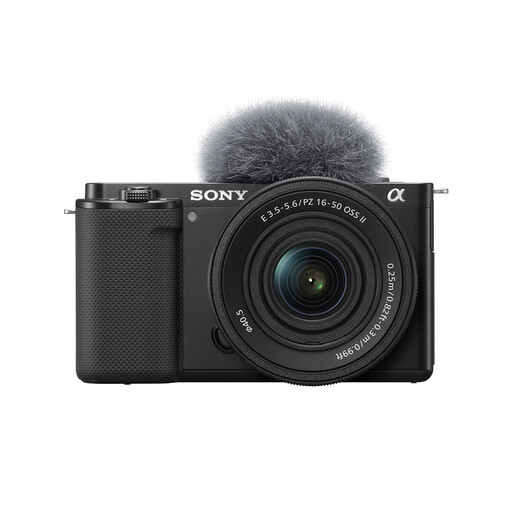
This interchangeable-lens camera comes with a zoom for changing whole-bowl framing. If small glaze details are your main subject, check what close-up lens capability you need separately.
 No image available
The included zoom offers a choice of focal lengths when framing complete bowls. Check how closely that lens can focus if you need small marks to fill the frame, and confirm the support and triggering options for your tabletop setup.
Not for photographs of complete bowls; consider 1:1 magnification when very small marks or surface details need to occupy much more of the frame. Compare working distance too, because a lens close to the bowl can restrict lighting placement.
A stable camera position and controllable light make framing and exposure easier to repeat. Nikon UK’s macro guidance recommends a tripod and an adjustable lamp; choose an aperture that keeps the parts of the bowl you need in focus.
It can help when you cannot stand directly behind a camera positioned above or beside the bowl. Canon UK and Nikon UK specify vari-angle screens for the EOS R50 and Z50II; check how any screen moves for the positions available at your bench.
For most UK online purchases, you can cancel without giving a reason up to 14 days after delivery, according to GOV.UK. Exceptions can apply, so check the cancellation information for your particular order.