Flower-detail walkers
If you want petals and small floral structures to fill the frame, prioritise the chosen lens’s magnification and close-focus capability over body resolution alone.


Choose a camera and lens together: for detailed flower photographs, the lens’s close-focusing ability and magnification matter more than body resolution alone. For a coastal walk, also consider the complete kit’s weight, a screen that helps with low viewpoints and how you will protect both body and lens from the weather.
If you want petals and small floral structures to fill the frame, prioritise the chosen lens’s magnification and close-focus capability over body resolution alone.
If the camera will be with you for most of the route, assess the weight of the body and intended lens together. Stabilisation and a screen suited to low viewpoints may also help with composition.
If you also photograph wider coastal views, birds or other wildlife, consider which lenses the system can accommodate and whether its focusing and screen features suit those subjects.
Start with how large you want a flower to appear in the frame, then assess the weight and outdoor handling of the complete camera-and-lens kit.
| Concern | What to check | Who this matters to |
|---|---|---|
| Close-up detail | Check the exact lens’s maximum magnification, minimum focusing distance and compatibility with the body. Consider whether you can frame the flower without touching it. | If I want small flower details to fill the frame, I need a lens that focuses close enough rather than relying on a high-resolution body. Around 42% of consumers put close-up detail first. |
| Walking and low viewpoints | Compare the weight of the complete kit, including its intended lens, battery and card; check how the screen moves for low compositions. | When I carry the camera along the route, I want a kit I can comfortably keep with me and use near ground level. For around 33% of consumers, that is the primary concern. |
| Weather and varied subjects | Read the environmental guidance for both body and lens, and check the lenses and focusing features needed for other subjects. | If I photograph coastal views or wildlife as well as flowers, I need a system that fits those plans and can be protected in changing conditions. This comes first for around 25% of consumers. |
Body resolution cannot replace lens magnification. Canon specifies its RF 35mm F1.8 Macro IS STM at up to 1:2 magnification, which is not life-size 1:1.
Decide how tightly you want to frame flowers, then check the exact lens’s magnification, focusing distance, mount compatibility and weight.
Getting the framing you want may mean carrying a separate close-focusing lens.
Fujifilm lists the X-T5 at 557g, while Canon lists the EOS R7 at approximately 612g with card and battery. Neither figure includes the lens you choose for flower photography.
Compare ready-to-carry combinations using a lens that meets your close-up requirements.
A larger lens can also change the bag and rain protection you need to carry.
Canon identifies weather sealing on the EOS R7 but advises caution before shooting in a downpour. Stabilisation addresses camera movement, not a flower moving in the wind.
Check the environmental guidance for the exact body and lens, protect the kit from harsh conditions and choose a shutter speed with subject movement in mind.
The Countryside Code for England and Wales advises visitors to leave plants as they find them and follow local signs.
Use lens choice, close focusing and a low-angle screen to compose without damaging flowers; follow the access rules where you are walking.
The EOS R7 is an APS-C body to consider if flower close-ups and occasional wildlife both matter, with the lens selected separately for the required magnification.
The X-T5 is an APS-C body to consider when walking weight and room to crop photographs matter, provided you choose an X-mount lens for the close-up work.
The α7C II offers a compact full-frame route for someone who specifically wants that body format and will choose an E-mount close-up lens separately.
The Z50II kit with 16–50mm and 50–250mm zooms is a route to consider for general walking scenes and more distant subjects.
These mirrorless camera kits offer different starting points for coastal views and low-angle compositions. If close flower detail is your priority, check the supplied lens’s focusing and magnification specifications before choosing a kit.
 No image available
Consider this full-frame kit if general coastal framing is as important to you as choosing a lens for flowers.
The supplied lens is a 28–70mm zoom. Check its close-focusing specifications and the complete kit weight if flower detail and carrying comfort are priorities.
 No image available
Consider the rotating screen if you want to compose flower photographs from a low viewpoint.
The kit includes a 16–50mm lens. Check that lens’s close-focus capability and the weight of the complete kit. Confirm the body-and-lens weather guidance before taking it into rain or coastal spray.
 No image available
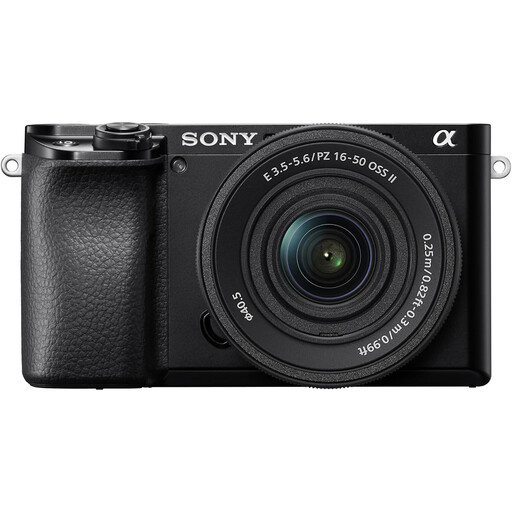
The flip-out screen offers a way to frame flowers from a low angle while the zoom gives you options for wider scenes.
This APS-C kit has a 16–50mm f/3.5–5.6 power zoom lens. Check its magnification and focusing distance for close flower detail, and assess the complete kit weight rather than a camera-only figure.
 No image available
The tilting screen and supplied zoom may suit a walk that combines wider views with flowers photographed from different viewpoints.
The lens is a 16–50mm power zoom. Check its close-up capability before relying on it for petal detail, and decide whether the listed 1.105kg weight for camera, battery, card and lens suits your walk.
 No image available
Its tilting screen is worth considering if you want to compose low-angle photographs without placing the camera over a flower.
The listing names a 16–55mm zoom lens. Confirm the exact supplied lens and its close-focusing specifications, as well as the weight you would carry with the lens attached.
Not for every flower photograph, but a close-focusing or macro-capable lens matters when small details need to fill the frame. Canon describes macro photography of small subjects as 0.5x magnification or greater and specifies its RF 35mm F1.8 Macro IS STM at up to 1:2, or 0.5x; check the figures for the lens you plan to use.
No: stabilisation addresses camera movement, not movement of the flower. When wind moves the subject, consider a faster shutter speed rather than relying on a manufacturer’s stated stabilisation rating.
No: weather sealing is not a promise that a camera-and-lens kit is waterproof. Canon identifies weather sealing on the EOS R7 but advises checking conditions before shooting in a downpour; read the guidance for both your chosen body and lens and protect the kit in severe weather.
Leave plants as you find them when following the Countryside Code in England and Wales. Follow local signs and access rules, and use your viewpoint or lens choice to improve the composition without disturbing the plants; check the applicable guidance elsewhere in the UK.