People documenting coins repeatedly
If you photograph coins for catalogues, listings, insurance or condition records, consistent alignment, controlled reflections and sufficient magnification matter more to this task than action autofocus.


Choose a mirrorless system around a dedicated macro lens and a stable overhead setup, rather than the camera body alone. For repeatable coin photographs, keep the sensor parallel to the coin and make room to control reflections; prioritise focus bracketing if close-up detail regularly falls outside a single shot’s depth of field. A compact body may be easier to clear from a shared bench, but image stabilisation does not replace a locked support.
If you photograph coins for catalogues, listings, insurance or condition records, consistent alignment, controlled reflections and sufficient magnification matter more to this task than action autofocus.
If the setup has to come down after each session, consider how you will secure the camera and lens, position the support and keep cables clear of other work.
If the camera will also serve for ordinary stills or video, look for a compatible dedicated macro lens as well as lenses for your other work. Do not assume a bundled zoom provides the close-up capability you need.
For coin photography on a shared bench, check the macro lens and the space needed for lighting first, then decide whether focus bracketing and easier storage affect your choice of body.
| Concern | What to check | Who this matters to |
|---|---|---|
| Close-up detail | Check the exact lens mount, maximum magnification and working distance. Make sure the stand height lets you frame a whole coin without tilting the camera. | I need small lettering and surface details to fill the frame, but still need space to position the lights. Around 33% of consumers put close-up detail first. |
| Depth of field | Check the body’s focus-bracketing functions and whether combining the images requires software; plan for a rigid support. | When raised details fall outside the sharp area of one close-up image, I need a repeatable way to capture them. For roughly 27% of consumers, depth of field is the primary concern. |
| Bench setup | Check the support’s load rating for the body and lens, and plan where the support and any powered-lighting cables will go. | I have to set up and clear the bench without leaving unstable equipment or cables in other people’s way. Bench setup comes first for about 27% of consumers. |
| Uses beyond coins | Confirm a suitable macro lens for the chosen mount, then assess general-purpose lenses for your other photography or video. | I want one camera system for coins and everyday shooting, rather than choosing the body solely for tabletop work. Around 13% of consumers prioritise that flexibility. |
A bundled general-purpose zoom does not establish the magnification or working distance needed for the coin details you intend to record. Venus Optics describes coin photography as a copy-stand and lighting problem before a gear problem.
Find a lens compatible with the body’s mount, check its maximum magnification and working distance, and allow room for your lighting before settling on body features.
Image stabilisation does not make a tilted coin parallel to the sensor or keep a moving support fixed throughout a focus sequence. Canon advises a sturdy tripod to maintain alignment between focus-stacking shots.
Use a stable copy stand or tripod, secure it before shooting and keep the coin flat and square to the sensor.
A lens can reach 1:1 magnification yet leave little room for diffusers or flags. Sony specifies a minimum working distance of 2.4 cm from the front of its E 30mm F3.5 Macro lens.
Plan where the lens, coin and light modifiers will sit at your intended magnification; compare working distances if access around the coin is important.
Canon’s RF-mount route includes the EOS R10, for which Canon documents focus bracketing and in-camera stacking, alongside dedicated macro-lens options.
Sony’s E-mount route pairs APS-C bodies with a dedicated 1:1 E 30mm F3.5 Macro lens.
Nikon’s Z-mount route includes the 20.9-effective-megapixel Z50II and the NIKKOR Z MC 50mm f/2.8 macro lens.
Fujifilm’s X-mount route includes the 26.1-effective-megapixel X-S20 and the XF30mmF2.8 R LM WR Macro.
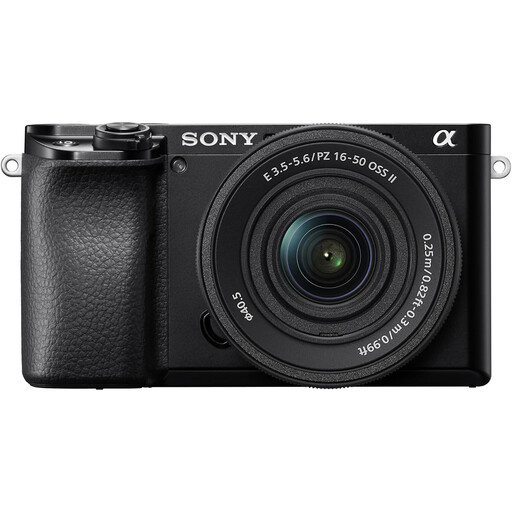
These Sony mirrorless kits can serve as camera starting points for a shared-bench setup. Each includes a zoom lens; choose a compatible dedicated macro lens separately if your coin photographs require a stated close-up magnification.
 No image available
Consider this APS-C kit if the camera will also be used for stills and video, while planning a separate E-mount macro lens for coin close-ups.
The kit name specifies a 16–50 mm f/3.5–5.6 Power Zoom lens, 26-megapixel stills and 4K60p video; it does not identify the included zoom as a macro lens.
If you need focus bracketing, confirm this model’s functions before buying. Use a stable support for repeatable overhead alignment.
 No image available
This APS-C camera kit suits someone considering one Sony E-mount system for general photography and a separately chosen macro lens for coins.
It includes a 16–50 mm Power Zoom lens; check the magnification and working distance of the separate macro lens you intend to use.
Confirm focus-bracketing functions and how the camera will attach to your chosen support if those details matter to your setup.
 No image available
Consider this APS-C kit for general stills alongside coin photography if you are prepared to choose a separate compatible E-mount macro lens.
The product name identifies a 16–55 mm zoom lens, not a dedicated macro lens; check the intended macro lens’s magnification and working distance.
If your method relies on focus bracketing or a particular overhead support, confirm the body’s functions and mounting arrangement before purchase.
Do not assume a kit zoom can capture the coin detail you need. Check that lens’s stated maximum magnification; Sony, Nikon and Fujifilm each specify 1:1 or 1x capability for the dedicated macro lenses discussed here. A kit zoom can still serve your general photography.
Not always: first keep the coin parallel to the sensor and control reflections. Consider stacking when the magnification you need leaves relevant raised details outside the sharp area of one image. Canon explains that stacking combines shots focused at different distances and advises sturdy support to keep them aligned.
No. Stabilisation does not establish fixed camera-to-coin alignment for repeatable records or keep a focus sequence aligned if the setup moves. Use a stable surface and secure the copy stand or tripod before shooting.
Check that the support can carry the camera and lens, secure its legs and head, and route cables away from movement and potential damage. BBC Studioworks’ tripod risk assessment calls for properly adjusted, locked legs; the Health and Safety Executive advises assessing electrical hazards and using appropriate controls.