Texture-detail sellers and makers
If listings or records must show weave, stitching, fibres or small surface defects, prioritise a lens that can reproduce those details at the required scale and a camera position you can repeat.


Choose the lens for the detail you need to show before choosing a mirrorless camera body: individual threads, stitching and small defects call for checking a compatible macro lens’s maximum magnification. For full swatches and patterns, consider how the camera and screen will fit above your table; at high magnification, shallow depth of field also makes stable positioning and lighting important.
If listings or records must show weave, stitching, fibres or small surface defects, prioritise a lens that can reproduce those details at the required scale and a camera position you can repeat.
If you photograph whole swatches as well as crops, consider your required image size, a repeatable lighting and white-balance routine, and whether you can see the screen from the tabletop camera position.
If the same camera will cover fabrics, wider product scenes and occasional video, distinguish the convenience of a bundled zoom from the close-up capability of the exact lens you intend to use.
Start with the smallest detail the photograph must show, then check whether the lens, camera support and lights can fit around the fabric on your table.
| Concern | What to check | Who this matters to |
|---|---|---|
| Close fabric detail | Check the exact lens’s maximum magnification, mount compatibility and close-focus distance. | If threads or defects need to fill much of the frame, cropping a wider photograph may not show enough detail. Around 36% of consumers would put close-detail reproduction first. |
| Pattern and colour consistency | Check still-image resolution against the required output size, and plan consistent lighting and white balance. | For a catalogue of full swatches and detail crops, I need images that can be framed and lit consistently. Around 29% of consumers would prioritise that pattern-and-colour workflow. |
| Fit around a small table | Check screen visibility from the intended angle and space for the lens, support and lights. | When the camera sits above a crowded table, I need room to compose without blocking the fabric or lighting. Roughly 21% of consumers would make physical fit their primary concern. |
| Wider content work | Check whether the camera meets your general stills or video needs while allowing a compatible close-up lens. | If I also photograph other products or make occasional videos, one interchangeable-lens camera needs to serve both jobs. Around 14% of consumers would put that flexibility first. |
A zoom bundled with a camera may suit full swatches without providing the magnification needed to fill the frame with a tiny defect. Nikon, for example, identifies its Z50II kit’s 16–50mm zoom separately from its 1:1 NIKKOR Z MC 50mm f/2.8 macro lens.
Check the magnification and close-focus specification of the exact included lens against the detail you need to photograph.
Nikon notes that depth of field becomes extremely narrow at high magnification, so more magnification does not mean every raised thread will be sharp in one exposure.
Try to keep a flat fabric sample aligned with the sensor plane, and decide whether your subject needs one focus plane or images taken at multiple focus positions.
Nikon says the front of its NIKKOR Z MC 50mm f/2.8 can be only centimetres from the subject at close focus. That leaves less room to position lights around fabric on a small table.
Lay out the intended camera support, lens position, fabric and lights before choosing a focal length.
A screen you can view from above helps with composition, but it cannot hold the camera still or increase the sharp area in a high-magnification photograph.
Check how you will secure the camera and light the fabric as well as how you will view the screen.
Canon RF and RF-S buyers can consider an APS-C body for tabletop framing and a separate RF macro lens for closer detail.
Nikon Z buyers can compare the space required by a compact macro lens with the viewing angle offered by a vari-angle body screen.
Sony E-mount buyers can consider an APS-C body alongside a compatible dedicated macro lens for fine fabric detail.
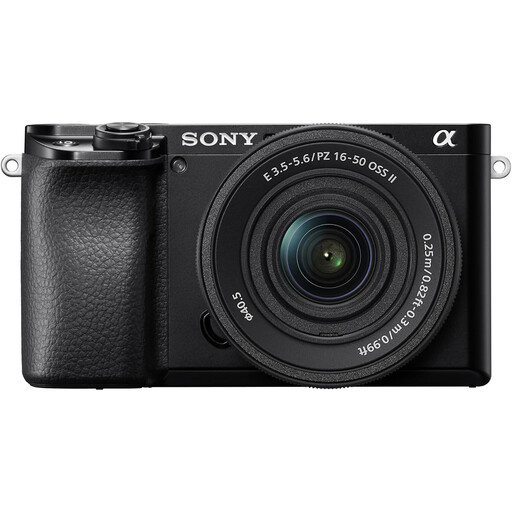
These Sony mirrorless camera-and-zoom kits offer a starting point for full fabric swatches and wider content work. For close views of individual fibres or stitching, check the supplied lens’s magnification and whether a compatible E-mount macro lens suits your setup.
 No image available
Consider this kit if you want to begin with whole swatches and check a separate lens for finer texture images.
APS-C mirrorless camera with a 16–50mm power zoom lens. Confirm the supplied lens’s maximum magnification and close-focus distance for the fabric detail you need.
 No image available
Consider this kit when fabric stills and video are both part of your work, while assessing close-up capability separately.
The product name specifies an APS-C mirrorless camera, 26 megapixels, 4K60p video and a 16–50 mm f/3.5-5.6 power zoom lens. Check that lens’s magnification and close-focus distance before choosing it for tiny fabric details.
 No image available
Consider this camera for wider fabric and product photographs, then assess the exact lens needed for close texture work.
The product name identifies an APS-C mirrorless camera with a 16–55mm zoom lens. Confirm the precise included lens model, its maximum magnification and its close-focus distance before relying on it for small details.
Not for every full swatch or pattern photograph, but a compatible macro lens is a more direct choice when threads, fibres or small defects must fill much of the frame. Check the exact lens’s maximum magnification; Nikon describes its NIKKOR Z MC 50mm f/2.8 as a 1:1 macro lens and notes that depth of field narrows at high magnification.
No: resolution does not change a lens’s closest focusing distance or maximum magnification. Canon specifies 24.2 MP for the EOS R50 and Sony approximately 26.0 MP for the α6700, but first check whether the intended lens can frame the fabric detail you need.
At high magnification, depth of field can be extremely narrow, as Nikon explains. Keep flat fabric as parallel to the sensor as practical, support the camera steadily and consider images at multiple focus positions if one exposure cannot show the required detail sharply.
Plan around the exact lens, a stable camera position and lighting that fits your table. A bundled zoom is not automatically a macro lens: Nikon lists a 16–50mm zoom with its Z50II kit and identifies the NIKKOR Z MC 50mm f/2.8 separately as a 1:1 macro lens.