Detail-led product-image makers
If you photograph peel texture, droplets or small decorations, you may need close framing and enough image detail to crop for listings, menus or other formats.


For a stationary fruit arrangement, choose a mirrorless camera that records RAW files and lets you control white balance, then pair it with a lens that can frame the detail you need. A high-resolution APS-C body and 1:1 macro lens suit close detail and cropping in a fixed setup; a stabilised full-frame body is another route if you also shoot handheld, but lens choice and available space remain important.
If you photograph peel texture, droplets or small decorations, you may need close framing and enough image detail to crop for listings, menus or other formats.
If you shoot several arrangements under controlled lights, consistent colour and exposure matter across the set. RAW files and deliberate white-balance settings give you a repeatable starting point.
If you switch between a tabletop tripod and handheld shots, consider how the camera handles as well as how far your chosen lens places you from the fruit.
Decide how closely you need to photograph the fruit before choosing a body: resolution, macro magnification and working distance answer different parts of that question. Then consider colour consistency under your lights and whether you will also shoot handheld.
| Concern | What to check | Who this matters to |
|---|---|---|
| Fine detail and cropping | Check RAW availability and effective resolution separately from the lens’s maximum magnification. For life-size detail, look for 1:1. | If small droplets or peel texture must remain clear after a crop, I need both suitable files and close enough framing. Around 40% of consumers put detail and close focus first. |
| Consistent artificial-light colour | Look for RAW recording and deliberate white-balance controls; set a reference under the lights you will use. | When I photograph a batch of arrangements, I want the fruit’s colour to stay consistent from frame to frame. Repeatable colour is the primary concern for around 40% of consumers. |
| Space and handling | Check whether the lens fits your camera-to-table distance and whether stabilisation would help with occasional handheld shots. | If I move between a cramped tabletop setup and handheld compositions, the lens’s working distance and camera handling shape what I can shoot. Around 20% of consumers prioritise that flexibility. |
More pixels will not make a lens frame a tiny detail more closely. The Canon RF 85mm F2 Macro IS STM reaches 0.5x magnification, while the cited Fujifilm and Nikon macro lenses reach 1:1.
Decide whether you need whole-arrangement views, moderate close-ups or life-size detail. Check the exact lens’s mount, magnification and required camera position before choosing the body.
A suitable close-focusing or macro lens may be a separate part of your setup.
Stabilisation addresses camera shake, not a moving garnish or prop. The FUJIFILM X-T5’s Pixel Shift Multi-Shot method also relies on multiple captures, making movement during the sequence a concern.
Reserve Pixel Shift for a motionless arrangement, stable camera and unchanged lighting. Use a tripod and a remote release or self-timer when repeatable framing matters.
Changing white balance or mixing lights between frames can make a batch harder to match, even when the camera offers RAW capture.
Set or photograph a neutral reference under the actual lights, and keep the lighting arrangement consistent unless a colour change is intentional.
Mismatched frames can mean more editing or another shoot.
A 105 mm macro setup needs room to position the camera farther from the arrangement. That can be awkward where the camera must stay close to the table.
Measure your available shooting distance before selecting a long macro lens, and compare it with a shorter compatible option if space is tight.
The X-T5 offers a high-resolution APS-C route for stationary detail work, with the X-mount XF30mmF2.8 R LM WR Macro as a close-focus option.
The Z5II and NIKKOR Z MC 105mm f/2.8 VR S provide a full-frame body and a dedicated life-size macro route for still-life detail.
The α7C II is a compact full-frame option for photographers who want RAW files and direct colour-temperature adjustment.
The EOS R8 offers a 24.2-megapixel full-frame body that can be paired with an RF close-focusing lens.
These Sony mirrorless kits offer starting points for photographing whole arrangements or building an interchangeable-lens setup. Before relying on a supplied zoom for tiny details, check its magnification and the camera controls your artificial-light workflow needs.
 Image unavailable
The supplied zoom is a starting point for whole-arrangement framing. If you need small texture or droplet details, check the lens’s maximum magnification rather than relying on its stated minimum focus distance.
Confirm that its RAW and white-balance settings suit the way you plan to match images under your lights.
 Image unavailable
This interchangeable-lens kit may suit a compact tabletop setup if the supplied zoom frames the arrangements you intend to shoot. Check its close-focus magnification before planning detailed fruit shots.
If you edit files extensively, confirm RAW recording as well as the white-balance controls you need.
 Image unavailable
The 26-megapixel kit is an interchangeable-lens starting point for arrangement images that you may want to crop. Check the supplied zoom’s magnification if close detail is the goal.
For a repeatable colour setup, confirm the manual white-balance options you intend to use.
 Image unavailable
This interchangeable-lens kit can serve as a starting point for whole-arrangement shots. For small fruit details, check what magnification the supplied zoom achieves or select a compatible close-focusing lens.
Confirm RAW recording and deliberate white-balance controls if those are central to your workflow.
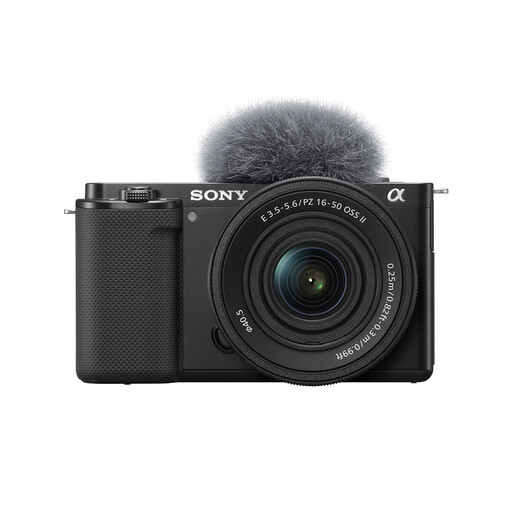 Image unavailable
This interchangeable-lens kit is a starting point if you plan to choose a different lens for closer fruit details. Check the supplied zoom’s magnification before treating it as your close-up lens.
Confirm still-image resolution, RAW recording and white-balance controls against your intended output.
No: a stationary tabletop setup can also suit an APS-C camera with the resolution, RAW workflow and compatible lens your images require. FUJIFILM lists 40.2 megapixels for the X-T5 and 1:1 magnification for its XF30mm macro lens; consider a full-frame route if its handling or lens options better fit the way you also shoot.
For a batch that needs consistent colour, set or photograph a white-balance reference under the actual lights rather than assuming automatic settings will match every frame. RAW capture provides editing flexibility; Sony lists direct colour-temperature adjustment from 2500 K to 9900 K on the α7C II.
Choose 1:1 magnification when life-size reproduction of small details, such as a droplet or section of peel, is important. Nikon’s Z MC 105mm f/2.8 VR S and FUJIFILM’s XF30mmF2.8 R LM WR Macro are 1:1 options; Canon’s RF 85mm F2 Macro IS STM reaches 0.5x and can still suit less extreme close-ups.
Not when you need fixed framing across shots or a stationary setup for multi-shot capture. Stabilisation helps with camera shake during handheld shooting, but it cannot correct movement in the fruit arrangement or changes in lighting.