What matters when choosing?
Decide how close your smallest required detail shot must be before comparing camera bodies; then consider file editing, camera position and video only in the order that matters to your work.
| Concern |
What to check |
Who this matters to |
| Stitch detail |
Check the lens mount, maximum magnification and close-focus distance. A 1:2 lens does not give the same magnification as a 1:1 lens. |
If tiny stitches or facial features need to occupy much of my image, close-detail framing comes before body extras. Around 36% of consumers put that detail need first. |
| Colour and editable files |
Check RAW recording on the exact body and whether you are willing to edit files; assess colour under your own lighting. |
When I make a series of listing images, I want control over how yarn colours look from one photograph to the next. For around 29% of consumers, that editing and consistency need takes priority. |
| Tabletop composition |
Check how the screen moves and whether you can see it with your tripod, copy stand or lighting in place. |
In a small tabletop setup, I need to frame toys from high or low positions without getting behind the camera each time. Composition is the primary need for around 21% of consumers. |
| Stills and video |
Check the video mode, intended lens framing and any microphone connection you need. |
If I publish product clips as well as photographs, the kit needs to work for both kinds of framing. Around 14% of consumers place that combined output first. |
A 1:1 label describes maximum lens magnification, not how much working room you will have around the toy. Sony specifies a particularly short front working distance for its E 30mm F3.5 Macro at maximum magnification, so leave space to position lights or reflectors when planning very tight shots.
Brands and systems to consider
These camera-and-lens combinations illustrate different ways to cover whole-toy and detail photographs; the lens named with each body should not be assumed to come in a camera kit.
Canon
The EOS R50 and RF 35mm F1.8 MACRO IS STM offer an EOS R option for whole-toy framing, medium close-ups and changing camera angles.
- Canon specifies a 24.2MP APS-C sensor and vari-angle screen for the EOS R50.
- The RF 35mm lens reaches 0.5x magnification, rather than the 1:1 scale offered by the other macro lenses here.
Nikon
The Z50II and NIKKOR Z MC 50mm f/2.8 pair a movable screen with a lens for life-size detail photographs.
- Nikon specifies 1:1 magnification for the lens and an electronic viewfinder and vari-angle touchscreen for the body.
- On the DX-format Z50II, the lens gives a 75mm-equivalent angle of view. Check that you can move the camera far enough back for a complete toy in your workspace.
Sony
The α6400 and E 30mm F3.5 Macro are a Sony E-mount route for buyers who want an APS-C body and a 1:1 close-up lens.
- Sony specifies 24.2MP effective resolution for the α6400 and 1:1 maximum magnification for the E 30mm Macro.
- The lens's short front working distance at maximum magnification needs consideration when placing lights around small details.
Fujifilm
The X-M5 and XF30mmF2.8 R LM WR Macro combine an APS-C stills camera with a 1:1 close-up lens.
- Fujifilm specifies a 26.1MP APS-C sensor for the X-M5 and 1:1 maximum magnification for the XF30mm lens.
- The X-M5 specification lists digital image stabilisation for movie mode only; plan stable support and controlled lighting for still photographs.
Joybuy camera kits for whole-toy framing
These Sony camera kits include zoom lenses for varying the framing of complete toys. If stitch-sized details are essential, check the supplied lens's maximum magnification and the compatibility of any close-focus lens you intend to use.
 No image available
Sony Alpha ZV-E10 II K with 16–50mm power-zoom lens
Consider this kit if you photograph whole toys and also plan to make video clips.
The product name specifies an APS-C camera, a 26MP still-image specification, a 16–50mm f/3.5–5.6 lens and 4K60p video. Check the lens's close-focus capability if stitch detail is a priority.
View on Joybuy
 No image available
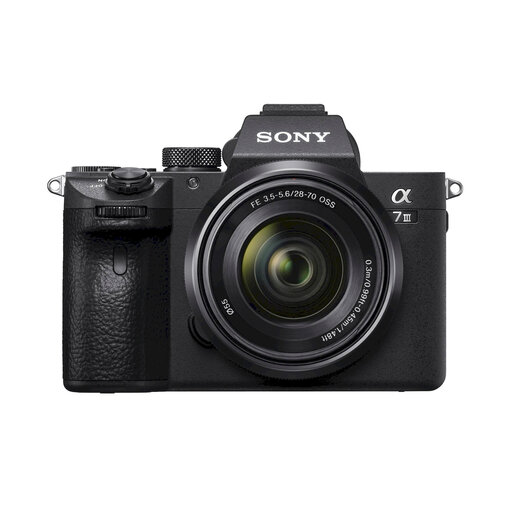
Sony Alpha 7 III with 28–70mm zoom lens
The supplied zoom offers a range of focal lengths to consider for complete-toy compositions.
This is a full-frame camera kit. If your photographs also need tight stitch detail, check the 28–70mm lens's maximum magnification before deciding whether you need another compatible lens.
View on Joybuy
 No image available
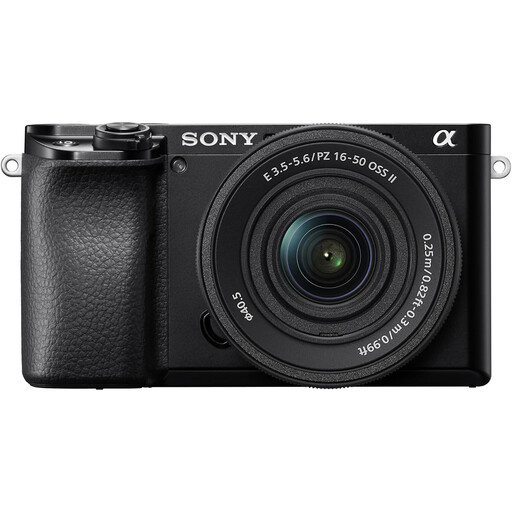
Sony A6400 with 16–50mm power-zoom lens
Consider the supplied zoom for framing complete toys at different focal lengths.
This APS-C kit is the ILCE-6400L configuration identified by Joybuy. Its supplied 16–50mm lens is not the Sony E 30mm F3.5 Macro; check close-focus requirements before treating the kit as a detail-photography setup.
View on Joybuy
 No image available
Sony A6700 with 16–50mm lens
The included zoom is a starting point for choosing the framing of whole-toy photographs.
This is an APS-C mirrorless camera kit. Check the supplied lens's maximum magnification if small embroidered or knitted details must fill the frame.
View on Joybuy
 No image available
Sony A6100 with 16–55mm zoom lens
A zoom kit can help you arrange complete-toy shots without relying on one fixed focal length.
The product name identifies an APS-C mirrorless camera and a 16–55mm zoom lens. Confirm the supplied lens model and its close-focus specifications if detail photographs are part of your plan.
View on Joybuy
Common questions
Do I need a 1:1 macro lens for knitted toys?
Choose a 1:1 lens when stitches, embroidered eyes or miniature accessories need to occupy much of the frame. Nikon, Sony and Fujifilm specify 1:1 for the macro lenses discussed here; Canon's RF 35mm F1.8 Macro reaches 1:2 and can still suit broader close-ups and whole-toy photographs.
Should I buy a camera body or a lens kit?
A kit gives you a supplied lens for initial framing, but choose the exact kit only after checking whether that lens covers your required detail shots. If buying a body separately, select a compatible lens for its mount; Canon RF, Nikon Z, Sony E and Fujifilm X lenses are not directly interchangeable.
Which screen features help in a tabletop studio?
A screen you can see from your intended camera position helps with overhead, low-angle or off-axis composition. Canon specifies a vari-angle screen for the EOS R50, and Nikon specifies a vari-angle touchscreen for the Z50II; check that your chosen body's screen remains visible beside your support and lights.
What if a newly bought camera is faulty in the UK?
For goods bought on or after 1 October 2015, the Consumer Rights Act 2015 sets standards including satisfactory quality, fitness for purpose and correspondence with description. Its explanatory notes describe a minimum 30-day period for the short-term right to reject when the statutory conditions are met; keep your order details and evidence of the fault when contacting the seller. This is distinct from a change-of-mind return under a retailer's policy.


