What matters when choosing
For small origami models under artificial light, settle the required close-up framing and test the lighting before choosing between extra image resolution and easier handheld handling.
| Concern |
What to check |
Who this matters to |
| Small-fold detail |
Compare the intended lens's maximum magnification and minimum focus distance; allow room to place lights around the model. |
If tiny folds or paper texture must occupy much of the frame, close-focus framing is my primary concern; around 31% of consumers put that need first. |
| Artificial lighting |
Test the camera with your actual lamps and shutter speeds for visible bands or brightness changes; assess reflections on the paper. |
When colour and illumination must stay consistent across photographs, I need to see how my lights behave with the camera; roughly 25% of consumers prioritise lighting control. |
| Cropping and output |
Compare native resolution with any High Resolution mode, and confirm that its operating conditions fit a still tabletop setup. |
If the finished image needs a substantial crop or a large file, I want enough usable detail for that output; around 25% of consumers make output latitude their main concern. |
| Handheld handling |
Assess the body with the intended lens attached and check the conditions behind stabilisation figures; retain a tripod option for close-ups. |
When I frequently change shooting angle, I need a camera I can position comfortably without relying on support for every frame; approximately 19% of consumers put handling first. |
Joybuy camera options
These Sony body and lens-kit options are starting points for photographing origami at a table. Check the magnification of any supplied or separately chosen lens before relying on it for tiny folds, and try your intended artificial lights with the camera.
 No image available
Sony Alpha ZV-E10 II K with 16–50mm f/3.5–5.6 Power Zoom lens
This APS-C kit provides an included lens for starting a tabletop setup; check that lens's maximum magnification before planning photographs of tiny folds.
The product title specifies a 26-megapixel camera and a 16–50mm f/3.5–5.6 Power Zoom kit lens.
View on Joybuy
 No image available
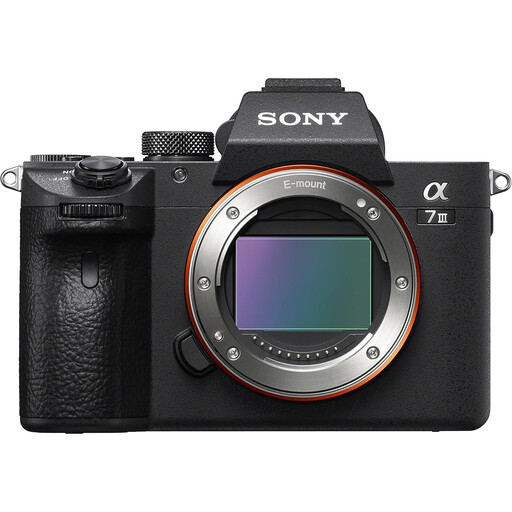
Sony Alpha 7 III Full-Frame Camera Body Only
This body-only option leaves the lens choice to you: select a compatible lens whose magnification and working distance suit the origami details you intend to photograph.
A lens must be chosen separately for this listing.
View on Joybuy
 No image available
Sony A6400 APS-C Camera with 16–50mm Power Zoom Lens
The included zoom lens makes this a kit to consider for whole-model framing; check its maximum magnification if small folds are the main subject.
Confirm RAW recording if editable RAW files are part of your workflow.
View on Joybuy
 No image available
Sony Alpha 7 III Full-Frame Camera with 28–70mm Zoom Lens
Unlike the body-only Alpha 7 III listing, this one includes a zoom lens; check the supplied lens's close-focus magnification before choosing it for small origami details.
Confirm RAW recording if your editing workflow requires it.
View on Joybuy
 No image available
Sony A6700 APS-C Camera with 16–50mm Lens
This kit includes a lens for initial tabletop framing, but its suitability for frame-filling photographs of tiny folds depends on the lens's close-focus capability.
Check RAW recording if you need it for editing, and assess the camera with your actual artificial lights.
View on Joybuy
Frequently asked questions
Do I need a true macro lens to photograph origami?
Not for every whole-model photograph. A 1:1 lens is worth considering when very small folds or paper texture must fill the frame: Nikon UK defines 1:1 as life-size reproduction on the sensor. A lens reaching 0.5x may suit larger models or moderately close details, but it does not provide the same maximum magnification.
Why is only part of my close-up origami model sharp?
Depth of field becomes very narrow at high magnification, so focus may cover one fold but not another. Use stable support, make careful focus adjustments and check sharpness across the folds that matter before moving the model.
Can stabilisation replace a tripod for close-up tabletop photographs?
Stabilisation can help reduce camera shake when shooting handheld, but it does not widen the plane of focus or stop the model moving. Keep a tripod option for precise, high-magnification compositions rather than treating published stabilisation figures as a close-up sharpness guarantee.
What should I check when choosing LED lights in the UK?
Test the intended lights with your camera at the shutter speeds you plan to use, looking for bands, uneven brightness and glare on the paper. The UK Health Security Agency identifies flicker and glare as LED-related considerations; for unfamiliar lighting equipment, you can also check GOV.UK product-safety alerts and recalls before purchase.


