Pottery sellers focused on colour
If photographs of different pieces need to show glaze hues consistently, plan the lighting and white-balance routine as carefully as the camera choice. X-Rite explains that changing light can shift recorded colour.


Choose a mirrorless camera setup around repeatable glaze colour, the size of the details you need to photograph and the space available for a stable setup. A suitable close-focus or macro lens, camera support and a neutral white-balance reference matter more to this task than body resolution alone; a compact body can still become a substantial kit once the lens and support are included.
If photographs of different pieces need to show glaze hues consistently, plan the lighting and white-balance routine as carefully as the camera choice. X-Rite explains that changing light can shift recorded colour.
Small crystals, speckling, carved texture and maker’s marks call for close-focus capability and precise focus. Canon UK notes that depth of field becomes very small in close-up photography and recommends support for still-life macro shots.
A kit that fits the available bench space and packs away readily may matter as much as body size. Keep photography clear of dust-generating ceramics tasks and follow the workshop’s controls; the UK Health and Safety Executive provides guidance on controlling respirable crystalline silica in ceramics work.
Start with a repeatable lighting and colour routine, then choose a lens for the smallest detail you need to show. Assess portability using the complete camera, lens and support setup.
| Concern | What to check | Who this matters to |
|---|---|---|
| Consistent glaze colour | Check RAW capture and custom white-balance controls; plan for a neutral reference under each lighting setup. | If I am comparing glazes across a catalogue, changing light must not leave one batch looking different from another. Roughly 31% of consumers put colour consistency first. |
| Fine surface detail | Confirm a compatible macro lens’s magnification and the working room it needs; allow for stable support. | To show tiny crystals or a maker’s mark, I need to focus close enough without losing the detail to camera movement. Close detail is the primary concern for around 31% of consumers. |
| Shared-workshop practicality | Assess the full kit’s size and tabletop footprint, and follow local controls around dust-generating work. | When I have limited bench space, I need to set up without obstructing other work and keep the kit clear of dusty tasks. About 23% of consumers prioritise shared-space practicality. |
| Stills and process video | Check the video modes and their conditions only if process footage is part of your work; keep the stills lens choice in view. | If I also record making or glazing, I need video features alongside photographs of finished pieces. For roughly 15% of consumers, combined stills and video is the main priority. |
More pixels can leave room to crop, but they do not give a lens greater magnification. Small glaze features may still be difficult to frame closely.
Identify a compatible lens and check its magnification and the space needed between camera and pot before settling on a body.
A separate macro lens and stable support also add items to carry, store and set up.
As X-Rite explains, changes in lighting can shift recorded colour. A camera colour mode cannot by itself make photographs consistent across different lighting setups.
Use repeatable lighting, photograph a neutral reference and set custom white balance for each setup; retain RAW files where the camera supports them.
A neutral reference and repeatable lighting routine take space and setup time.
Close-up work has very shallow depth of field, and movement can make precise focus or repeatable framing difficult. Canon UK recommends a tripod or other support for still-life macro images.
Support the camera for catalogue photographs and check focus at the size at which the images will be used before shooting a whole batch.
A body’s sealing claim is not permission to photograph amid airborne glaze powder or silica dust. The UK Health and Safety Executive’s ceramics guidance addresses controls for respirable crystalline silica exposure.
Arrange photography away from dust-generating tasks and follow the shared workshop’s procedures for equipment and work areas.
The X-T5 is a stills-oriented option for stationary pottery when detailed framing and a tilting screen are useful.
The EOS R8 offers a relatively light full-frame body, with a separate RF macro-lens option for close detail.
The Z5II and NIKKOR Z MC 105mm f/2.8 VR S form a route for RAW stills and life-size close-ups.
The α7C II is a compact-body full-frame option when pottery stills and process video are both part of the brief.
The OM-1 Mark II is worth considering if in-camera focus-stacking or focus-bracketing settings are central to a static macro workflow.
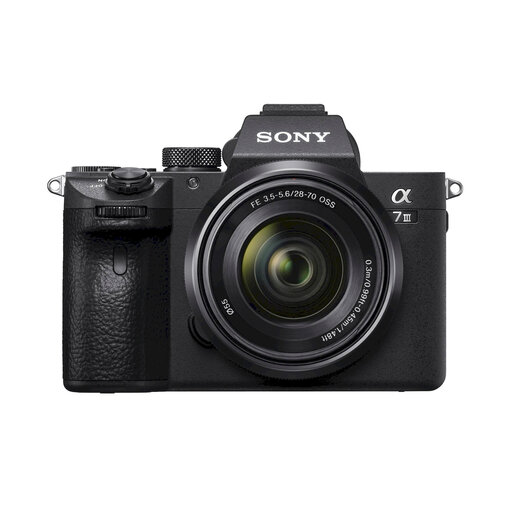
These Sony camera-and-zoom kits are starting points for photographing pottery in a shared workshop. If fine glaze detail is essential, assess a compatible close-focus or macro lens as part of the setup.
 No image available
This full-frame camera-and-zoom kit is a starting point for pottery photographs where you can assess a separate lens for small glaze details.
Before relying on the supplied 28–70mm lens for close-ups, check its magnification and minimum focus distance. Confirm the camera’s RAW and custom white-balance controls if consistent glaze colour is a priority, and use stable support for repeatable still-life shots.
 No image available
This APS-C camera-and-zoom kit suits a starting setup when you can check whether the lens covers the pottery details you intend to show.
For close photographs, confirm the supplied 16–50mm lens’s magnification and minimum focus distance, or assess a compatible macro lens. Check RAW and custom white-balance controls for a repeatable colour routine, and allow room for camera support.
Choose a compatible macro lens if small crystals, fine texture or maker’s marks must fill the frame. Extra sensor resolution offers cropping room but cannot give a lens true close-focus ability; check magnification and the space needed to position the camera.
Keep the lighting repeatable and set custom white balance using a neutral reference for each lighting setup. X-Rite explains that lighting changes can shift recorded colour; RAW capture, where available, gives you a file for subsequent controlled adjustment rather than making automatic colour settings a guarantee of accuracy.
Use a tripod or other stable support when you need precise focus and repeatable framing for still-life close-ups. Stabilisation can assist handheld photography, but Canon UK recommends support for still-life macro work because close focus demands accuracy.
Do not treat a sealing rating as permission to work amid glaze powder or silica dust. Keep photography away from dust-generating tasks and follow the workshop’s procedures; the UK Health and Safety Executive’s ceramics guidance addresses controls for respirable crystalline silica exposure.