For small, static sculptures, choose a compatible macro lens and a workable way to keep the subject sharp through its depth before prioritising general-purpose autofocus features. In-camera focus stacking can simplify a multi-frame close-up, while high-resolution composite capture is worth considering when larger output matters and the whole setup can remain still. Whichever route you choose, test it under your actual artificial lights for banding and set colour deliberately.
Who is this setup for?
Photographers working with three-dimensional detail
When a close view leaves the front or back of a sculpture soft, a repeatable focus-bracketing or stacking workflow becomes important. Canon UK documents this approach on the EOS R7, while Panasonic UK & Ireland describes in-camera stacking across current LUMIX G models.
People documenting artwork for crops or print
For catalogues, archives or larger output, consider the framing and magnification of the lens alongside the camera file. Nikon UK specifies 1:1 reproduction for the NIKKOR Z MC 105mm f/2.8 VR S; Panasonic UK & Ireland describes a multi-shot high-resolution mode on the G9II for static subjects.
Home-studio photographers using LEDs
If continuous lights illuminate your tabletop, check the images for bands at the shutter speeds you intend to use. Nikon UK explains that flickering light and shutter timing can produce visible dark bands.
What matters when choosing?
Start with the detail you need to frame and the depth you need to keep sharp; then check how the camera behaves under your lights. A higher-resolution body does not take the place of suitable lens magnification or a stable multi-frame setup.
| Concern |
What to check |
Who this matters to |
| Sharpness through the sculpture |
Check focus bracketing on the exact body, whether stacking happens in-camera or in software, and compatibility with the intended lens. |
If the nearest and farthest details both need to read clearly, one close-focused frame may not be enough. Around 36% of consumers put depth through the sculpture first. |
| Consistent artificial-light results |
Test the body at your intended shutter speeds under your own lights, and check its flicker controls and white-balance settings. |
When LED lighting leaves dark bands or colour varies between sessions, repeatable capture matters most. Around 29% of consumers prioritise lighting consistency. |
| Fine detail and output size |
Check the lens’s stated maximum reproduction ratio and the body’s resolution; establish whether a high-resolution mode needs consecutive captures. |
For a tight view of surface texture or a larger final image, I need enough detail without losing the framing I want. Roughly 21% of consumers make detail and output their primary concern. |
| A workable tabletop system |
Check lens-mount compatibility, screen movement and the working distance needed to position lights around the object. |
If I repeatedly photograph pieces on the same tabletop, I want a body-and-lens arrangement I can position and use comfortably. Around 14% of consumers put that workflow first. |
Mistakes to avoid
-
Choosing the body before the close-up lens
The lens determines how tightly you can frame a small detail. Body resolution alone cannot establish whether the supplied lens reaches the magnification your sculpture requires.
Decide on the framing and working distance you need, then check the lens’s stated maximum reproduction ratio and compatibility with the body. For life-size reproduction on the sensor, look for an explicitly specified 1:1 lens.
-
Expecting a small aperture to sharpen every surface
At close focusing distances, a three-dimensional sculpture can extend beyond the sharp area of one frame. Canon UK describes focus stacking as a way to combine captures made at different focus distances.
For a static piece, compare a single stopped-down photograph with a focus-bracketed sequence on a stable tripod before deciding how much stacking automation you need.
-
Treating composite resolution as a single-shot specification
Panasonic UK & Ireland describes the LUMIX G9II’s high-resolution file as a composite of consecutive captures. Movement during the sequence can interfere with the intended result.
Consider that mode for a sculpture and camera that can remain still; choose lens magnification and a stable setup independently of the composite output figure.
A multi-shot setup can also take longer and require retakes if something moves.
-
Checking LED banding only after photographing the collection
Nikon UK explains that some shutter timings under flickering light can produce dark bands in the image, even when the scene appears evenly lit.
Make test frames under the exact lights at your intended shutter speeds, and check whether the chosen body offers a suitable flicker-reduction control.
Finding banding late may mean repeating photographs or spending extra time correcting files.
Relevant brands to consider
Canon
The EOS R7 is a route to consider when in-camera close-up stacking is central to the choice.
- Canon UK specifies a 32.5MP APS-C sensor for the EOS R7 and documents its in-built focus bracketing and stacking.
- A stack still requires multiple captures and a stable setup. Select a compatible macro lens for the magnification and working distance you need.
Panasonic LUMIX
Current LUMIX G cameras offer a Micro Four Thirds route for buyers interested in in-camera stacking.
- Panasonic UK & Ireland states that current LUMIX G models offer in-camera focus stacking; the G9II also has a high-resolution composite mode.
- The G9II’s high-resolution mode combines consecutive captures, so allow for a still subject and a stable setup.
Sony
The α7C II and FE 90mm F2.8 Macro G OSS form a full-frame body-and-macro-lens route for controlled tabletop work.
- Sony UK specifies a 33.0MP full-frame sensor and vari-angle monitor for the α7C II, and up to 1:1 magnification for the FE 90mm lens.
- If automated focus stacks are essential, check the exact body’s bracketing and stacking workflow before choosing this combination.
Nikon
A Nikon Z system can be chosen around the macro lens when life-size detail is the starting requirement.
- Nikon UK specifies the full-frame Z-mount NIKKOR Z MC 105mm f/2.8 VR S with a 1:1 reproduction ratio.
- Choose the compatible body separately, checking the focus-bracketing, flicker-control and remote-operation functions your setup needs.
Sony kits for tabletop sculpture photography
These Sony mirrorless kits provide interchangeable-lens starting points for tabletop still photography. Before choosing one for small sculptures, check the supplied zoom’s close-up magnification, the body’s focus-bracketing workflow and its behaviour under your lights; none of the kit-lens names establishes 1:1 macro reproduction.
 No image available
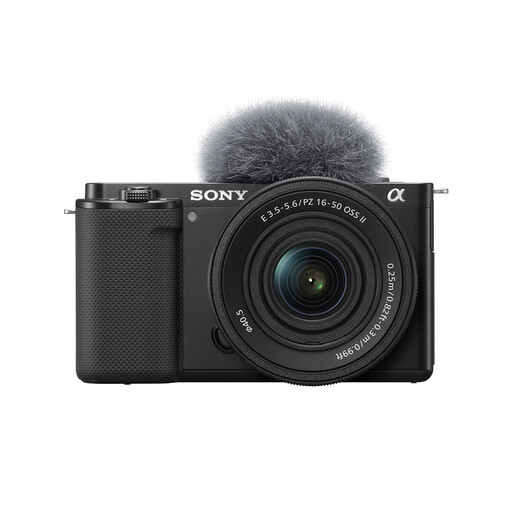
Sony Alpha ZV-E10 II K with 16–50 mm f/3.5–5.6 Power Zoom
Consider this APS-C mirrorless kit if an interchangeable-lens camera is your starting point for a fixed tabletop setup. The product name specifies 26 megapixels and a 16–50 mm f/3.5–5.6 kit lens; check that lens’s close-up magnification and the body’s stacking and flicker-control workflow for your sculptures.
View on Joybuy
 No image available
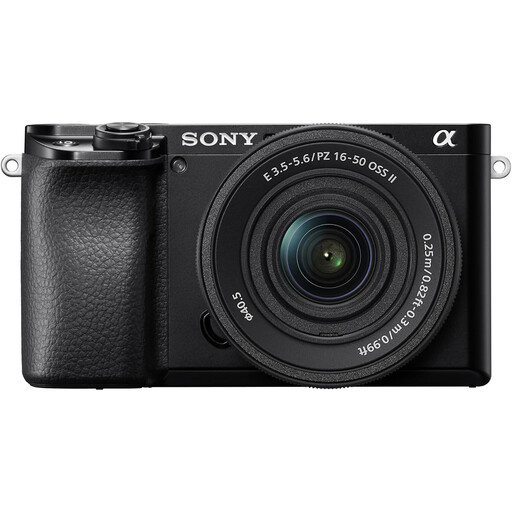
Sony A6400 APS-C with 16–50mm Power Zoom
This mirrorless kit may suit a tabletop setup where you want to choose the body and close-up lens separately. It includes a 16–50mm Power Zoom lens; check its maximum magnification, along with the exact body’s focus-bracketing and flicker controls, before relying on it for small details.
View on Joybuy
 No image available
Sony ZV-E10K with 16–50mm Power Zoom
Consider this interchangeable-lens kit if you plan to establish your required sculpture framing before selecting a dedicated close-up lens. The included lens is described as a 16–50mm Power Zoom; check its magnification and the camera’s stacking and artificial-light controls for your intended setup.
View on Joybuy
 No image available
Sony A6100 APS-C with 16–55mm zoom lens
This mirrorless kit is another starting point for a body-and-lens tabletop setup. Its product name identifies a 16–55mm zoom lens; confirm the exact supplied lens and its close-up magnification, then check the body’s stacking and flicker-control workflow.
View on Joybuy
Common questions
Do I need a 1:1 macro lens for small sculptures?
Choose a 1:1 macro lens if you need life-size reproduction of a detail on the camera sensor; wider views of larger sculptures may need less magnification. Nikon UK specifies 1:1 reproduction for the NIKKOR Z MC 105mm f/2.8 VR S. Check the framing and working distance you need before selecting a lens.
Why is part of my sculpture soft even at a small aperture?
Close focusing can leave too little depth of field to keep a three-dimensional sculpture sharp in one exposure. Canon UK describes focus stacking as combining frames focused at different distances; for a static subject, use a stable setup and check whether the camera can produce the stack in-camera or needs software.
How can I check for dark bands under LED lighting?
Photograph a test sequence under your actual lights at the shutter speeds you intend to use, then inspect the files for bands. Nikon UK explains that flicker and shutter timing can create dark bands; if they appear, check the camera’s compatible flicker-reduction controls and adjust the capture settings.
Will a high-resolution multi-shot mode work for every sculpture?
Use it when the sculpture and camera can remain still throughout the capture sequence, rather than assuming it will suit every session. Panasonic UK & Ireland describes the G9II’s high-resolution mode as combining consecutive captures into one file, so movement can affect the result.


