For whole bars, packaging and wider tabletop scenes, start with a mirrorless body and a lens that frames your usual setup; megapixels alone will not tell you how close the lens can focus. If stamped marks or small inclusions need to fill the frame, prioritise a compatible 1:1 macro lens and check how much room it leaves for window light. Canon’s cited RF 35mm Macro reaches 1:2, while the cited Nikon, Sony and Fujifilm macro lenses reach 1:1.
Who is this for?
Soap makers photographing fine details
If listings need to show stamped marks, cut surfaces, botanicals or marbling, check the magnification of a lens compatible with your camera. Sony, Nikon and Fujifilm each specify a 1:1 macro option for the systems discussed here.
Sellers working beside a window
When the camera sits above or beside a small tabletop set, screen movement affects how easily you can compose. Canon specifies a vari-angle screen for the EOS R50; Nikon specifies both a vari-angle screen and an electronic viewfinder for the Z50II.
Makers adding short videos to product stills
The Sony ZV-E10 II and Fujifilm X-M5 offer interchangeable-lens systems with video-oriented features. If photographs are the immediate priority, check the lens’s close-focus capability before choosing for video features.
What matters when choosing?
Mirrorless body with a standard zoom
Choose it for: Whole bars, packaging and wider scenes when frame-filling surface detail is not the main task.
Trade-off: A zoom supplied with a camera does not establish the magnification needed for tiny details; check the exact lens before relying on it for close-ups.
Mirrorless body with a 1:1 macro lens
Choose it for: Stamps, textures or inclusions that need to occupy much more of the photograph.
Trade-off: At the closest setting, the lens may sit near enough to the soap to complicate window-light placement; allow for a stable camera position and careful focusing.
| Concern |
What to check |
Who this matters to |
| Close-up scale |
Check the exact lens mount, maximum magnification and focusing or working distance. A 1:1 lens addresses a different framing need from Canon’s cited 1:2 RF 35mm Macro. |
If a tiny stamped mark needs to occupy much of my listing image, I need the lens to reproduce it at the required scale. Around 42% of consumers put close-up detail first. |
| Changing daylight |
Check RAW recording if you plan to adjust files later, and choose a screen or viewfinder you can use at your shooting position. |
When the light changes across a batch, I want enough control to keep my product images consistent. For around 33% of consumers, colour and exposure workflow is the primary concern. |
| Tabletop handling |
Check screen articulation and any phone-control option on the exact body, alongside the space your chosen lens needs. |
In a small workspace, I need to frame an overhead shot without repeatedly moving the soap or camera. Simple tabletop handling comes first for around 25% of consumers. |
Buying pitfalls
-
Choosing the body by megapixels alone
Sensor resolution does not establish how large a small soap detail can appear in the frame. The cited Canon RF 35mm Macro reaches 0.5x magnification, while the cited Sony, Nikon and Fujifilm macro lenses reach 1x.
Decide which details you need to show, then compare maximum magnification and working distance for the exact lens.
-
Assuming the closest focus position gives the easiest shot
At closest focus, Sony specifies a 2.4cm working distance for the E 30mm F3.5 Macro; Nikon says the front of its Z MC 50mm f/2.8 can be about 5cm from the subject. That proximity can put the lens in the path of window light.
Plan where the camera and window will sit. If the lens shades the soap, try a lower magnification or a different position before adding lighting accessories.
-
Comparing a camera body with a complete lens kit
An interchangeable-lens body still needs a suitable lens for the close-up scale you want. A standard zoom and a 1:1 macro lens serve different framing needs.
Check exactly what the package contains, including the lens, before comparing camera setups.
A macro lens, stable support and memory card may need to be obtained separately for the setup you plan to use.
Relevant brands for reference
Canon
The EOS R50 is an APS-C option for tabletop framing, with a vari-angle touchscreen and phone-assisted control specified by Canon.
- Canon specifies up to 1:2 magnification for the RF 35mm F1.8 Macro IS STM, giving this system a moderate close-up lens option.
- That cited lens does not reach 1:1; check whether 1:2 frames your smallest soap features closely enough.
Nikon
The DX-format Z50II offers an electronic viewfinder and vari-angle touchscreen. Nikon lists the NIKKOR Z MC 50mm f/2.8 as usable on DX-format Z cameras.
- Nikon specifies 1:1 magnification and a 0.16m minimum focus distance for the Z MC 50mm.
- At minimum focus, Nikon says the lens front can be about 5cm from the subject; plan how window light will reach the soap.
Sony
The APS-C ZV-E10 II accepts Sony E-mount lenses, making the E 30mm F3.5 Macro a relevant option for a stills-and-video setup.
- Sony specifies 1:1 magnification for the E 30mm F3.5 Macro.
- Sony specifies a 2.4cm working distance at closest focus, so check whether the camera will shade a window-lit tabletop set.
Fujifilm
The X-M5 is a compact APS-C X-mount body with RAW recording; Fujifilm specifies a body weight of 355g.
- Fujifilm specifies 1x maximum magnification and a 0.1m minimum focus distance for the XF30mmF2.8 R LM WR Macro.
- Check the exact body or kit contents: the macro lens is a separate item from an X-M5 body-only package.
Joybuy product choices
These Sony APS-C camera-and-zoom packages suit shoppers starting with whole-bar and general soap photographs. If small details must fill the frame, check the supplied lens’s close-up specifications or plan for a compatible macro lens separately.
 No image available
Sony Alpha ZV-E10 II K with 16–50 mm f/3.5–5.6 Power Zoom kit lens
A camera-and-zoom package to consider for whole bars and wider tabletop compositions.
The listed camera is APS-C and 26 megapixels. Check the included zoom’s maximum magnification and minimum focusing distance if close soap texture matters; the researched 1:1 Sony macro route uses a separate lens.
View on Joybuy
 No image available
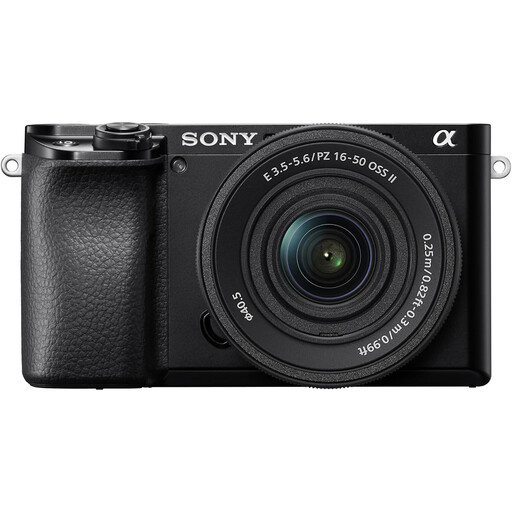
Sony A6400 with 16–50mm Power Zoom lens
The supplied zoom makes this a package to consider for whole-bar photographs and general product framing.
The title identifies an APS-C mirrorless camera with a 16–50mm lens. Check that lens’s close-up magnification before relying on it for tiny details, and confirm RAW recording if editable files matter to your workflow.
View on Joybuy
 No image available
Sony A6100 APS-C mirrorless camera with zoom lens
Consider this camera-and-zoom package for general soap photographs rather than assuming the supplied lens will frame the smallest details.
The product title describes a 16–55mm zoom, but confirm the exact lens included before choosing the package. Check its magnification and focusing distance, and confirm RAW recording if you plan to edit files after shooting.
View on Joybuy
Frequently asked questions
Do handmade soap photos need a 1:1 macro lens?
Not for whole bars, packaging or every moderate close-up. Choose a compatible 1:1 lens when very small features need to fill much of the frame: Sony, Nikon and Fujifilm specify 1:1 for the macro lenses discussed here, while Canon specifies 1:2 for its RF 35mm F1.8 Macro IS STM.
Will a macro lens prevent shadows in window light?
No; the closest focus position can put the lens near enough to block light reaching the soap. Sony specifies a 2.4cm working distance for its E 30mm F3.5 Macro at closest focus, and Nikon says its Z MC 50mm f/2.8 can be about 5cm from the subject. If the lens shades your set, change its position or use a lower magnification.
Can I take an overhead shot without touching the shutter?
Canon says a connected phone can control settings, composition and shooting on the EOS R50. For another body, confirm its phone-control functions and the app you would need before planning an overhead setup around remote operation.
Is a macro lens included with a mirrorless camera body?
A body-only package does not include the separate macro lenses discussed here. Canon lists the EOS R50 body separately from its RF 35mm Macro, and Fujifilm lists the X-M5 body separately from its XF30mm Macro. Check the exact package contents and lens model before comparing setups.


