What matters when choosing?
Decide how tightly you need to frame the bark, then weigh crop room against the kit you are willing to carry. The three concerns below describe consumers according to the need they would put first.
| Concern |
What to check |
Who this matters to |
| Fine texture and cropping |
Compare effective pixel counts and check whether the intended shots allow stable support. Confirm pixel-shift availability on the exact body if you plan to use it. |
I want to crop a static bark study without making a small section the whole composition at capture; around 42% of consumers would put texture and crop room first. |
| Close focusing |
Check lens-mount compatibility and maximum magnification; also consider whether the stated closest-focus distance leaves room to frame and light the subject. |
When a small fissure or patch of lichen is my subject, I need it to fill more of the frame. Close magnification would be the first concern for around 33% of consumers. |
| Carrying and handheld composition |
Compare body and lens weight together, screen movement and the exact stabilisation specification. Do not treat a stabilisation rating as a close-up sharpness guarantee. |
I expect to walk between trees and change camera position often, so a manageable kit comes first; roughly 25% of consumers would prioritise portable handheld use. |
Joybuy camera choices
These Sony interchangeable-lens camera kits offer starting points for general bark photography and flexible composition. If tightly framed surface detail is the aim, check the supplied zoom’s close-focusing capability and the compatibility of a separate macro lens before choosing a kit.
 No image available
Sony A6400 APS-C with 16–50mm Power Zoom Lens
Consider this kit for wider bark studies or general woodland framing. The named kit includes a 16–50mm power zoom; check its close-focus and magnification specifications before relying on it for small surface details.
View on Joybuy
 No image available
Sony Alpha ZV-E10 II K with 16–50 mm Power Zoom
This APS-C kit is an option for general bark framing and for consumers who want to consider its stated 26MP still-image resolution when planning crops. Its named lens is a 16–50 mm f/3.5–5.6 power zoom; check the lens’s close-focus and magnification specifications for tight texture studies.
View on Joybuy
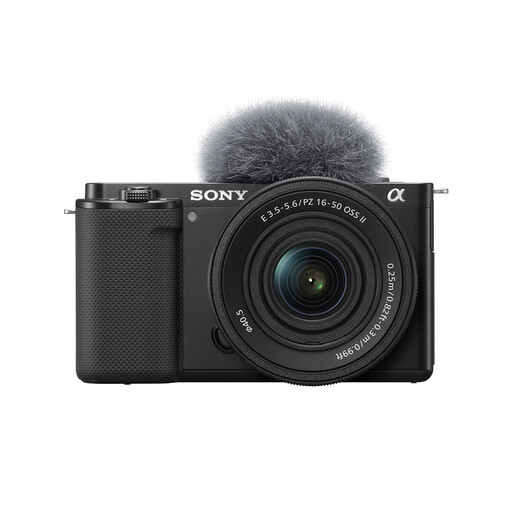 No image available
Sony ZV-E10K with 16–50mm Power Zoom Lens
Consider this interchangeable-lens kit for broader bark compositions that suit its supplied 16–50mm power zoom. Before choosing it for texture crops or tight details, check the still-image resolution and the supplied lens’s close-focus and magnification specifications.
View on Joybuy
Common questions
Do I need a macro lens to photograph tree bark?
Not for a whole-trunk photograph, but a dedicated macro lens is the more direct choice when a small section should fill much of the frame. Check maximum magnification and closest focus on a lens compatible with your camera; Nikon and Sony specify 1:1 macro options, while Canon specifies 1.4x for its RF 100mm F2.8L Macro.
Will in-body stabilisation make close-up bark photographs sharp?
Stabilisation can reduce camera-shake risk, but it cannot correct inaccurate focus or remove shallow depth of field. Canon’s macro guidance recommends especially careful focusing and stable support for fixed close-up subjects.
Can I take personal bark photographs in Forestry England woods?
Yes, Forestry England’s guidance allows photographs for fun, sharing and personal use in the woods and forests it manages. Commercial photography is treated differently and requires a permit; check the relevant land manager’s rules elsewhere.
What access signs should I check before setting up beside a tree?
In England and Wales, the Countryside Code says to follow signs showing where you can go and who may use a right of way. For a privately managed site or a location in Scotland or Northern Ireland, check the relevant local access and land-manager guidance.


