Close-detail costume documenters
If stitching, beads, textile weave or damage must occupy a substantial part of the image, lens magnification and precise focus matter more to your choice than a general-purpose zoom alone.


Choose the lens system before the camera body: a 1:1 macro lens suits tiny stitching or beadwork that needs to fill the frame, while a 1:2 close-focusing lens can suit details shown within a larger garment section. Then assess how the body helps you frame and focus at awkward angles, allowing for the shallow depth of field and lighting constraints of close-up work.
If stitching, beads, textile weave or damage must occupy a substantial part of the image, lens magnification and precise focus matter more to your choice than a general-purpose zoom alone.
For portfolios, archives or client review, you need files that retain useful detail for cropping and a lighting workflow you can repeat when photographing materials.
If you move between full-costume views and close details, consider how easily you can carry the body and lens and frame subjects from low or awkward positions.
Start with the size of the detail you need to record and the lens that can frame it. Then consider file handling, focus controls and what the complete kit will be like to carry.
| Concern | What to check | Who this matters to |
|---|---|---|
| Magnification and clearance | Check the exact lens’s maximum magnification and working distance. Sony and Fujifilm list 1:1 options; Canon lists the RF 35mm F1.8 Macro IS STM at 1:2. | If tiny embroidery must fill my frame, I need enough magnification without crowding the fabric with lights or the lens. Roughly 40% of consumers put macro scale and working distance first. |
| Detail and file workflow | Check effective pixel count and RAW support for the exact body, then assess the lens and lighting you intend to use. | When I photograph fabric for later selection or editing, I want files that preserve useful texture and colour information. Around 30% of consumers prioritise that file workflow. |
| Focus and framing | Look for a screen that moves to your shooting angle and focus aids you can use with the intended lens. | For a hem close to the floor or a small detail against a busy background, I need to place and inspect focus carefully. Approximately 20% of consumers make handling and focus their primary concern. |
| Carrying the whole kit | Compare the body together with its intended lens, battery and lighting equipment, not body size alone. | If I switch between full outfits and details during a shoot, I want a kit I can keep with me. Roughly 10% of consumers put portability first. |
A high-resolution body does not give an ordinary lens 1:1 magnification. The difference between a 1:1 lens and Canon’s 1:2 RF 35mm F1.8 Macro IS STM matters when a very small feature must fill the frame.
Choose the magnification you need, then check the exact lens mount and whether its working distance leaves room for your lighting.
A dedicated macro lens, stable support or additional lighting may also be needed for the intended setup.
Photography Life explains that depth of field becomes very limited in close-up photography. Focus aids help you place the sharp area but cannot make every part of a three-dimensional embellishment sharp in one frame.
Inspect focus at the magnification you plan to use, keep the camera stable and allow time to adjust lighting or make additional focused frames.
Nikon UK states that a charger is not included with its cited Z50II body listing. Contents can matter when comparing a body with a camera-and-lens kit.
Read the contents of the exact bundle before deciding what else you need to use it.
A compatible charging solution may need to be obtained separately.
GOV.UK advises taking batteries and electrical products to an appropriate collection point rather than placing them in household rubbish.
Check the local collection instructions for the camera and battery before disposal.
The EOS R50 and RF 35mm F1.8 Macro IS STM form a route for mixed garment views and close details.
The E-mount route includes the α6400 body and the dedicated SEL30M35 macro lens for close-detail work.
The X-M5 and XF30mmF2.8 R LM WR Macro offer an X-mount body-and-lens route for detailed costume photographs.
The Z50II is a body to consider if awkward-angle framing and focus on small subjects matter to your work.
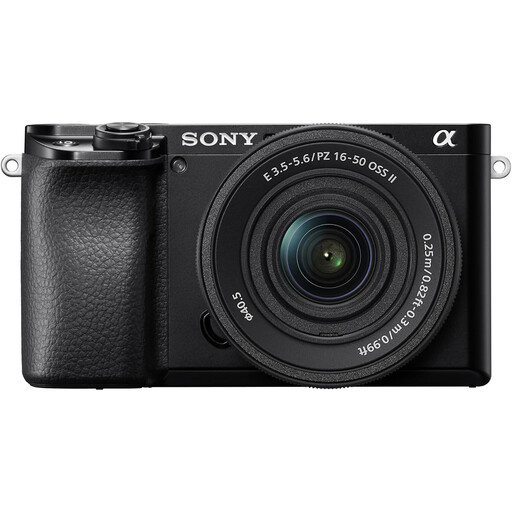
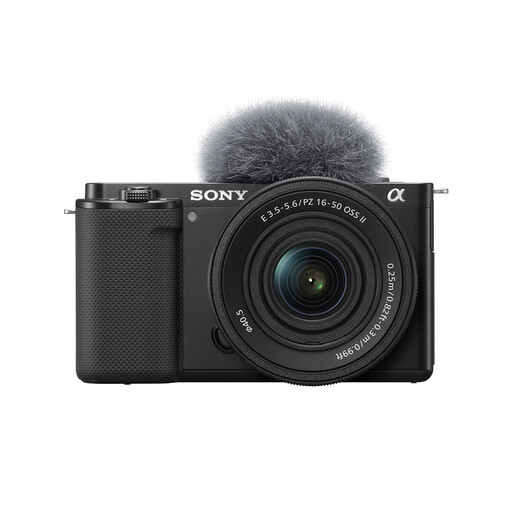
These Sony interchangeable-lens kits suit buyers considering wider costume images alongside close-up work. For frame-filling stitchwork, assess a compatible dedicated macro lens separately rather than assuming the included zoom reaches 1:1.
 No image available
For shoots that mix garment views with closer compositions, this kit includes a 16–55mm zoom lens. If tiny stitches need to fill the frame, Sony’s SEL30M35 is a separate 1:1 macro option; check the included zoom’s close-focus capability before relying on it for that task.
 No image available
If you want an interchangeable-lens kit for full-costume views as well as details, this model includes a 16–50mm power zoom. For frame-filling embroidery, consider the separately purchased Sony SEL30M35 1:1 macro lens and check the included zoom’s magnification before using it for close documentation.
Not for every detail: Canon’s 1:2 RF 35mm F1.8 Macro IS STM can frame close texture within a wider garment section. If a tiny stitch or bead must occupy much of the frame, a 1:1 option such as Sony’s SEL30M35 or Fujifilm’s XF30mmF2.8 R LM WR Macro is the more direct choice.
Depth of field becomes very thin at close magnifications, as Photography Life explains. Keep the camera stable, place the detail as parallel to the sensor as practical and adjust the light; where one frame cannot cover the required detail, consider making multiple focused frames.
For an eligible distance purchase, GOV.UK says customers generally have 14 days after receiving goods to tell the seller they want to cancel, followed by another 14 days to return them. Faulty, damaged or misdescribed goods raise separate remedies rather than depending solely on a change-of-mind return; keep your order record and check the received kit promptly.
Take unwanted electrical products and batteries to an appropriate collection point rather than putting them in household rubbish, as GOV.UK advises. Check the local collection instructions for the item and battery you have.