What matters when choosing?
Choose the lens and camera position for your whole-card and detail shots first; then decide which screen and transfer features make repeated shoots easier.
Canon EOS R50 with RF 35mm F1.8 Macro IS STM
Consider it when: Phone-based remote composition and shooting would help you photograph batches without moving a supported camera. Canon UK specifies a vari-angle screen on the EOS R50.
Trade-off: Canon UK Store specifies up to 1:2 magnification for the compatible lens, rather than life-size 1:1 reproduction.
Nikon Z50II with NIKKOR Z MC 50mm f/2.8
Consider it when: Life-size photographs of small card features are central to your work; Nikon UK specifies 1:1 magnification for this lens.
Trade-off: Its 75mm-equivalent angle of view on a DX camera gives a tighter frame, so check the distance available for whole-card shots.
Sony Alpha 6400 with E 30mm F3.5 Macro
Consider it when: You want a 1:1 macro option with the 45mm-equivalent angle of view Sony UK specifies for this lens on APS-C.
Trade-off: Sony UK specifies a 2.4cm minimum working distance; check that your lights can illuminate raised details with the lens this close.
| Concern |
What to check |
Who this matters to |
| Repeatable catalogue images |
Check the camera’s white-balance and RAW options, and how you will hold it in a fixed position. |
If I photograph a batch of cards, I want consistent framing and colour rather than resetting the setup for each one. Around 36% of consumers put that repeatability first. |
| Small details |
Compare the exact compatible lens’s maximum magnification and working distance. |
When embossing or layered paper needs its own photograph, I want the detail to fill the frame without leaving no room for light. Roughly 29% of consumers prioritise close-up detail. |
| Whole-card framing |
Measure the available camera-to-card distance and check the lens’s angle of view on your camera. |
My table has to hold the card and lights while the camera still fits the entire design into the shot. Around 21% of consumers put small-space framing first. |
| Transfer and solo shooting |
Check the exact model’s phone-control and image-transfer options against your workflow. |
If I shoot alone and prepare listings soon afterwards, I want a convenient way to operate the camera and move photographs. About 14% of consumers make workflow convenience their primary concern. |
Joybuy camera choices for handmade-card photography
These mirrorless camera-and-zoom kits offer starting points for framing cards at home. If close photographs of tiny details are essential, check the supplied lens’s close-focus specifications or choose a compatible separate lens; a zoom kit does not by itself establish macro capability.
 No image available
Sony Alpha ZV-E10 II K with 16–50mm f/3.5–5.6 Power Zoom kit lens
Consider this APS-C camera-and-zoom kit for whole-card framing and occasional video alongside still photographs.
The product title specifies 26 megapixels and a 16–50mm f/3.5–5.6 kit lens. For small embellishments, check that lens’s close-focus capability and the camera’s remote-shooting options before choosing a setup.
Joybuy
 No image available
Sony A6400 APS-C with 16–50mm Power Zoom lens
The supplied zoom gives you a starting point for whole-card compositions; the 1:1 E 30mm F3.5 Macro discussed above is a different lens.
Check the exact macro lens’s compatibility and the kit contents before planning detail shots around it. Sony UK specifies a 2.4cm minimum working distance for that macro lens, which also affects lighting placement.
Joybuy
 No image available
Sony A6700 APS-C with 16–50mm lens
Consider the supplied 16–50mm zoom for framing whole cards at your table.
If raised or embossed details need separate close-ups, check the supplied lens’s magnification and minimum focus distance, as well as compatible close-up lens options. Confirm the support and remote-shooting features you need for repeatable batches.
Joybuy
 No image available
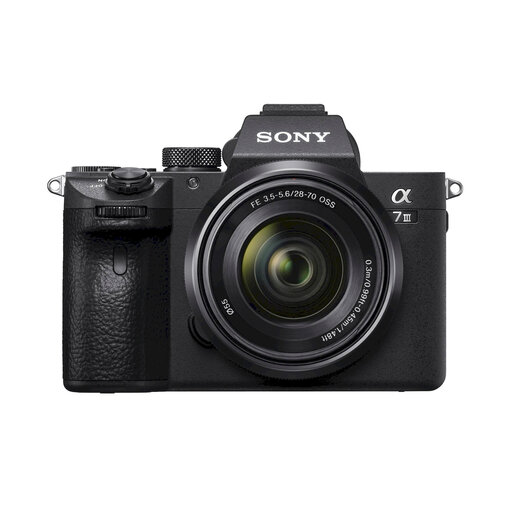
Sony Alpha 7 III full-frame with 28–70mm zoom lens
The supplied 28–70mm zoom is a route to whole-card compositions on a full-frame camera.
If you also need small details to fill the frame, check the supplied lens’s maximum magnification and the compatibility of any separate close-focusing lens. Do not treat its zoom range alone as a measure of macro capability.
Joybuy
 No image available
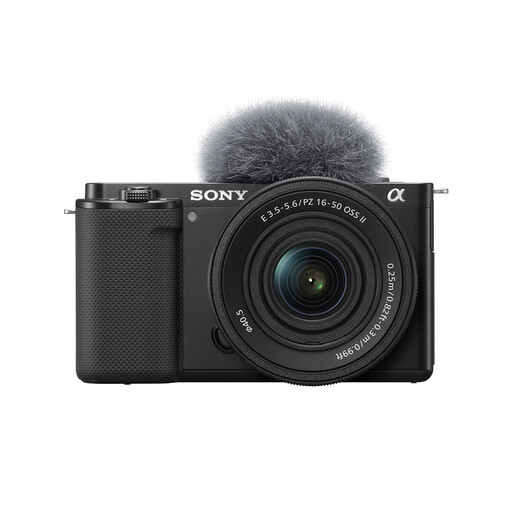
Sony ZV-E10K with 16–50mm Power Zoom lens
This interchangeable-lens camera-and-zoom kit is a starting point for tabletop framing if its still-photography controls suit your workflow.
Check the supplied lens’s close-focus capability before relying on it for tiny card details, and confirm the white-balance and camera-support options you need for repeated still photographs.
Joybuy
Frequently asked questions
Do I need a macro lens to photograph handmade cards?
Not for every whole-card photograph, but a close-focusing or macro lens matters when small textures or embellishments need to fill the frame. Check the exact lens’s magnification: Canon UK Store specifies up to 1:2 for the RF 35mm F1.8 Macro IS STM, while Nikon UK and Sony UK specify 1:1 for the macro lenses discussed here.
How can I keep card photographs consistent between shoots?
Keep the camera supported and its position, card placement and lighting as consistent as you can. Canon UK recommends a tripod or other support for still-life macro work; check your camera’s white-balance options when planning a repeatable colour workflow.
How should I look after a camera that needs lens changes?
Minimise unnecessary lens changes and keep the camera body facing downwards when changing lenses, as Sony UK advises. Check photographs against a plain background for visible spots, and follow the camera maker’s cleaning instructions if dust persists.
Does a retailer’s returns policy replace my rights if a camera is faulty?
No. A retailer’s voluntary change-of-mind policy is separate from remedies for faulty or misdescribed goods; GOV.UK says sellers must offer a refund when goods are faulty, not as described or do not do what they are supposed to do. Check the applicable cancellation terms for your online order separately and keep proof of purchase.


