Detail-first catalogue photographer
You photograph stationary folded fabrics and need room to inspect weave, stitching or cropped product images. A tripod can be part of your setup.


For stationary folded textiles, choose the camera and lens together: the lens must frame the fabric at your working distance, while the file must leave enough detail for its intended crop. Nikon’s Z6III offers a tripod-based, multi-shot route for still subjects; Sony’s Alpha 7 IV offers 33MP native files for single-frame work; and Canon’s EOS R8 Mark II offers stabilisation for a more mobile setup. None of those specifications replaces consistent window light or a colour-managed editing workflow.
You photograph stationary folded fabrics and need room to inspect weave, stitching or cropped product images. A tripod can be part of your setup.
You move the camera around a temporary window-side setup and need to frame the textile without keeping the camera in one fixed position.
You need textile colours to remain consistent through capture, editing and delivery. As Adobe explains, colour profiles matter when an image moves between devices.
Decide how much detail the finished textile image needs, then choose between a fixed tripod setup and more mobile framing. Plan the colour workflow separately from the camera specification.
Consider it: Nikon describes a Pixel Shift workflow that merges multiple RAW files into a 96MP image when the subject is still and the camera is on a tripod.
Trade-off: The multi-shot sequence adds capture and processing steps and needs the textile and lighting to remain consistent.
Consider it: Sony specifies 33.0 effective megapixels and 14-bit RAW recording for a workflow built around individual still photographs.
Trade-off: Check the chosen lens against your shooting distance; resolution alone does not establish framing or colour accuracy.
Consider it: Canon specifies in-body stabilisation rated up to 7.5 stops, depending on the lens, for a setup you frequently reposition.
Trade-off: Its specified 24.2MP native resolution offers less room to crop than the Sony Alpha 7 IV’s stated 33MP; compare both with your required output dimensions.
| Concern | What to check when buying | Who this matters to |
|---|---|---|
| Detail and cropping | Check native resolution and RAW recording. For multi-shot modes, check the still-subject and tripod conditions. | When I need close crops of a stationary weave or folded edge, retaining usable detail is my priority; around 40% of consumers put detail and crop latitude first. |
| Consistent colour | Check that your capture and editing workflow can use a repeatable white balance and appropriate colour profiles. | If a listing must show textile colour consistently from editing to delivery, I cannot judge it from the camera screen alone. Colour is the primary concern for around 30% of consumers. |
| Handheld flexibility | Check camera and lens stabilisation under their stated conditions, plus the lens’s framing and focusing distance. | I need to move around a temporary window-side table rather than leave a tripod in place; for around 30% of consumers, that flexibility comes first. |
The body alone cannot tell you whether a folded textile will fit the frame from your available camera position. The included or separately chosen lens determines the usable focal-length range and focusing distance.
Measure your table and camera position, then check the exact lens, mount compatibility and minimum focusing distance before choosing a kit.
A compatible lens may need to be obtained separately from a body-only camera.
Manufacturer stabilisation ratings depend on stated conditions and address camera movement, not changing light or movement between frames. Canon’s up-to-7.5-stop figure, for example, depends on the lens used.
Use stabilisation to help with handheld shooting; use a stable camera position when repeatable framing or Nikon’s multi-shot Pixel Shift workflow is the priority.
Adobe explains that an image can look substantially different across devices when colour profiles are not handled consistently.
Keep capture conditions repeatable, use a deliberate white balance and check the exported listing image through your intended editing and output workflow.
The UK Intellectual Property Office states that photographs are generally protected by copyright as artistic works. An image supplied for one purpose should not be assumed available for every listing or advertising use.
Use your own photographs or confirm ownership, permission and the licence scope before publishing someone else’s images.
The Z6III is a route to consider when the folded textile and camera can remain still on a tripod.
The Alpha 7 IV offers a single-frame route when native resolution and RAW recording are priorities.
The EOS R8 Mark II is a route to assess for a window-side setup that you reposition frequently.
These mirrorless camera-and-zoom options suit buyers assessing tabletop framing and, in some cases, a setup they move around. Check the exact lens and working distance against your folded-textile arrangement before choosing.
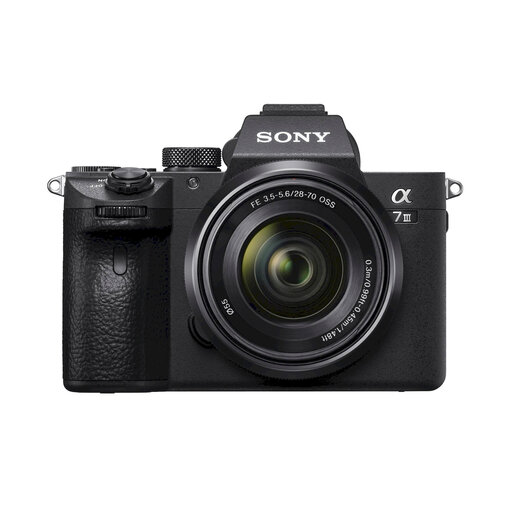 No image available
Consider this kit if you want a zoom for changing the framing around a window-side table.
Its stated lens range is 28–70mm. Check that the lens can focus and frame the fabric from your available camera position.
 No image available
Consider this kit when changing your camera position and zoom framing is part of the tabletop setup.
The stated lens range is 16–50mm. Confirm its minimum focusing distance and RAW still-photo support if either is essential to your workflow.
 No image available
This kit is worth assessing if you want to vary the framing of folded fabrics without changing lenses.
The stated lens range is 16–50mm. Check RAW still-photo support, the lens’s minimum focusing distance and any still-photo stabilisation you require.
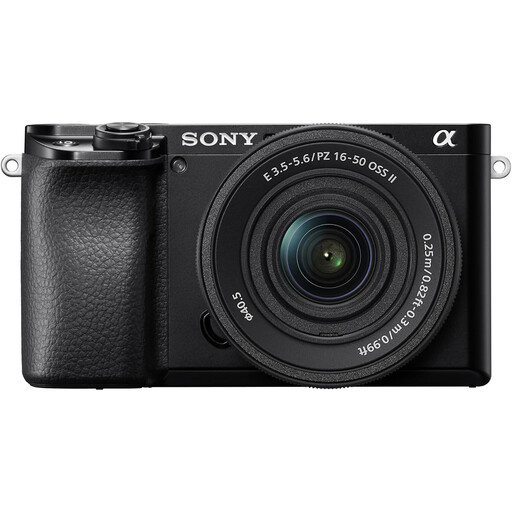 No image available
Consider this kit if an included zoom suits the way you frame folded textiles on your table.
Confirm the exact supplied lens and its focal-length range before choosing; also check its minimum focusing distance and RAW still-photo support if needed.
No. Adobe explains that colour profiles underpin consistent colour management and that an image can appear different across devices. Use a repeatable capture and editing workflow, and check the exported image rather than relying on resolution alone.
It is a route for a still textile photographed with the camera on a tripod. Nikon says the mode merges multiple RAW files into a 96MP image; movement or changing light during that sequence makes it less suitable than an ordinary single-frame capture.
Check permission and the permitted uses before publishing it. The UK Intellectual Property Office says photographs are generally protected by copyright; having access to an image does not, by itself, establish that it can be reused in your listing or advertising.