Who each setup suits

Close-up wildflower detail seekers

If petals and small plant structures need to fill the frame, lens magnification and working distance matter more than covering every holiday subject with one lens. Sony UK specifies its E 30mm F3.5 Macro as a 1:1 lens with a 2.4 cm minimum working distance.

One-lens countryside travellers

If you move between flowers, landscapes and general holiday photographs, a travel zoom with useful close-focusing ability may suit you better than a dedicated macro lens. Canon UK specifies up to 0.59x magnification for its RF-S 18-150mm at 35 mm in manual focus, rather than 1:1.

Mixed-subject holiday photographers

If flowers are one subject among people and places, consider how the zoom, viewfinder, screen and stabilisation fit the way you shoot. These handling features do not replace a lens with the close-focusing capability you need.

What matters when choosing

Dedicated macro setup

Choose when: Small wildflower details are the main reason for the trip; Sony UK specifies the E 30mm F3.5 Macro paired here with an α6700 as a true 1:1 lens.

Trade-off: Its 2.4 cm minimum working distance puts the lens front very close to the subject, and a fixed 30 mm macro lens cannot cover the range of a travel zoom.

Close-focusing travel zoom

Choose when: You want one lens for flowers and wider holiday scenes; the Canon EOS R10 can be paired with the RF-S 18-150mm.

Trade-off: Canon UK specifies up to 0.59x magnification at 35 mm in manual focus, not 1:1, and lists no dust or moisture resistance for this lens.

All-round holiday zoom

Choose when: People, places and broader countryside views take priority alongside occasional flowers; Nikon UK offers the Z50II with an 18-140 mm travel zoom.

Trade-off: If small flowers are a priority, check the lens’s close-focus and magnification specifications before relying on this kit for detailed close-ups.

ConcernWhat to checkWho this matters to
Small-flower detail Compare the exact lens’s maximum magnification and working distance; distinguish 1:1 macro from a close-focusing zoom. If I want petals and stamens to fill the frame, I need enough magnification without having to rely on a heavy crop. Around 42% of consumers would make close-up detail their primary concern.
One-lens versatility Check the supplied focal-length range, complete kit weight and close-focus specification. When I walk between flower patches and wider views, I would rather carry one lens than change lenses along the way. One-lens versatility would come first for around 33% of consumers.
Outdoor handling Check screen movement, viewfinder usability and whether stabilisation is in the body or lens; assess weather resistance for each component separately. For low-growing flowers and changing light, I want to compose comfortably while still photographing other holiday subjects. Around 25% of consumers would prioritise outdoor handling.

Buying pitfalls

  • Equating close focus with true macro

    Canon UK specifies up to 0.59x magnification for the RF-S 18-150mm at 35 mm in manual focus; Sony UK specifies 1:1 for the E 30mm F3.5 Macro. That distinction matters if a small flower needs to occupy much of the frame.

    Decide whether you mainly want flower details or a mix of flowers and wider holiday photographs, then choose the lens before the body.

  • Assuming a travel-kit lens resists rain

    Canon UK specifies no dust or moisture resistance for the RF-S 18-150mm. Do not assume that a body’s specification also applies to its attached lens.

    Check both components’ guidance and protect the equipment when conditions call for it.

  • Leaving the path for a closer photograph

    The Countryside Code published by Natural England and Natural Resources Wales advises visitors in England and Wales to follow local signs, keep to marked paths unless wider access is available, and leave plants as they find them.

    Compose from a permitted position, using a suitable focal length or a lower shooting angle rather than disturbing vegetation.

  • Overlooking a macro lens’s working distance

    Sony UK specifies a 2.4 cm minimum working distance from the front of the E 30mm F3.5 Macro to the subject. Getting that close can constrain where you position the camera and how you light the flower.

    Check whether you can reach your subject from a permitted position; if you need more physical distance, consider a longer-focal-length macro option.

Relevant brands to consider

Canon

The EOS R10 with RF-S 18-150mm is a one-lens route for flower close-ups and other countryside-holiday photographs.

  • Canon UK specifies the EOS R10 at 429 g with card and battery under CIPA guidelines, with a vari-angle touchscreen. Its RF-S 18-150mm covers 29–240 mm equivalent and reaches up to 0.59x magnification at 35 mm in manual focus.
  • The lens is not a 1:1 macro lens, and Canon lists no dust or moisture resistance for it.

Sony

The α6700 paired with the E 30mm F3.5 Macro is a route for photographers who put small-flower detail ahead of an all-purpose zoom.

  • Sony UK specifies the APS-C α6700 with in-body 5-axis stabilisation and the E 30mm F3.5 Macro as a 1:1 lens.
  • The macro lens’s minimum working distance is 2.4 cm from its front, and its fixed focal length does not replace a travel zoom.

Nikon

The Z50II with NIKKOR Z DX 18-140mm f/3.5-6.3 VR is a single-zoom route for a holiday that includes flowers alongside people and places.

  • Nikon UK specifies a 7.8x travel zoom with in-lens Vibration Reduction and describes the Z50II viewfinder as bright.
  • If frame-filling photographs of small flowers matter most, confirm the lens’s close-focus and magnification specifications or consider a dedicated macro lens.

Joybuy camera kits

These Sony camera kits include a 16–50 mm zoom for carrying one lens on a holiday. If close-up wildflower detail is your priority, check the supplied lens’s magnification and focusing distance before choosing either kit.

Sony A6400 camera with 16–50 mm Power Zoom lens

Sony A6400 APS-C with 16–50mm Power Zoom Lens

The supplied zoom offers a one-lens starting point for varied holiday photographs. For walking, consider the stated 1.105 kg weight for the camera with battery, card and lens; check the lens’s close-focus and magnification figures if small-flower detail matters.

View on Joybuy
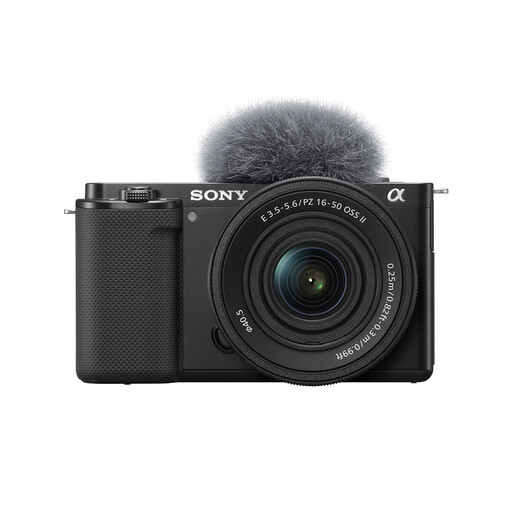
Sony ZV-E10K camera with 16–50 mm Power Zoom lens

Sony ZV-E10K with 16–50mm Power Zoom Lens

The supplied zoom provides a one-lens starting point for general holiday photographs, while the vari-angle screen can help with low-angle compositions. Check the lens’s close-focus and magnification figures for flower detail; the stated video stabilisation does not establish stabilisation for still photographs.

View on Joybuy

Common questions

Do I need a macro lens to photograph wildflowers?

No: a close-focusing zoom can photograph flowers, but a true 1:1 macro lens is the clearer choice when small details need to fill the frame. Sony UK specifies its E 30mm F3.5 Macro at 1:1; Canon UK specifies up to 0.59x for the RF-S 18-150mm at 35 mm in manual focus.

Can one travel zoom cover flowers and other holiday photographs?

Yes, if you do not require 1:1 flower detail. Canon UK specifies 29–240 mm equivalent coverage for the RF-S 18-150mm, while Nikon UK offers the Z50II kit with an 18-140 mm travel zoom; check the exact lens’s close-focus specification if flowers are a priority.

Can I leave a path to get closer to a wildflower?

In England and Wales, follow local signs and keep to marked paths unless wider access is available. The Countryside Code published by Natural England and Natural Resources Wales also advises leaving plants as you find them; for Scotland or Northern Ireland, check the guidance and signs applicable to your location.

Is a camera kit automatically suitable for wet weather?

No: check the weather-resistance specifications of the body and the particular lens separately. Canon UK lists no dust or moisture resistance for the RF-S 18-150mm; that specification does not establish the protection offered by other lenses or camera bodies.