Detail-first origami makers
If small folds or paper texture need to fill much of the photograph, start with the lens’s stated maximum magnification. Sony UK specifies 1:1 magnification for its E 30mm F3.5 Macro and FE 90mm F2.8 Macro G OSS.


Choose the lens for the size of the origami detail you need to photograph before choosing a camera body. A lens specified at 1:1 magnification suits tiny folds that must fill the frame; a close-focusing prime can suit complete models and moderate close-ups. Against a dark background, also consider how you will position the light, preview the exposure and keep the intended folds in focus.
If small folds or paper texture need to fill much of the photograph, start with the lens’s stated maximum magnification. Sony UK specifies 1:1 magnification for its E 30mm F3.5 Macro and FE 90mm F2.8 Macro G OSS.
If you mainly photograph complete models, an adjustable screen and a lens that focuses close enough for your compositions may matter more than 1:1 reproduction. Canon UK specifies a vari-angle screen for the EOS R50 and 0.5x magnification for the RF 24mm F1.8 MACRO IS STM.
If the same setup must photograph finished models and record the folding process, consider screen positioning, focus behaviour during video and close-focus needs together. A convenient video setup does not necessarily provide the magnification needed for tiny folds.
Decide how large the smallest fold must appear in the frame, then check lens compatibility and working distance before weighing camera-body controls. A dark backdrop makes light placement and focus decisions important even when a lens has a wide maximum aperture.
| Concern | What to check | Who this matters to |
|---|---|---|
| Small folds and texture | Check the compatible lens’s maximum magnification and front-of-lens working distance. Sony UK specifies 1.0x magnification for the E 30mm F3.5 Macro, but only 2.4 cm of working distance at its closest setting. | If a tiny fold must fill my photograph, a close-focusing label alone will not tell me whether the lens frames it tightly enough. Around 36% of consumers could put detail reproduction first. |
| Exposure and focus | Check exposure preview, manual-focus access and whether a focus-bracketing workflow would help with folds at different depths. Nikon UK describes real-time setting preview in the Z50II viewfinder. | With a dark backdrop, I want to judge the paper’s appearance and place focus on the folds that matter before taking the shot. Consumers prioritising that control could account for around 29%. |
| Whole-model framing | Check screen articulation, field of view and close-focus capability. Canon UK specifies a vari-angle screen for the EOS R50 and 0.5x magnification for the RF 24mm F1.8 MACRO IS STM. | If I usually show the complete model, I need a workable camera angle and enough room to compose it, rather than maximum magnification. Around 21% of consumers could make straightforward whole-model photography their main concern. |
| Stills and tutorials | Check the intended video controls and focusing behaviour alongside the lens’s suitability for still photographs. Nikon UK describes a product-review focus-shifting mode on the Z50II. | When I photograph finished origami and record demonstrations with one kit, video handling needs to fit alongside my still-image needs. That could be the primary concern for around 14% of consumers. |
Close-focus distance and maximum magnification describe different things. Sony UK specifies 1.0x for the E 30mm F3.5 Macro, while Canon UK specifies 0.5x for the RF 24mm F1.8 MACRO IS STM; Nikon UK gives a 0.18 m minimum focus distance for the Z DX 24mm f/1.7.
Work out how much of the frame your smallest fold needs to occupy, then check the exact compatible lens’s maximum magnification before choosing a body.
A lens close to the paper may obstruct a carefully positioned light. Sony UK specifies just 2.4 cm between the front of its E 30mm F3.5 Macro and the subject at the closest working distance.
Plan where the lens, model and lights will sit. If that clearance is too tight, compare a compatible macro lens offering more room or use less magnification.
A body-only listing is not a close-up kit. The Canon UK Store’s EOS R50 body listing includes a battery and battery charger but says a USB-C charger is not included.
Read the exact bundle contents and confirm that any supplied lens meets your framing needs.
A memory card and stable support may also be needed for the tabletop setup.
At close distances, opening the aperture can leave less of a folded model in focus. A bright lens does not by itself settle which edges will look sharp or how the paper will be lit.
Decide which folds must remain sharp, then assess the aperture, focus position, light placement and whether a stable, repeatable shooting setup would help.
These examples illustrate different camera-and-lens routes, not a judgement about every product made by each brand. Check the exact lens and bundle rather than relying on the brand name alone.
Sony UK specifies a 26.0 MP APS-C sensor, in-body stabilisation and focus bracketing for the α6700. Its E-mount lens options include the APS-C E 30mm F3.5 Macro and full-frame FE 90mm F2.8 Macro G OSS, each specified at 1.0x magnification.
Canon UK specifies a 24.2 MP APS-C sensor and vari-angle screen for the EOS R50. Its RF 24mm F1.8 MACRO IS STM focuses to 14 cm and reaches 0.5x magnification.
Nikon UK describes real-time setting preview in the Z50II viewfinder. It specifies an f/1.7 maximum aperture and 0.18 m minimum focus distance for the NIKKOR Z DX 24mm f/1.7.
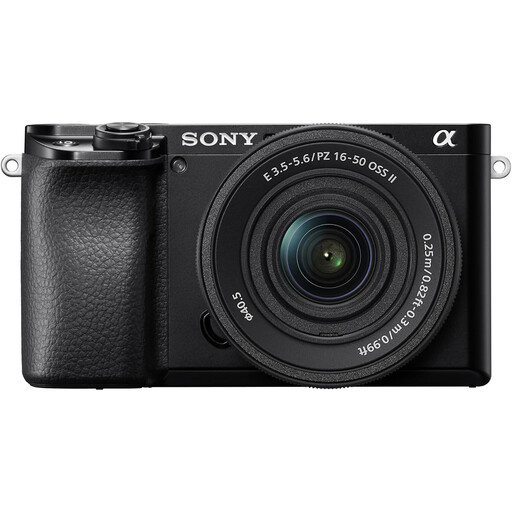
These Sony kits offer starting points for framing complete origami models on a tabletop. Their supplied zoom lenses should not be assumed to provide the 1:1 magnification discussed above; check the exact lens’s close-focus specifications if tiny folds are your priority.
 No image available
The included zoom and rotating screen suit compositions showing a complete model from different camera positions.
The listing describes a 26 MP APS-C sensor and an included 16–50mm lens. If small folds need to fill the frame, check that lens’s maximum magnification and minimum focus distance before buying.
 No image available
The supplied zoom and tilting touchscreen make this a kit to consider for whole-model framing from varied tabletop angles.
The listing describes a 24.2 MP APS-C sensor, a 180° tilting touchscreen and a 16–50mm f/3.5–5.6 power-zoom lens. Check the lens’s maximum magnification and minimum focus distance if close detail is essential.
 No image available
The tilting screen and bundled zoom make this a kit to consider for photographs of complete tabletop models.
The listing describes a 24.2 MP APS-C sensor and a 180° tilting touchscreen. Its title identifies a 16–55mm lens, while the detailed description identifies a 16–50mm lens: confirm which lens is supplied and check its close-focus specifications before buying.
Not for every photograph: a close-focusing lens can suit complete models and moderate details. If a tiny fold must fill the frame, check for a stated maximum magnification such as the 1.0x specified by Sony UK for the E 30mm F3.5 Macro; Canon UK specifies 0.5x for the RF 24mm F1.8 MACRO IS STM.
No camera specification alone determines how the paper and dark backdrop will look together. Arrange the light around the model, check exposure at the intended aperture and place focus on the important folds; Nikon UK describes real-time setting preview in the Z50II viewfinder as one way to assess adjustments before shooting.
No: check the exact body and lens mounts before buying. The Canon EOS R50 uses the RF mount, the researched Nikon prime uses Nikon Z mount, and the researched Sony macro lenses use Sony E-mount; do not assume they are directly interchangeable.
Confirm the exact supplied lens, battery and charging equipment, then check whether the lens focuses close enough for your intended photographs. The Canon UK Store’s EOS R50 body-only listing includes a battery and battery charger but says a USB-C charger is not included; other bundles need to be checked against their own contents.