
24/7 全天候客户支持

免费退货

当日/次日达

品质保障

开启新人专享福利: 全场免邮 | 低至 2 折 | 免费试用 30 天 JoyPlus 会员
下载 Joybuy
For any DIY enthusiast or tradesperson in the UK, achieving a clean, professional finish on trim, beading or trunking is paramount. A common tool for this is the mitre shear, but choosing the right one can be tricky. Many end up with a tool that promises precision but delivers frustration, leading to wasted materials and untidy results.
Before you make a purchase, it is crucial to understand the common pitfalls. Many buyers are swayed by low prices or flashy marketing, only to discover their tool suffers from one of these three fundamental flaws:
To avoid these issues, focus on a few core specifications. These are the non-negotiable features that separate a reliable tool from one destined for the bin.
The blade is the heart of any mitre shears. Look for tools that specify the blade material. The industry benchmark for this type of tool is SK5 steel. This is a Japanese high-carbon tool steel known for its hardness and ability to hold a sharp edge. A sharp SK5 blade provides a clean, scissor-like action.
Equally important is the ability to replace the blade. Even the best blades will eventually dull with use. A good moulding scissors design will include replacement blades and a simple mechanism for swapping them out, extending the life of your tool indefinitely.
The primary function of an angle trim cutter is to produce accurate, repeatable angles. The quality of the angle setting mechanism is therefore critical.
Whether you are a professional using trunking shears all day or a hobbyist working on a weekend project, comfort and stability matter. The handle and frame provide the leverage and control you need.
Look for handles made from aluminium alloy or steel, which offer rigidity without excessive weight. A non-slip coating, often made from PPC (polypropylene copolymer) or PVC, is essential for maintaining a secure grip and reducing hand fatigue during repetitive tasks. A solid pivot and a secure safety lock for storage are also hallmarks of a well-made gasket shear.
Based on these practical criteria, we have selected a few options that align with different user needs, helping you find a tool that offers genuine value.
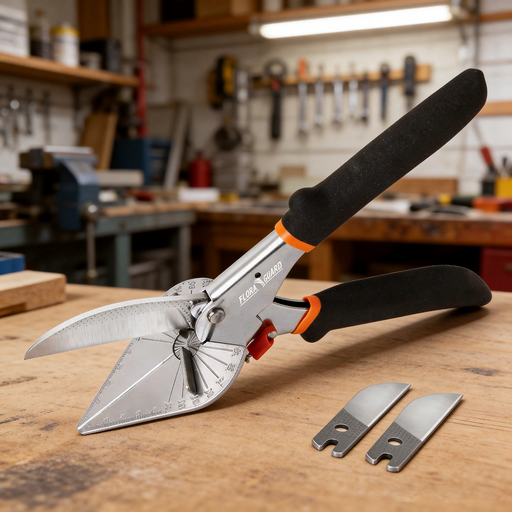
Why This Fits Their Persona: Ideal for the UK homeowner tackling occasional projects like fitting quadrant beading or replacing a door seal. It provides the necessary precision without the cost of a professional-grade tool.
It features a high-precision engraved scale, not a cheap printed one, ensuring the angle markings remain clear. The handle is a solid aluminium alloy, avoiding the flex found in all-plastic models.
Includes two replaceable SK5 steel blades and a secure safety lock, offering great long-term value and safety for home use.
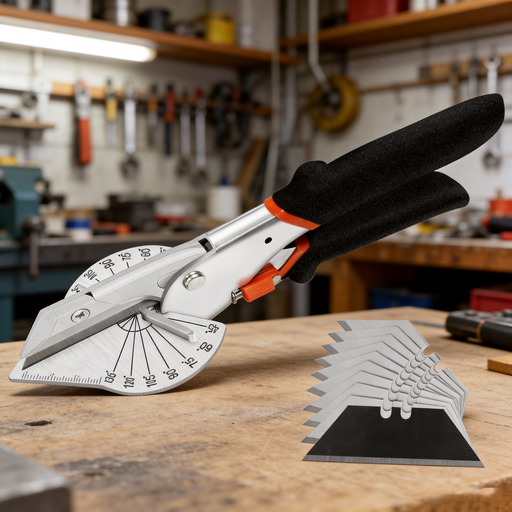
Why This Fits Their Persona: For joiners, electricians or floor fitters who use their tool daily. The generous supply of blades means less downtime on the job, and the robust build can withstand the rigours of a work site.
This model directly addresses the issue of blade dulling by providing 10 spare SK5 steel blades. This acknowledges that blades are a consumable part and prepares the user for long-term, heavy use.
Outstanding value for heavy users due to the large number of included blades. The ergonomic handle with a non-slip PPC cover reduces fatigue during prolonged use.
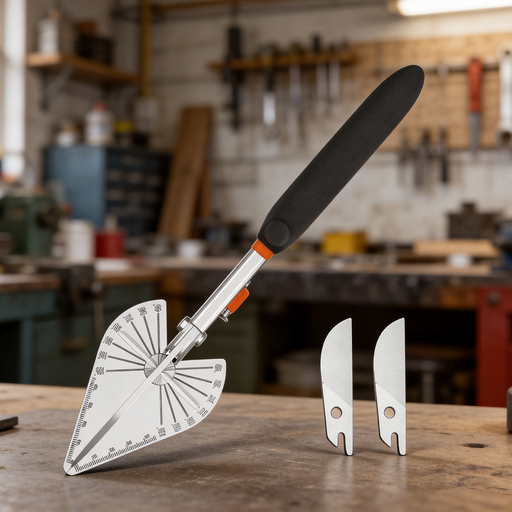
Why This Fits Their Persona: Perfect for those working with wider materials, such as larger decorative moulding, thicker rubber seals or custom trim profiles. Its extended design provides capacity beyond standard models.
It overcomes the limitation of standard shears by offering a wider cutting range. The robust frame and pivot are designed to handle the increased leverage needed for cutting materials up to 6.8 cm in diameter.
The key feature is its extended cutting capacity. It maintains the high-precision engraved scale and secure locking slider, ensuring accuracy is not sacrificed for size.
We have compiled a complete, real-time list of products that fully satisfy these strict selection criteria and UK safety regulations.
No. Mitre shears, including quadrant shears and trunking shears, are specifically designed for cutting softer materials. This includes pine and other soft woods, PVC, rubber seals and plastic mouldings. Attempting to cut hardwood, MDF or any type of metal will damage the blade and likely the tool's frame. Always use the tool as intended for safety and longevity.
You will notice a clear decline in performance. Instead of a clean slice, the tool will begin to crush or tear the material, leaving a frayed or compressed edge. You may also need to apply significantly more force to make a cut. This is a clear sign the blade is dull and needs to be replaced to restore performance and ensure clean results.
They serve different purposes. A multi angle cutter is a portable, convenient hand tool perfect for quick, precise cuts on lightweight trim and trunking, especially in finished spaces where a power saw would be impractical. A power mitre saw is essential for cutting larger, harder materials like skirting boards, structural timber or for making a high volume of cuts quickly. For trim work, a good pair of mitre shears is an invaluable companion to, not a replacement for, a power saw.