Households making alcohol-free drinks
If avoiding alcohol is the priority, choose a mixer for its flavour and check the stated ABV of any base drink separately. A light or slimline name describes neither ingredient’s alcohol content.


Choose the drink you will mix first: a slimline or light tonic does not reduce the alcohol contributed by a spirit. For an alcohol-free serve, check the stated ABV of the base and mixer against your requirement; for a lower-unit spirit serve, the NHS calculation depends on the spirit’s ABV and the amount poured. Then choose mixers by flavour, nutrition label and whether you will use the pack after opening.
If avoiding alcohol is the priority, choose a mixer for its flavour and check the stated ABV of any base drink separately. A light or slimline name describes neither ingredient’s alcohol content.
If a drink will still contain a spirit, its ABV and the measured pour determine the alcohol units contributed by that spirit. Mixer choice can then be made on taste and nutrition.
If sugar, calories or sweeteners matter to your choice, compare the exact tonic variants per 100 ml. Those figures do not tell you whether a finished mixed drink is lower in alcohol.
Decide whether you want no alcohol or a lower-unit alcoholic serve before comparing tonic, soda and flavoured mixers.
Choose this route: When avoiding alcohol matters more than changing the mixer’s calorie or sugar content, check the stated ABV of everything you plan to pour.
Bear in mind: An alcohol-free description need not mean exactly 0.0% ABV; check for an explicit 0.0% label if that is your requirement.
Choose this route: If you still want a spirit, use its ABV and a measured pour to work out the units; the NHS formula is ABV × volume in ml ÷ 1,000.
Bear in mind: Changing the spirit or its measure can change the drink’s flavour balance; switching tonic alone does not reduce the spirit’s units.
| Priority | What to check | Your needs |
|---|---|---|
| Alcohol units | Read the alcoholic base’s ABV and measure the pour. The NHS calculates units as ABV × volume in ml ÷ 1,000. | I still want a spirit in the drink, but I want to know how many units my chosen measure contributes. |
| Alcohol-free serves | Check the stated ABV of the base and mixer. If you require exactly 0.0%, look for that figure on each relevant pack rather than relying on a light or slimline description. | I want to make a drink without assuming that a mixer’s nutrition wording establishes its alcohol content. |
| Nutrition and ingredients | Compare calories and sugars per 100 ml on the exact variants. Read the ingredient list if sweetener choice matters to you. | I would choose between regular and lower-calorie tonic on the mixer’s label, independently of the alcohol decision. |
| Flavour | Decide whether you want bitter tonic, soda water or a more pronounced ginger flavour. Compare the exact flavoured product’s nutrition label too. | Different drinks call for different flavours; I do not want one sweet or strongly flavoured mixer for every serve. |
| Pack format | Match cans or a larger bottle to how often you use mixers. Follow the selected bottle’s storage and opened-life instructions. | For occasional drinks, I would rather open a portioned can than leave a large bottle unfinished. |
A low-calorie tonic does not reduce the units contributed by gin, vodka or another spirit.
Check the spirit’s ABV and measure its pour first. Compare the tonic’s nutrition separately.
Alcohol-free wording and an exact 0.0% figure are not interchangeable. England’s Department of Health and Social Care guidance describes an alcohol-free threshold of no more than 0.05% ABV for drinks from which alcohol has been extracted.
If exactly 0.0% matters to you, check the ABV stated on the individual base drink and mixer.
The usable time after opening depends on the product. Sainsbury's tells shoppers to refrigerate its Diet Indian Tonic Water after opening and use it within 3 days.
Check opened-life instructions before choosing a large bottle over individual portions.
For the named products, Fentimans lists 4.4 g sugars per 100 ml for Ginger Beer, while Sainsbury's lists under 0.5 g per 100 ml for Diet Indian Tonic Water.
Compare the exact product labels per 100 ml before making a flavoured mixer your routine choice.
These brand examples show different tonic and flavoured-mixer choices; the figures apply to the named products, not every drink in a range.
Its Indian tonic range includes Premium and Refreshingly Light versions for shoppers choosing between tonic styles.
Britvic offers regular and Low Calorie Indian Tonic Water for comparing mixer variants.
Its range includes tonic, soda water and ginger options for different flavour preferences.
Tesco lists own-label Indian Tonic Water alongside lower-calorie mixer options.
Its Diet Indian Tonic Water comes in a 1-litre bottle for households considering a larger tonic format.
Schweppes Slimline Tonic Water is among the lower-calorie mixers listed by Tesco Groceries.
These tonic packs offer individual 150 ml portions for pantry stocking. Choose between slimline, light and regular tonic styles by checking the exact pack label; none determines the alcohol units of a spirit added to it.
 No image available
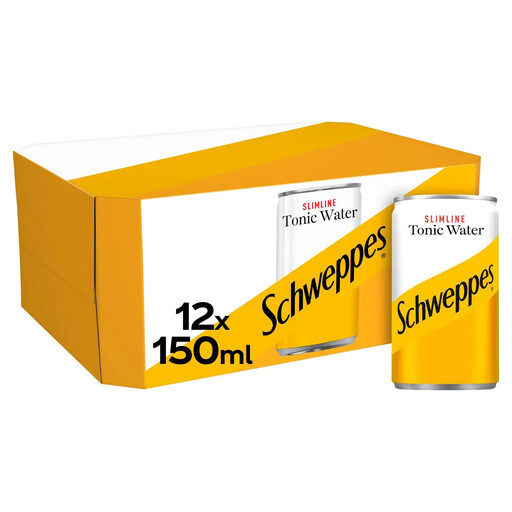
The 12 × 150 ml can pack suits portioned tonic serves without opening a large bottle. Slimline describes the mixer variant, not the alcohol strength of a drink made with a spirit; check the pack’s ABV if you have a specific alcohol requirement.
 No image available
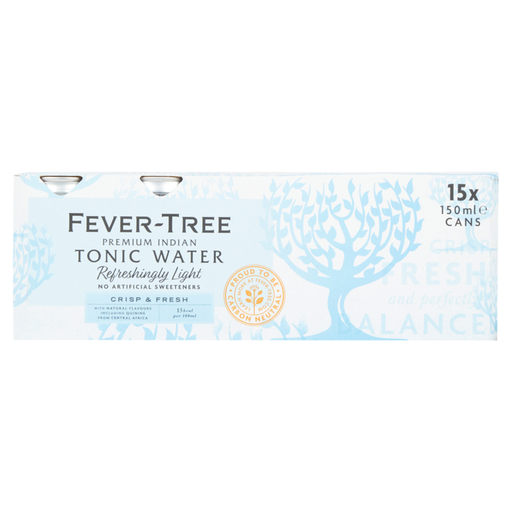
This 15 × 150 ml pack provides individual Indian tonic portions for a pantry. Check the exact pack’s nutrition and ABV if light-tonic nutrition or a particular alcohol threshold matters to your serve.
 No image available
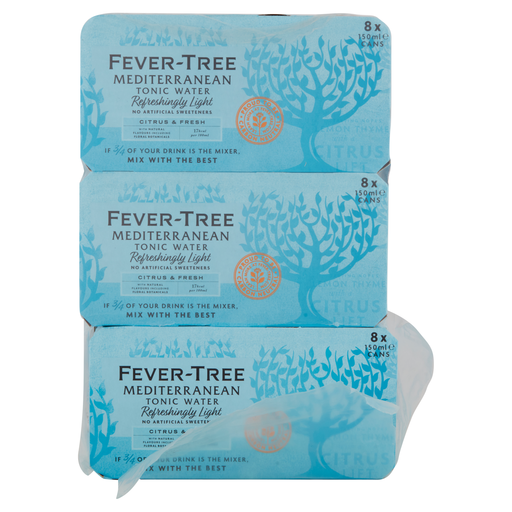
The 8 × 150 ml pack is a portioned Mediterranean tonic option when you want a different tonic style in the pantry. Compare its own nutrition label rather than assuming that every light tonic has the same sugar content; check ABV separately for alcohol-free serves.
 No image available
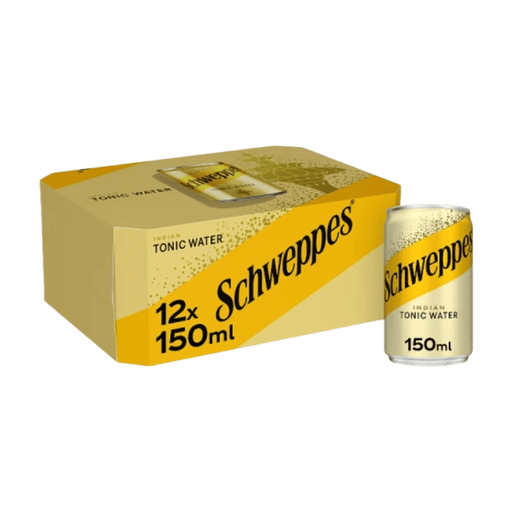
This regular Indian tonic comes in 12 × 150 ml portions. It is a choice when you want standard tonic rather than a named slimline or light variant; compare nutrition labels if sugar or calories guide your purchase, and check ABV for any alcohol-free serve.
No. Slimline describes the mixer, while the gin’s ABV and the volume poured determine the units it contributes. The NHS calculates alcohol units as ABV × volume in ml ÷ 1,000.
Choose mixers for the flavour you want, then check the stated ABV of each drink you will combine. If your requirement is exactly 0.0% ABV, look for that explicit figure rather than relying on light, slimline or alcohol-free wording alone.
Follow the instructions on that bottle. Sainsbury's says to refrigerate its Diet Indian Tonic Water after opening and use it within 3 days; check the selected product rather than applying that period to every tonic.
Choose portioned cans if you use mixers occasionally and prefer to open only what you need. A larger bottle may suit more frequent serves, provided you can follow that product’s storage and opened-life instructions.