Shared-room debugger
You need room for a laptop, mouse and notes, and you want typing during coding or browser work to be less disruptive to someone nearby. A compact board is worth considering, provided it keeps the keys you regularly use.


Choose a quiet, compact multi-device keyboard if you type on both a computer and mobile test devices in a shared room. A programmable 75% keyboard makes more sense if remapping shortcuts matters to you, while a wired full-size model suits work centred on one computer. Check the physical layout, connection methods and dedicated keys before trading desk space for a smaller board.
You need room for a laptop, mouse and notes, and you want typing during coding or browser work to be less disruptive to someone nearby. A compact board is worth considering, provided it keeps the keys you regularly use.
You type on a laptop and also interact with a phone or tablet during layout checks. Device switching is useful if you actually enter text on those mobile devices, rather than using them only to view the page.
You move frequently between an editor, terminal and browser developer tools. Remapping may be worth the set-up effort if a compact layout otherwise puts familiar commands behind key combinations.
Start with where you type: on one computer or across several devices. Then decide how much desk space and dedicated-key access you can give up, and whether your room calls for particular attention to key noise.
| Concern | What to check | Who this matters to |
|---|---|---|
| Noise and desk space | Compare board dimensions and the stated key or switch type; check which dedicated keys a compact layout removes. | If I type while someone else studies or sleeps nearby, I want a board that fits beside my laptop without adding distracting key noise. Around 36% of consumers would put quiet typing and desk space first. |
| Device switching | Check supported operating systems, connection methods and how many devices the keyboard can switch between. | When I enter text on a phone or tablet as well as a laptop, changing devices should not interrupt each test. Roughly 29% of consumers would make device switching their primary concern. |
| Shortcuts and layout | Check remapping support for the exact variant, the physical UK-ISO or ANSI layout, and access to function and navigation keys. | If browser tools and coding shortcuts shape my day, I need to know whether a smaller layout will make familiar commands harder to reach. About 21% of consumers would prioritise shortcut access and layout. |
| Simple wired use | Confirm the required USB port or adapter, cable placement and whether you need a full number pad. | For work on one computer, I would rather connect a keyboard and keep full-size keys than manage wireless pairing. Around 14% of consumers would put straightforward wired use first. |
ANSI and ISO place some keys differently, including Enter and left Shift. A layout that differs from the one you know can interrupt symbol-key habits during coding.
Check the listing and product photographs for UK-ISO or UK QWERTY if that is the physical layout you intend to use.
On Razer's BlackWidow V3 Mini HyperSpeed, the 65% layout retains arrow keys but has no dedicated function row, home cluster or number pad. Those omissions matter if your debugging routine relies on those keys.
Note the commands you use in your editor, terminal and browser tools. Compare their access on 65%, 75% and full-size layouts before choosing by footprint alone.
Switch variants matter: Razer describes a clicky green-switch option and a yellow-switch option with sound dampeners for the BlackWidow V3 Mini HyperSpeed. Neither description is a room-noise measurement.
Check the exact switch variant and available sound information if someone nearby may be disturbed by typing.
Switching between paired devices helps when you type on a laptop and mobile device during the same session. If the phone only displays your test page, a keyboard connected to the computer may meet your typing needs.
Decide which devices need keyboard input before comparing wireless switching with a wired USB model.
Depending on the wireless model, ongoing use may also involve charging or replacing batteries.
Logitech offers relevant examples at both ends of this decision: the compact Pebble Keys 2 K380s and the wired, full-size K120.
The K3 Version 3 and K3 Max are relevant if a compact mechanical layout and configurable shortcuts matter to your debugging workflow.
The BlackWidow V3 Mini HyperSpeed illustrates the particularly compact 65% mechanical route rather than a default choice for shared-room work.
These keyboards cover compact wireless options, models that retain more dedicated keys, and a wired full-size set. Match the physical layout and connections to your desk and test devices rather than treating the list as one keyboard type.
 No image available
Consider this compact option if desk space and switching between devices matter to you; confirm support for your phone or tablet before planning to type on it.
The product name specifies 78 keys and 2.4 GHz and Bluetooth connection modes. Its physical layout is US QWERTY, so check the key positions against your usual UK layout.
 No image available
This is worth considering if you want mechanical keys and several connection methods; check whether its installed switches are acceptable in a shared room.
The named variant offers wired, Bluetooth and 2.4 GHz modes. It has a US QWERTY physical layout; confirm mobile-device compatibility if you intend to type on a phone or tablet.
 No image available
Consider a full-size UK keyboard if familiar key access matters more to you than freeing up desk space.
This is a wireless model; check its dimensions against your student-room desk and confirm the connection method you need for each device.
 No image available
The 96-format option is worth assessing if you want a UK layout but need to check how much room a keyboard will take alongside your laptop and mouse.
Confirm the exact switch variant and its sound for shared-room use. If mobile-device typing matters, check compatibility with your phone or tablet before ordering.
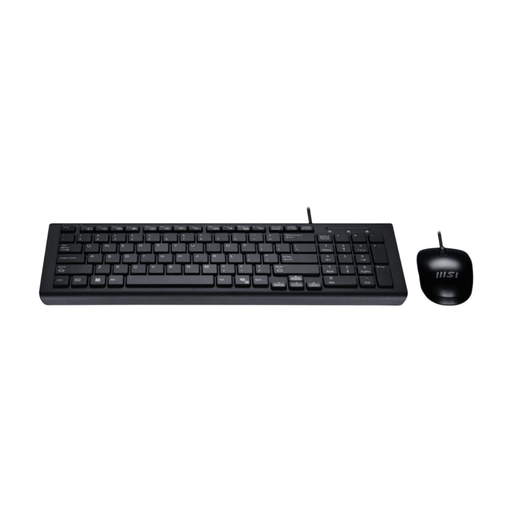 No image available
This set suits a one-computer workspace if a wired keyboard and mouse meet your needs better than switching between devices.
The product name specifies a UK layout and USB connection. Check that your computer has a suitable port and that the set will fit on your desk.
Choose the physical layout you can use confidently for symbols and shortcuts. Logitech UK explains that ISO and ANSI differ in the shape and position of keys including Enter and left Shift; check the exact listing and photographs rather than assuming a compact keyboard has a UK layout.
Bluetooth is useful if you enter text on a phone or tablet as well as on your computer. If the mobile device is only displaying the page while you work on one computer, a compatible wired USB keyboard may be simpler.
A 65% keyboard can work if you are comfortable using key layers for commands without dedicated keys. Razer's BlackWidow V3 Mini HyperSpeed retains arrows but omits the function row, home cluster and number pad, so map out the shortcuts you use before deciding whether its smaller footprint is worthwhile.