Side-by-side DevTools and code users
If you keep an editor, browser tools and a responsive viewport open together, prioritise a window arrangement you can use comfortably. Check hub connections and stand adjustment if you also work from a laptop.


Choose a conventional QHD workspace if keeping code and DevTools side by side matters most; consider 4K for close inspection of type and interface details, or a tall display when long files and portrait previews dominate your work. Check laptop connectivity and desk clearance before settling on a format. A larger screen does not replace testing important behaviour on a real phone, as Chrome for Developers advises.
If you keep an editor, browser tools and a responsive viewport open together, prioritise a window arrangement you can use comfortably. Check hub connections and stand adjustment if you also work from a laptop.
If your work centres on spacing, font rendering and screenshots, assess resolution alongside the scaling you find comfortable. Desktop image detail does not establish how a page will appear on every phone.
If you regularly read long source files, logs and portrait previews, a tall panel or an adjustable display may make more sense than choosing solely for side-by-side width.
Choose the screen layout around the windows you use most; then check whether its resolution, connections and physical position work with your existing setup.
Choose it when: you mainly need an editor, DevTools and a responsive viewport visible together at a laptop desk.
Allow for: less pixel density than a same-size 4K display; confirm video output and charging compatibility before relying on a USB-C hub.
Choose it when: close inspection of typography, spacing and screenshots is a regular part of debugging.
Allow for: text and controls that may feel small at native scaling. Set the mobile viewport separately in DevTools.
Choose it when: long code, console output and a portrait preview compete for vertical space.
Allow for: a less conventional desk arrangement, including the space needed for the stand or mount.
| Concern | What to check | Who this matters to |
|---|---|---|
| Simultaneous workspace | Usable screen space, window arrangement and stand adjustment. | When I debug a breakpoint, I want my editor, DevTools and responsive viewport visible without constantly rearranging windows. Around 33% of consumers put this shared workspace first. |
| Fine-detail inspection | Native resolution and comfortable operating-system scaling. | Small differences in type, borders or screenshots are my main reason to scrutinise a desktop display. For around 27% of consumers, that close visual inspection is the primary need. |
| Laptop integration | USB-C video support, Power Delivery wattage and the ports your laptop needs. | I want to connect my laptop at the desk with fewer separate cables, provided its ports and charging requirements match. One-cable integration comes first for around 20% of consumers. |
| Vertical workspace | Display orientation, stand range and desk or mount clearance. | Long files and logs leave me wanting more room above and below a portrait preview. Around 20% of consumers primarily value that vertical arrangement. |
A high-resolution screen can help you inspect desktop content, but it does not set a phone-sized viewport or establish real-device behaviour.
Enter the intended width and height in Chrome DevTools, then check important layouts and interactions on a real mobile device.
A monitor’s stated Power Delivery wattage does not establish that your laptop supports its video and charging functions.
Compare the exact monitor connection, cable requirements and charging output with your laptop’s specifications.
Depending on that compatibility, you may need a suitable cable, a separate dock or the laptop’s own power adapter.
LG UK marks the DualUp 28MQ780-B as discontinued, while the cited Joybuy listing for the Dell U2724DE says that listing is no longer available.
Use those models to identify useful formats or features, then check a current model’s exact specifications and the seller’s after-sales terms.
A tall or adjustable display still has to fit your desk and leave room for stable placement and cables.
Measure desk depth, the stand or clamp footprint and rear clearance; check mount compatibility if you plan to use an arm.
A different cable route or suitable mounting hardware may be needed for the position you want.
The U2724DE illustrates a conventional 27-inch QHD hub-monitor setup for a laptop desk. Dell UK identifies it as a Thunderbolt 4 hub monitor.
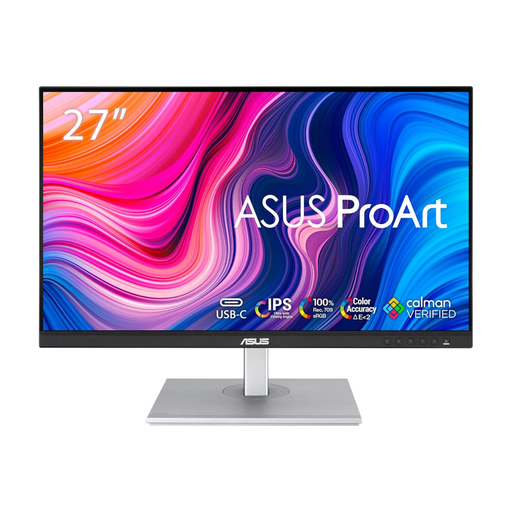
The PA279CRV is a 27-inch 4K IPS example for developers who also spend time reviewing fine interface detail.
The DualUp 28MQ780-B illustrates a tall alternative when vertical room for code and portrait previews matters most.
These monitors cover conventional QHD and 4K desktop choices for working with code, DevTools and responsive previews. Choose between them by the detail you need to inspect and the connections your laptop can use.
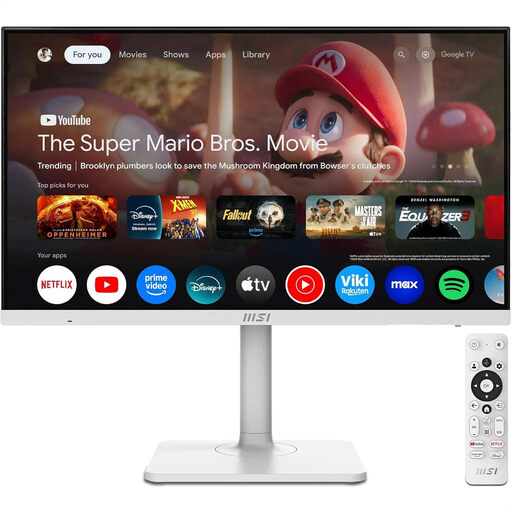 No image available
Consider this 4K option if close inspection of interface details is part of your desktop debugging work.
The product title specifies a 27-inch IPS display and USB-C 65 W. Check whether your laptop supports the required video connection and whether 65 W meets its charging needs; also check that your preferred scaling keeps text comfortable.
 No image available
Consider this WQHD model if a conventional desktop layout for code and DevTools is your priority.
Check the exact USB-C video support and Power Delivery wattage against your laptop before planning a one-cable desk setup.
 No image available
Consider this model if 4K desktop inspection matters more to you than an assumed laptop-docking setup.
The product title specifies 60 Hz, HDMI and DisplayPort. Confirm the connections you need, including any USB-C video or charging functions, before ordering.
No. A monitor gives you room to use browser tools, but Chrome for Developers advises testing in browsers on real devices to be certain of behaviour. Set responsive dimensions during development, then check important layouts and interactions on a phone.
Not solely for mobile-layout debugging. A 4K monitor is worth considering when you regularly inspect fine text, spacing or screenshots and find its scaling comfortable; the mobile viewport dimensions are set separately in DevTools.
Check that the monitor and laptop support the video connection you intend to use, then compare the monitor’s Power Delivery output with the laptop’s charging requirements. A stated wattage or hub connection alone does not establish that every laptop function will work through one cable.
Check the terms for the exact product and seller, including warranty support, the return process and any dead-pixel policy. ASUS provides a support page for PA279CRV owners to manage product registration and support, but that does not establish the terms of a particular retailer purchase.
Measure desk depth, the stand or clamp footprint and the space behind the display for adjustment and cables. If you intend to use an arm, match the mount to the exact monitor and ensure the desk can accommodate it securely.