Shared-desk web testers
People who repeatedly change browser viewport widths and inspect mobile-menu states at desks used by different colleagues. They need room for browser tools and a screen position they can adjust when they sit down.


For mobile-menu checks at a shared desk, start with a height-adjustable 27-inch IPS monitor; QHD is a practical choice when the work is mainly browser viewport and breakpoint checks. Consider a USB-C or Thunderbolt hub when colleagues regularly swap compatible laptops, or 4K when close inspection of interface details is also part of the job. No monitor or browser emulation replaces checking important menu behaviour on a real phone.
People who repeatedly change browser viewport widths and inspect mobile-menu states at desks used by different colleagues. They need room for browser tools and a screen position they can adjust when they sit down.
People who regularly connect a work laptop at a shared desk. A suitable USB-C or Thunderbolt connection can make changing desks simpler, provided the laptop supports the monitor’s video and charging functions.
People who check the menu layout alongside small type, icons, screenshots or design assets. A 27-inch 4K screen is worth considering when that closer visual review is a routine part of the work.
For mobile-menu work at a shared desk, establish the browser workspace and screen adjustment you need, then decide whether laptop docking or finer visual detail changes the choice.
| Concern | What to check | Who this matters to |
|---|---|---|
| Responsive-menu checks | Allow space for the page and browser tools; check the connection needed by the work computer. | If I switch between viewport widths and menu states, I want to keep the page and testing tools workable together. Around 31% of consumers would put responsive-menu checks first. |
| Shared-desk adjustment | Look for height adjustment or a compatible VESA mount, and assess the screen position as part of the whole workstation. | When colleagues take turns at a desk, I need to reset the viewing position to suit me. About 31% of consumers would make adjustability their primary concern. |
| Laptop connections | Match USB-C or Thunderbolt video support, power delivery and required ports to the exact laptop. | If I change laptops at a shared desk, I want fewer connections to manage each time. Roughly 23% of consumers would prioritise simpler docking. |
| Fine UI detail | Consider 4K when close inspection of icons, type or design assets is routine; check the stand and preferred display scaling too. | When menu checks include reviewing small visual details, I want enough resolution for that work. Around 15% of consumers would place fine-detail review first. |
Chrome for Developers describes Device Mode as an approximation: it does not run the page on mobile hardware or reproduce every device characteristic. A menu that looks right in the browser still needs behavioural checks on a handset.
Use browser tools for quick viewport and breakpoint checks, then test important menu interactions on a real phone before sign-off.
A fixed screen position may not suit each person using the workstation. The Health and Safety Executive advises placing the top of the screen at eye level, with the display directly in front of the user and about an arm’s length away.
Check stand adjustment or VESA-mount compatibility, and consider the chair, desk and lighting rather than the monitor alone.
A USB-C socket alone does not establish whether a particular laptop can send video, receive enough charging power or connect to the peripherals needed at the desk.
Compare the exact laptop’s capabilities and charging requirements with the monitor’s stated connection and power-delivery specifications.
Chrome DevTools can set viewport dimensions for responsive checks, so a 4K panel is not required simply to change the tested width. Its extra pixels matter more when the job also involves close visual review.
Choose resolution according to the work you do regularly, and check whether your preferred display scaling keeps text comfortable.
Dell’s UltraSharp U2724D and U2724DE illustrate two 27-inch QHD routes: an adjustable display and a Thunderbolt hub model for connection-heavy laptop desks.
BenQ’s PD2705U is a 27-inch 4K option for menu checks that also involve close inspection of interface or design details.
LG lists both a 27-inch 4K USB-C display for visual-detail work and a 27-inch Full HD business display with desk-connection features.
These QHD and 4K monitors offer different starting points for browser-based menu checks and visual-detail review. For a shared desk, compare their stated adjustment and connection features with the people and laptops that will use the screen.
 No image available
Consider this model when menu checks also involve close inspection of interface details. Its stated features include a height-adjustable stand; check USB-C video support and charging suitability against the laptop you will connect.
 No image available
A WQHD IPS option to consider for routine browser viewport and menu-state checks. Confirm that its stand adjustment suits the shared desk, and check the intended laptop connection and charging requirements before ordering.
 No image available
The 4K IPS display is relevant when mobile-menu work includes reviewing small interface details. The product name specifies USB-C with 65 W power delivery; check video compatibility and whether that charging output meets the exact laptop’s needs.
 No image available
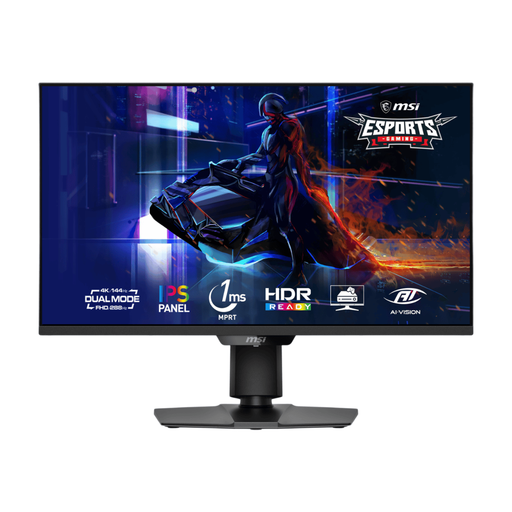
Consider this 4K UHD model if close visual review is part of the menu-checking job. Its named display modes are UHD at 144 Hz and FHD at 288 Hz; check the required laptop connection and shared-desk adjustment separately.
 No image available
This 4K IPS option suits consideration when menu checks extend to small visual details. Its product name includes HDMI and DisplayPort; confirm the exact port configuration before buying if several devices must connect at the shared desk.
No. Chrome for Developers describes Device Mode as an approximation that does not run the page on mobile hardware. Use it for quick viewport checks, then validate important menu behaviour on a real phone.
QHD is a practical choice if the work is mainly browser and breakpoint checking; consider 4K when close inspection of type, icons, screenshots or design assets is routine. In either case, make sure the screen can be positioned comfortably at the shared desk.
An adjustable stand or suitable mount helps different users set the screen position. The Health and Safety Executive advises placing the screen directly in front of the user, with its top at eye level and the display about an arm’s length away; the rest of the workstation matters too.
No. Charging output varies by model, and the laptop must support the intended connection. For example, BenQ UK lists 65 W USB-C power delivery for the PD2705U, while LG UK lists charging up to 90 W for the 27UP850K-W and 27BA850-B. Check the exact laptop’s video and charging requirements before choosing a monitor.