
24/7 Customer Support

Free returns

Same-day & Next-day Delivery

Quality Guaranteed

Unlock Your Welcome Offers: FREE Delivery | Up to 80% OFF | Free 30-day JoyPlus trial
Download the APP
Choosing model toys and building sets can be surprisingly difficult. Product photos often make every item look detailed, durable and suitable for a wide age range, yet the real differences may be hidden in the piece size, materials, moving parts and intended use.
Whether you are buying educational construction toys for a child, die-cast model cars for a collector or a landmark display project for your home, three common pitfalls are worth checking before you pay.
A detailed vehicle may have opening doors, suspension or small removable parts, but that does not automatically make it suitable for young children. Many collectible model vehicles are intended for ages 14+, while construction building kits commonly contain small pieces and may be unsuitable for children under three.
Always check the manufacturer’s age guidance, choking warnings and whether adult supervision is recommended. A model designed for display may not withstand repeated play, while a robust children’s toy may not offer the fine detailing a collector expects.
A set with hundreds of parts can offer a longer building session, but piece count alone does not confirm quality or play value. Check whether the instructions are clear, whether the finished model has usable functions and whether the pieces can be reused.
A 740-piece tank building blocks set, for example, offers a different experience from a 1:36 pull-back toy car. One focuses on construction and assembly; the other is ready for play or display with minimal setup.
Scale affects both appearance and available display space. A 1:18 motorcycle model will need more room than a 1:44 car, while a large architectural construction set may require a stable shelf or desk.
Also consider cleaning instructions. Some die-cast models should be wiped with a dry cloth rather than washed, and small loose components can be misplaced easily. Before ordering, check the product dimensions, packaging size and whether the model is intended for frequent handling.
For children aged three and above, read the full product warning rather than relying only on the category label. Look for:
Products sold in the UK should include appropriate safety information and required conformity marking where applicable. A CE or UKCA marking, when required for that product, should be supported by relevant documentation from the seller or manufacturer. A marking alone is not a substitute for checking age guidance and construction quality.
ABS plastic is widely used for construction building kits because it is lightweight and suitable for interlocking parts. Look for descriptions that specify smooth edges, consistent connections and resistance to deformation. For die-cast model cars, zinc alloy or other metal bodies may provide a weightier feel, while ABS and rubber components are commonly used for interiors, wheels and trim.
Do not assume that “metal” means indestructible. Opening doors, detachable parts and thin detailing may still need careful handling, particularly on collectible display models.
Decide whether the recipient wants a project or an immediately playable model. Useful features may include:
For hobby builders, piece count and instructions are important. For younger children, simple functions and larger, easy-to-handle parts may be more practical than intricate assembly.

Why This Fits Their Persona: A flexible starting point for children aged 5 and above who want to build different designs without buying separate kits for each project.
The set is not limited to one finished model; rods and connectors can be taken apart and reused. The stated small-part warning and age guidance also make suitability clearer.
Builds up to 50 models; includes instructions; no batteries required.
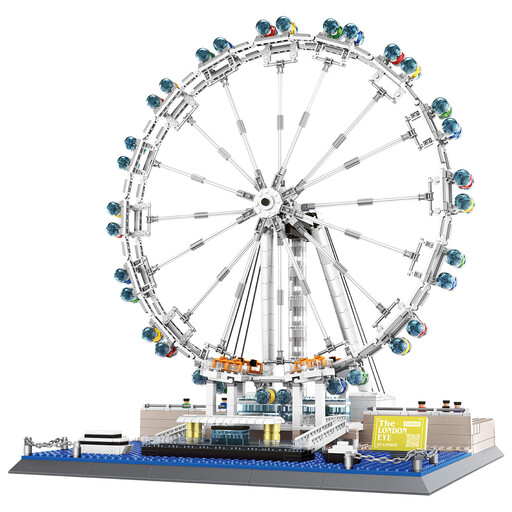
Why This Fits Their Persona: Suits architecture enthusiasts, families seeking a shared project and adults wanting a recognisable London-themed display piece for a home or office.
The 1,528-piece count, 2.6 kg product weight and 50 × 40 × 11.6 cm box dimensions help buyers plan time and storage before purchase.
Rotating Ferris wheel design; ABS construction; suitable for display after assembly.
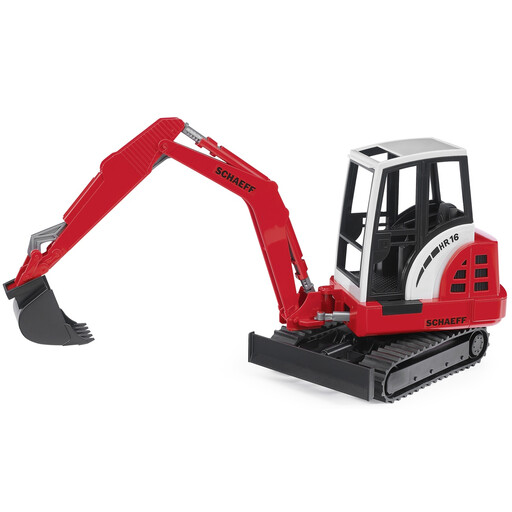
Why This Fits Their Persona: Designed for children aged 3 and above who prefer active, hands-on construction play rather than a static display model.
It is a ready-to-play construction vehicle rather than a small-parts building kit, with clear warnings and direct supervision advised.
360-degree rotating cab; articulated arm and detachable bucket; rubber tracks; no batteries required.
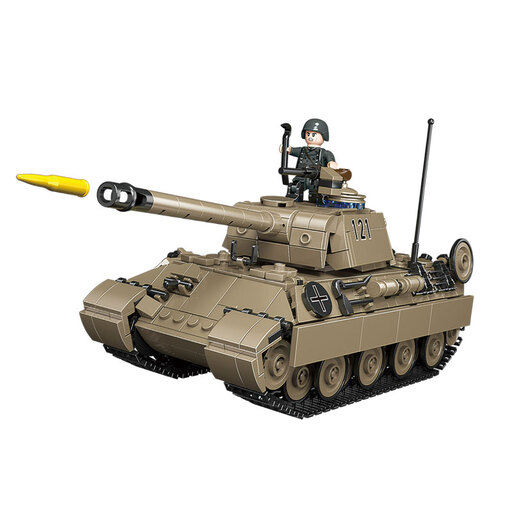
Why This Fits Their Persona: A focused DIY project for military model fans and hobby builders aged 6 and above who enjoy assembling a themed vehicle.
The 899-piece specification makes the assembly commitment visible, while the small-part warning helps prevent an unsuitable purchase for under-threes.
899 ABS pieces; rounded-edge treatment described by the manufacturer; reusable assembly and disassembly format.
Choose die-cast model cars when the recipient wants realistic proportions, opening features or a ready-made collectible. The 1:36 Lamborghini Revuelto, Ford Mustang, BMW M3 and similar models include pull-back action and opening doors, but their stated 14+ guidance makes them more suitable for teenagers, adults and collectors than toddlers.
Choose construction building kits when the enjoyment comes from following instructions, solving assembly problems and displaying the completed design. Tank building blocks, DIY model kits and the London Eye building set require more time but can support shared parent-child activity or a longer hobby session.
For car enthusiasts, consider whether the model is intended for play or display. A pull-back mechanism adds interaction, while a larger-scale replica with delicate parts may be better kept on a shelf.
Some are, but suitability depends on the individual product. Ready-to-play vehicles such as the Bruder excavator are listed for children from age 3, with supervision advised. Small-granule construction kits and many collectible model vehicles have higher age guidance and should be kept away from children under three.
The pull-back models listed here do not require batteries for their rolling function. Check the individual product description before purchase, particularly if the model includes lights, sound or motorised features.