Layout photographers seeking front-to-back sharpness
You photograph stationary trains and scenery close up, where a single frame may not keep the whole scene sharp, and are willing to capture and combine images at different focus distances.


Choose the camera and lens together, based on what you photograph rather than megapixels alone. Focus bracketing suits stationary close-ups that need greater front-to-back sharpness; a suitable close-focus or macro lens matters most for tiny details, while stabilisation and video features matter more if you also shoot handheld or film your layout. A focus stack still needs a scene that stays still throughout the sequence.
You photograph stationary trains and scenery close up, where a single frame may not keep the whole scene sharp, and are willing to capture and combine images at different focus distances.
You want to frame cab interiors, figures, couplings or weathering closely. Lens magnification and the room left between the lens and the model matter as much as the camera body.
You work around indoor lighting and awkward camera positions, and may also film operating sessions or demonstrations. Screen movement, camera-shake control and video features affect your choice.
Start with whether the train and scenery can stay still for a sequence of shots. Then consider how closely you need to frame small parts, followed by your indoor handling and video needs.
| Concern | What to check | Who this matters to |
|---|---|---|
| Sharpness across a close-up | Confirm focus bracketing on the exact camera and whether combining the frames requires editing software. | When I photograph a stationary locomotive close up, I want both its front and nearby scenery sharp without movement spoiling the sequence; around 37% of consumers put depth-of-field control first. |
| Small model details | Check the intended lens’s maximum magnification and working distance, as well as mount compatibility. | To show tiny couplings or weathering, I need close framing but enough room to position the camera and light the model; roughly 27% of consumers prioritise close-detail magnification. |
| Indoor handling | Check whether stabilisation is in the body or lens and whether the screen suits your shooting position. | If I photograph a layout indoors without fixed camera support, shake and awkward viewing angles affect how I work; about 18% of consumers make indoor usability their primary concern. |
| Stills and video | Confirm the exact camera’s video modes, screen movement and focusing behaviour with your intended lens. | I want to photograph the layout and film operating sessions with the same setup, so neither type of shooting should be an afterthought; around 18% of consumers put mixed stills-and-video use first. |
A camera body alone does not determine how large a tiny model part will appear in the frame. Magnification and working distance depend on the lens.
Decide whether you mainly photograph whole layouts or individual details, then check the intended lens’s mount, maximum magnification and working distance.
Close-detail work may require a compatible close-focus or macro lens in addition to the camera body.
Stacking combines multiple frames. Sony’s close-up guidance notes that even slight movement can affect the result.
Use a stack for stationary trains and scenery, keeping the camera and lighting steady. For an operating train, plan a single focused exposure instead.
Image stabilisation addresses camera shake; it does not stop a train moving or increase the depth of field in one frame. Manufacturer ratings also depend on stated test conditions.
Check the body-and-lens combination behind any stabilisation claim, and use stable camera support for critical close-ups or stacks.
GOV.UK distinguishes cancellation of an online order when an item is not faulty from remedies when goods are faulty. The conditions for one do not automatically settle the other.
Check the seller’s cancellation and return instructions before ordering, and keep your order records if you need to raise a fault.
These camera and lens lines illustrate different ways to approach stationary close-ups, small details and video; the relevant feature depends on the exact model and lens.
The EOS R10 and EOS R7 are APS-C options for photographers considering a focus-bracketing workflow for stationary trains and scenery.
The α6700 is an APS-C E-mount option if you want focus bracketing alongside in-body stabilisation.
A compatible Nikon Z body and macro lens are worth considering when small components are the main subject.
These Sony APS-C camera-and-zoom kits are options for photographing model-train layouts. If tiny details or multi-frame stacks are your priority, assess the supplied lens and the exact camera’s focusing workflow before choosing.
 No image available
For stationary close-ups, Sony documents focus bracketing on the α6700; keep the scene still across the sequence.
The camera has an APS-C sensor and 5-axis in-body stabilisation. Check the supplied 16–50mm lens’s magnification and working distance for tiny details, and confirm how you will combine bracketed frames.
 No image available
For layout photographs, consider this kit if its supplied zoom provides the framing you want.
Check the lens’s magnification and working distance before relying on it for tiny details. If a multi-frame stack is important, confirm focus-bracketing support for the A6400 before buying.
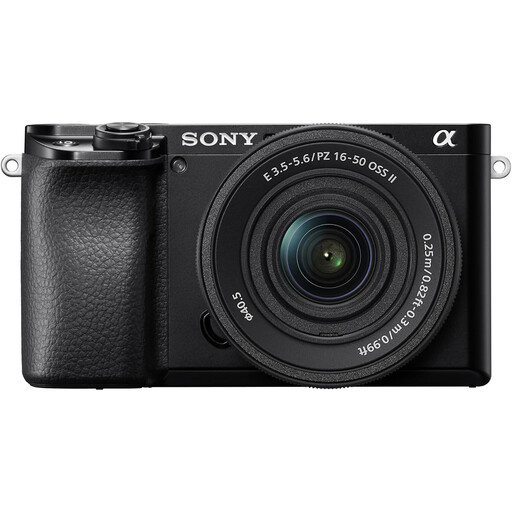 No image available
For model-train photographs, assess whether the supplied 16–55mm zoom gives you the framing you need around the layout.
Check its close-focus and working-distance specifications for small components, and confirm A6100 focus-bracketing support if you intend to stack still images.
No: it is most useful when a stationary train or close-up scene needs more front-to-back sharpness than one frame provides. Canon Europe and Sony UK document bracketing tools on specific cameras, but capturing several frames means movement during the sequence can spoil a stack.
Not for a whole-layout view; 1:1 magnification is more relevant when you want to fill the frame with very small details. Check the lens’s working distance as well as magnification, because fixed scenery can restrict access and lighting.
No. Stabilisation addresses camera shake under the manufacturer’s stated conditions, while a stack needs a consistent subject across multiple frames. Sony’s close-up guidance notes that even slight movement can affect the result.
Check the seller’s cancellation instructions and keep the order details, while treating a faulty camera as a separate issue from changing your mind. GOV.UK describes a limited right to cancel an online order even when the item is not faulty; a retailer’s voluntary policy does not replace statutory remedies for faults.