
24/7 Customer Support

Free returns

Same-day & Next-day Delivery

Quality Guaranteed

Unlock Your Welcome Offers: FREE Delivery | Up to 80% OFF | Free 30-day JoyPlus trial
Download the APP
Choosing a new motorcycle helmet can feel like navigating a minefield of marketing claims and technical jargon. A modular motorcycle helmet, also known as a flip up motorcycle helmet, offers a compelling blend of the protection of a full-face lid with the convenience of an open-face one. However, not all modular helmets are created equal. Many riders in the UK end up with a helmet that is either non-compliant, uncomfortable or lacks the features they thought they were paying for.
As the Joybuy Product Recommendation Officer, my role is to help you sidestep these common purchasing mistakes. Here are the key pitfalls to watch for and how to secure a helmet that genuinely meets your needs for safety and practicality on UK roads.
To ensure you get a helmet that is safe, comfortable and practical, focus on these non-negotiable specifications.
This is the single most important factor. The ECE 22.06 helmet standard is a significant leap forward in protection. Unlike the old 22.05 test, it includes:
Always check for the ECE 22.06 label, which is typically found on a sticker on the back of the helmet or sewn into the chin strap.
The outer shell is your first line of defence. Many reliable helmets use an Acrylonitrile Butadiene Styrene (ABS) shell, which offers a great balance of impact resistance and affordability. Inside, a high-density EPS (Expanded Polystyrene) foam liner is responsible for absorbing the shock of an impact.
For comfort, especially on longer rides, look for a helmet with a removable and washable inner lining. This allows you to keep your helmet fresh and hygienic. Good ventilation is also crucial to prevent fogging and keep you cool.
For a dual visor helmet, check that the internal sun visor is easy to deploy with a gloved hand and provides sufficient coverage. The main clear visor should offer a wide field of view and ideally be prepared for an anti-fog insert.
The defining feature of a modular helmet is its chin bar mechanism. It should lock securely in both the closed and, on some models, the open position (known as P/J dual-homologation). A solid, easy-to-use locking system is essential for both safety and convenience.
Based on these practical criteria, here are some helmet options suited to different types of UK riders.
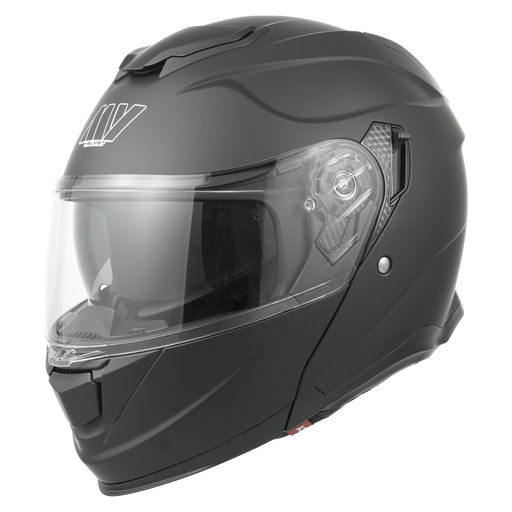
Why This Fits Their Persona: Ideal for daily riding in the UK, this helmet's flip-up design is perfect for quick stops in town, while the dual visor system handles sudden sun or gloom. It combines practicality with essential safety compliance for the daily journey.
It is fully ECE 22.06 certified, avoiding the pitfall of outdated safety standards. The dual visor is integrated with a clear purpose, not as a gimmick.
Features a high-strength ABS shell and a reserved slot for a Bluetooth headset, making it a versatile and future-proof choice for commuters.
Why This Fits Their Persona: This rider values connectivity and comfort on long hauls. The helmet is explicitly Bluetooth ready, with dedicated space for an intercom system, allowing for easy installation of navigation and communication devices.
It avoids the "integrated" myth by clearly stating it has a "reserved Bluetooth headset slot," managing expectations and providing genuine utility for tech-savvy riders.
The comfortable, removable inner lining is ideal for hygiene on multi-day trips, and the high-density EPS offers reliable shock absorption for peace of mind on the open road.
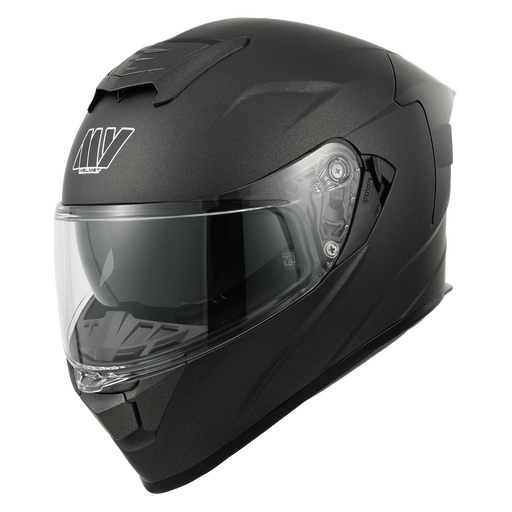
Why This Fits Their Persona: For riders who prioritise the structural integrity of a one-piece shell above all, a traditional full face motorcycle helmet is the go-to choice. This model offers the same modern safety standards and convenience features in a non-modular design.
This helmet delivers on the promise of top-tier safety with its ECE 22.06 certification and robust, single-piece construction, removing any concerns about chin bar mechanism integrity.
Provides maximum structural strength due to the fixed chin bar. It still includes practical features like an integrated sun visor and a removable, skin-friendly liner for comfort.
We have compiled a complete, real-time list of products that fully satisfy these strict selection criteria and UK safety regulations.
Both types of helmets must pass the same ECE 22.06 tests to be legally sold in the UK. A high-quality modular helmet with its chin bar securely locked provides excellent protection. However, a full face motorcycle helmet has a one-piece shell, which gives it an inherent structural advantage with no potential point of failure at a hinge mechanism. The choice often comes down to balancing ultimate structural integrity with practical convenience.
To be a road legal motorcycle helmet UK, it must carry an ECE 22.06 certification mark. Look for a label sewn onto the chin strap or a sticker on the back of the helmet that clearly displays an 'E' in a circle followed by a number (which represents the country of certification) and the 22.06 regulation number.
The general guidance from most manufacturers is to replace your helmet every 3-5 years, depending on usage. More importantly, a helmet must be replaced immediately after any significant impact, even if there is no visible damage. The internal EPS liner is designed for a single impact, and its protective qualities are compromised after it has been compressed in a crash.