
24/7 Customer Support

Free returns

Same-day & Next-day Delivery

Quality Guaranteed

Unlock Your Welcome Offers: FREE Delivery | Up to 80% OFF | Free 30-day JoyPlus trial
Download the APP
As a Joybuy Product Recommendation Officer, I often see how the right storage can transform a home. A cluttered entryway filled with a jumble of trainers, boots and school shoes is a common frustration for many UK households. A modular shoe storage cabinet seems like the perfect fix, promising a tidy, customisable solution. However, not all are created equal, and a poor choice can lead to more problems than it solves.
Before you buy, it's worth knowing about a few common pitfalls. Many shoppers are drawn in by low prices, only to find their new organiser is a source of regret. Here are the key issues to watch out for:
plastic shoe organiser with doors can look neat, but if it lacks ventilation, it becomes a sealed box. Putting away slightly damp shoes after a walk in the rain can trap moisture, leading to unpleasant odours and, in the worst cases, mould growth that can ruin your footwear.To avoid these issues, focus on a few core features rather than marketing claims. Analysing these details will help you find a durable and practical customisable shoe storage solution.
The backbone of any interlocking shoe rack is its frame and connectors. This is where stability is won or lost.
large shoe rack, especially in a home with children or pets, an anti-tip kit is a non-negotiable feature. This allows you to secure the unit to a wall, preventing it from toppling over if bumped or climbed on.The panels form the walls and doors of your cabinet. Their design directly impacts the longevity of your shoes.
A modular system's greatest strength is its flexibility. To make the most of it, you need to verify its dimensions and customisation options.
Based on these practical criteria, we've matched a few options to different household needs.
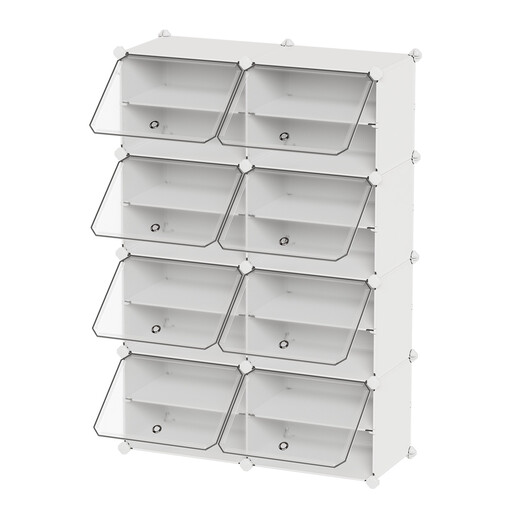
Why This Fits Their Persona: Ideal for a busy entryway or hallway, this large-capacity unit can handle the entire family's footwear. The doors keep visual clutter hidden and the included anti-tip kit provides peace of mind in a household with active children.
The steel frame and quality connectors provide the stability needed for a large unit, avoiding sagging. Grommets in the doors ensure proper ventilation, preventing the moisture trap.
Generous 16-slot capacity with customisable configuration. Includes an anti-tip kit for enhanced safety.
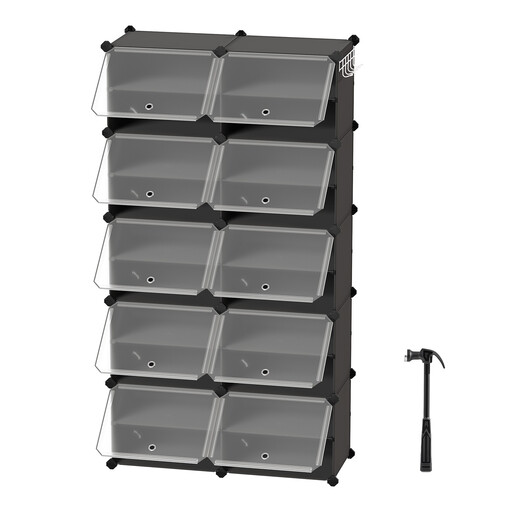
Why This Fits Their Persona: The sleek black finish and flexible design make this a great fit for a bedroom or walk-in closet. As it's easy to assemble and reconfigure, it's perfect for renters who may need to adapt their storage to a new space when they move.
The product details clearly state the internal compartment dimensions, helping you avoid the trap of misleading capacity claims. The modularity allows you to build around your specific shoe collection.
Highly flexible design can be split into smaller units or stacked. The clear doors with vents keep shoes visible yet protected.
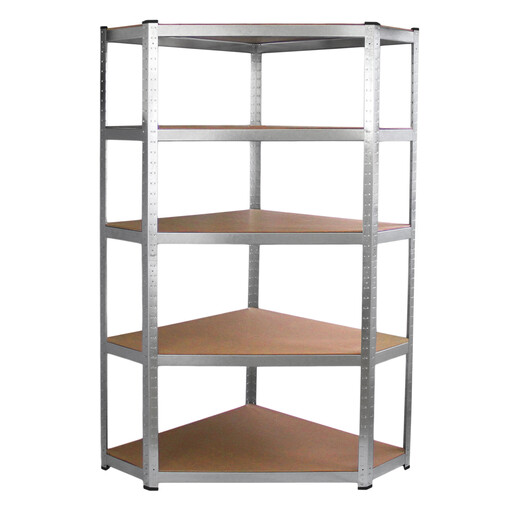
Why This Fits Their Persona: For those with a serious collection of heavy walking boots, work boots or who need robust storage for a garage or utility room. This is a no-nonsense, high-strength solution that prioritises stability and weight capacity above all else.
Constructed from hard-wearing galvanised steel and MDF boards, it completely bypasses the flimsy plastic problem. The open-shelf design provides maximum air circulation, eliminating any risk of moisture traps.
Exceptional strength and stability for heavy items. The corner design is highly space-efficient for garages or storage rooms.
We have compiled a complete, real-time list of products that fully satisfy these strict selection criteria and UK safety regulations.
This varies significantly by model. It is essential to check the product specifications for the maximum static weight capacity per compartment. For typical plastic modular units with a steel frame, this is often around 5 kg per cube, which is sufficient for most shoes. For heavier items like work boots or for storing other goods, a metal racking system is a more suitable choice.
Most modular systems are designed for tool-free assembly. They usually come with simple, click-together components and a small rubber mallet to help secure the panels into the connectors. The key to a stable build is ensuring that the corner of every panel is pushed firmly to the very back of the connector. Taking the time to do this properly during setup will prevent wobbling later on.
It is not recommended. The connectors and panel dimensions are not standardised across different manufacturers. Attempting to mix and match parts will likely result in an unstable and ill-fitting structure that could be unsafe. For the best results and a secure interlocking shoe rack, it is always best to purchase and expand your storage using components from the same system.